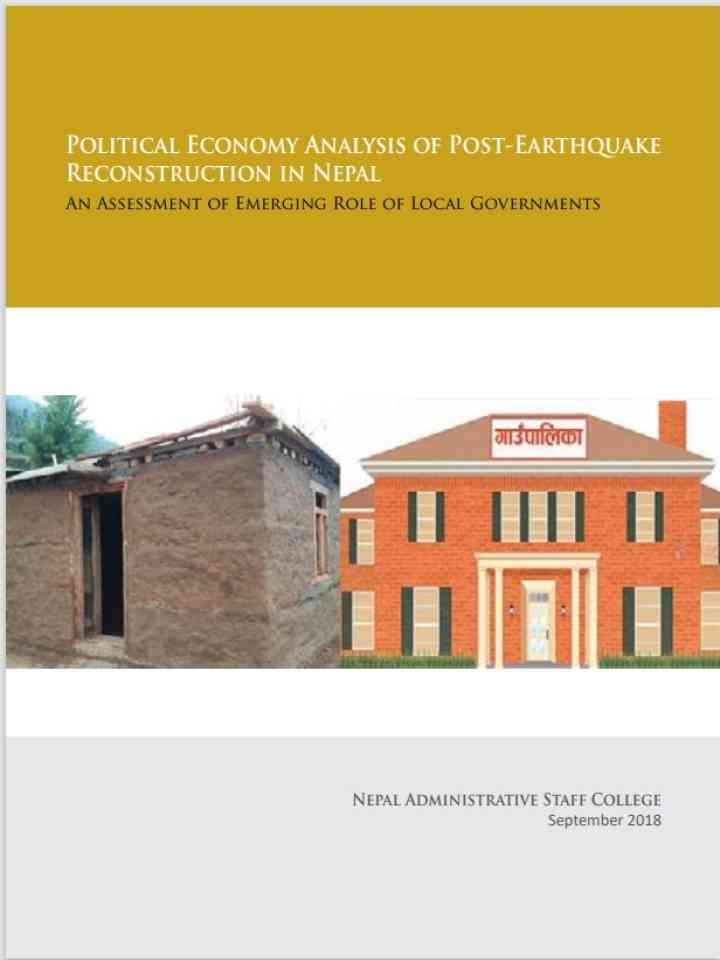
Political economy analysis of post-earthquake reconstruction in Nepal
This document examines the complex dynamics surrounding Nepal's reconstruction efforts following the 2015 Gorkha earthquake. It highlights the challenges faced by the Nepalese government, particularly the National Reconstruction Authority (NRA), in managing the reconstruction process amidst political maneuvering, centralized decision-making, and a lack of preparedness. The analysis underscores the disconnect between the state and citizens due to the absence of local government representatives for nearly two decades, which further complicated the response to local needs.
The document also explores the emerging role of newly established local governments in the reconstruction process. While local governments have been tasked with significant responsibilities, they have struggled with institutional capacity, coordination issues, and a lack of resources. The report identifies key strategic interventions needed to strengthen local governments' role in disaster risk management and enhance the overall effectiveness of the reconstruction process. Additionally, it addresses issues of distributive and procedural justice, highlighting how pre-existing socio-economic inequalities have been perpetuated in the reconstruction efforts.
Explore further