PreventionWeb
Menu

International Journal of Disaster Risk Reduction (Elsevier)

IJDRR

Mission

The International Journal of Disaster Risk Reduction (IJDRR) is the journal for researchers, policymakers and practitioners across diverse disciplines: earth sciences and their implications; environmental sciences; engineering; urban studies; geography; and the social sciences. IJDRR publishes fundamental and applied research, critical reviews, policy papers and case studies with a particular focus on multi-disciplinary research that aims to reduce the impact of natural, technological, social and intentional disasters. IJDRR stimulates exchange of ideas and knowledge transfer on disaster research, mitigation, adaptation, prevention and risk reduction at all geographical scales: local, national and international.
Show more
Latest additions
Items: 46
Publication
Published on
1 June 2023
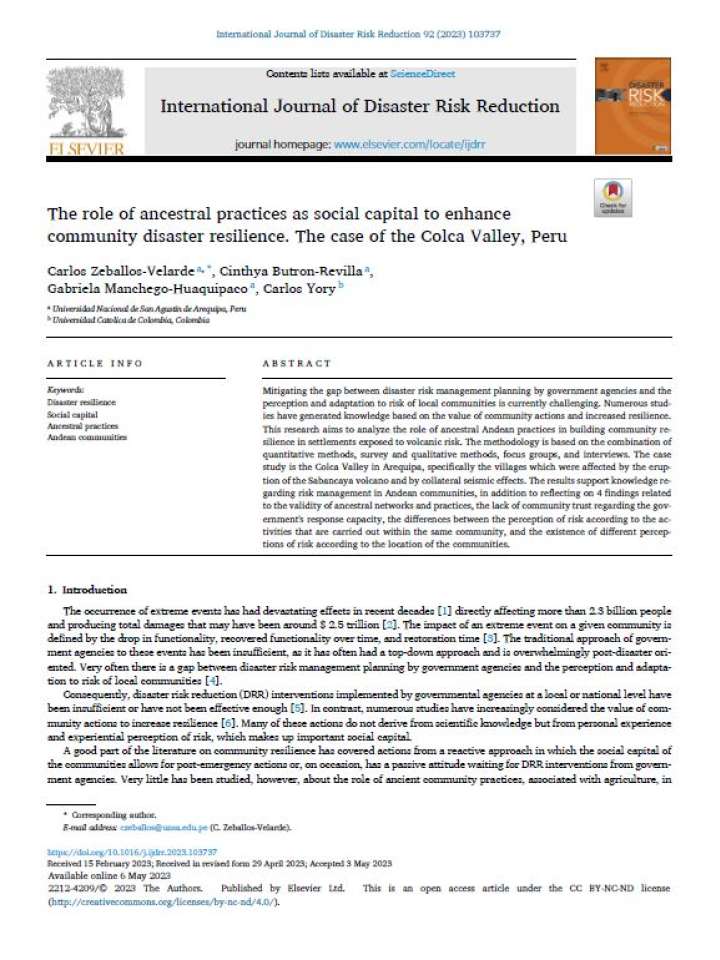
The role of ancestral practices as social capital to enhance community disaster resilience. The case of the Colca Valley, Peru
This research aims to analyze the role of ancestral Andean practices in building community resilience in settlements exposed to volcanic risk.
Publication
Published on
15 May 2023
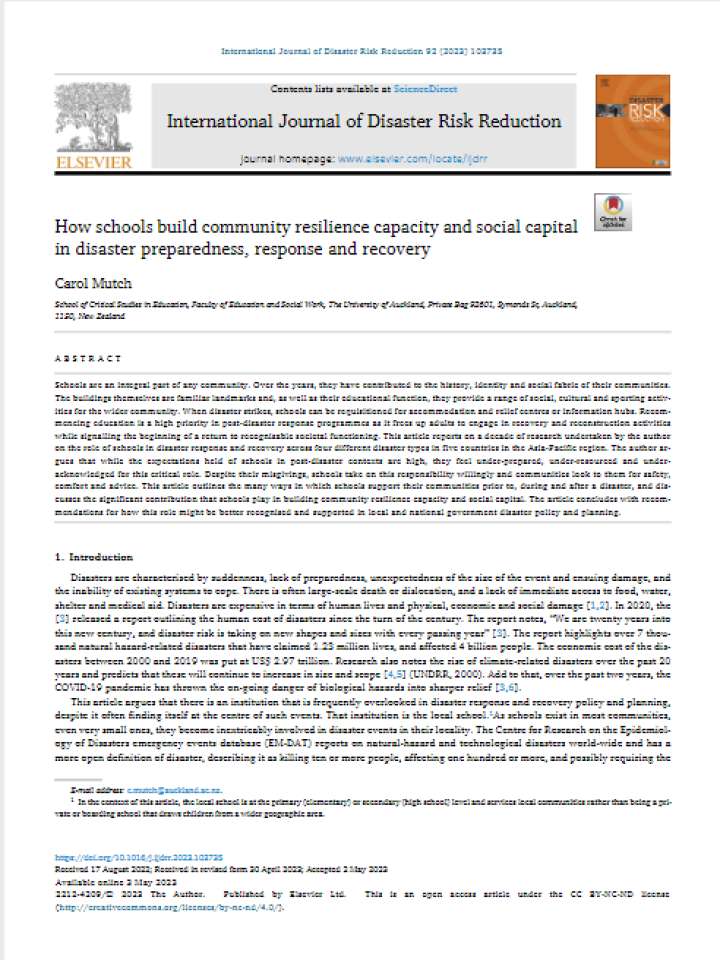
How schools build community resilience capacity and social capital in disaster preparedness, response and recovery
This article reports on a decade of research undertaken by the author on the role of schools in disaster response and recovery across four different disaster types in five countries in the Asia-Pacific region.
Publication
Published on
4 May 2023
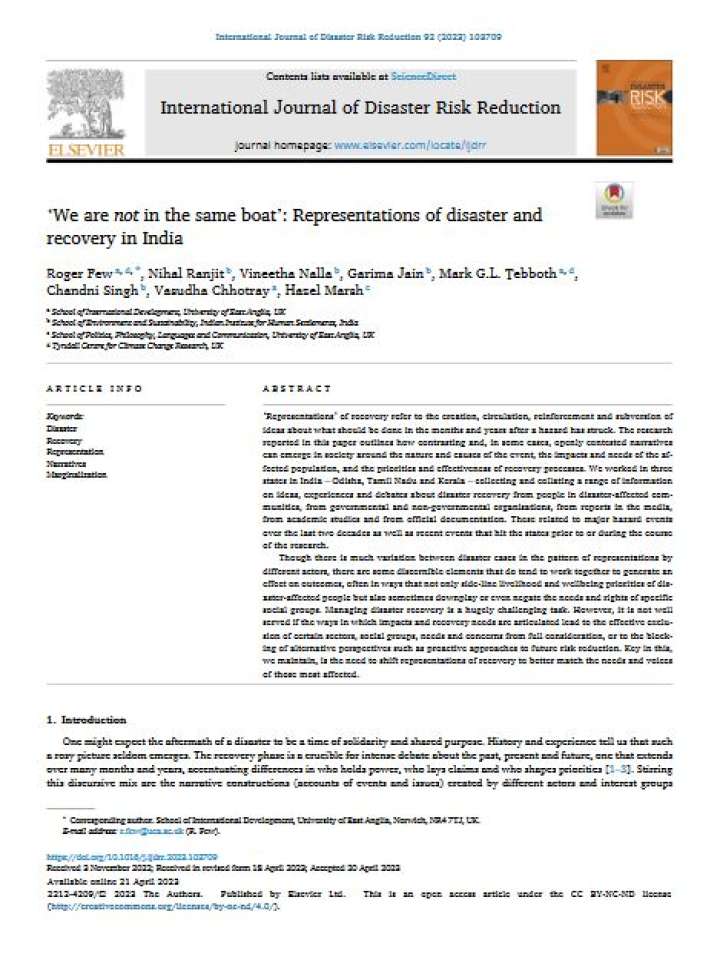
‘We are not in the same boat’: Representations of disaster and recovery in India
The research reported in this paper outlines how contrasting and, in some cases, openly contested narratives can emerge in society around the nature and causes of the event, the impacts and needs of the affected population.
Publication
Published on
21 February 2023
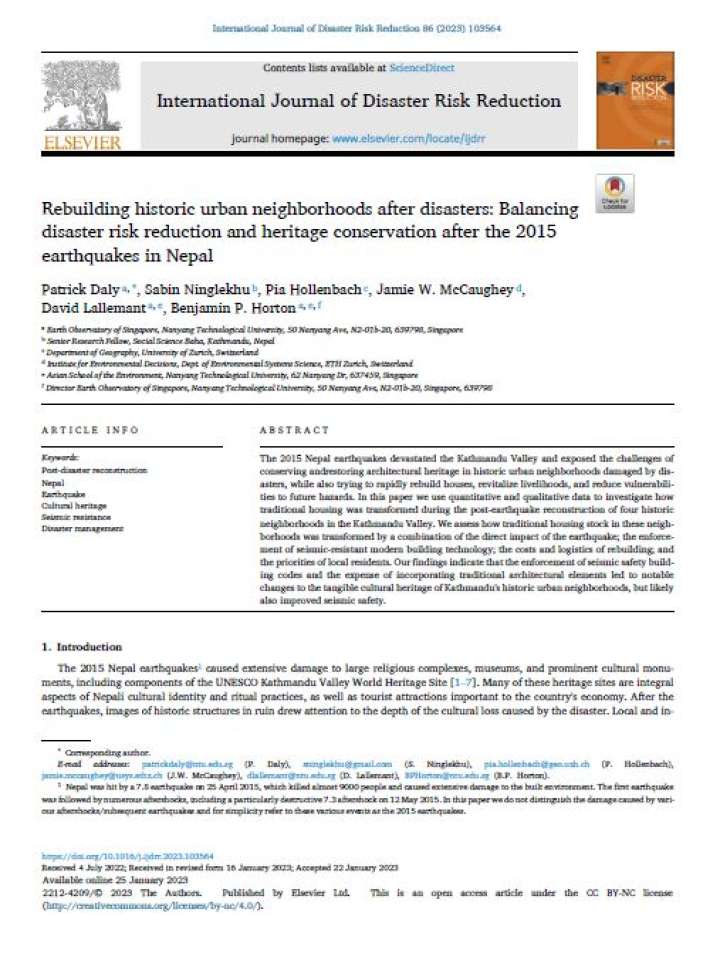
Rebuilding historic urban neighborhoods after disasters: Balancing disaster risk reduction and heritage conservation after the 2015 earthquakes in Nepal
In this paper the authors use quantitative and qualitative data to investigate how traditional housing was transformed during the post-earthquake reconstruction of four historic neighborhoods in the Kathmandu Valley.
Publication
Published on
30 January 2023
Phased post-disaster recovery challenges: 2016–2017 floods and landslides in Colombo and Kalutara, Sri Lanka
This paper aims to understand the challenges arising in individual post-disaster recovery (PDR) phases and how they contribute to overall recovery progress, using the 2016 and 2017 floods and landslides in Sri Lanka as the case study.
Publication
Published on
15 November 2022
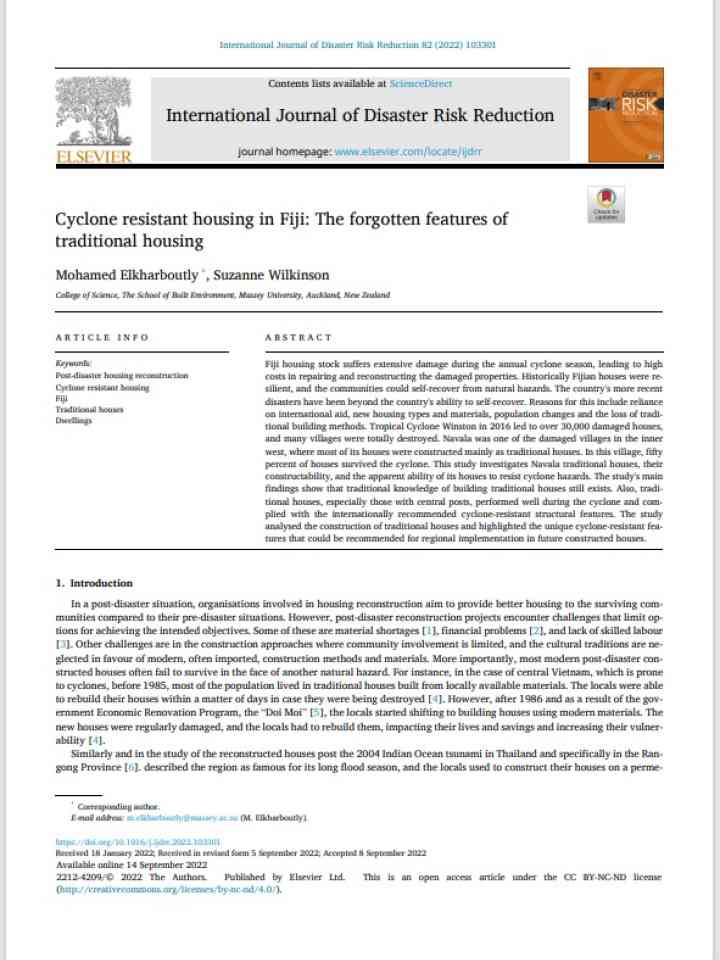
Cyclone resistant housing in Fiji: The forgotten features of traditional housing
This study investigate cyclone-resistant features of traditional houses in Navala Village, which withstood 2016 Cyclone Winston. It shows the resilience benefits of traditional methods, materials and designs, suggesting adoption into current practices.
Publication
Published on
31 August 2022
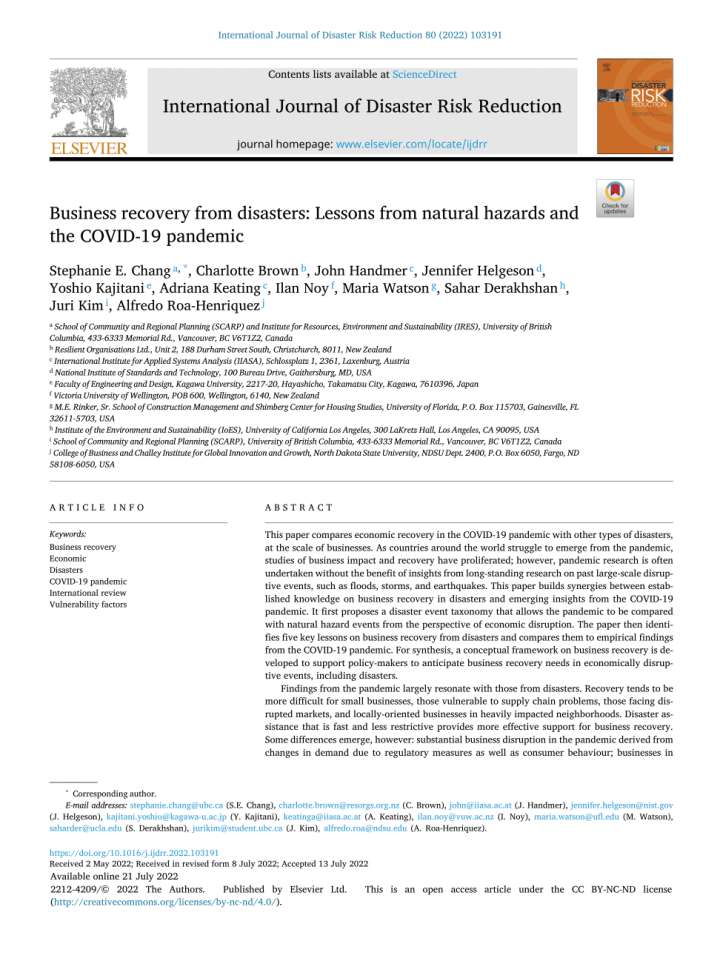
Business recovery from disasters: Lessons from natural hazards and the COVID-19 pandemic
This paper compares economic recovery in the COVID-19 pandemic with other types of disasters, at the scale of businesses.
Publication
Published on
30 May 2022
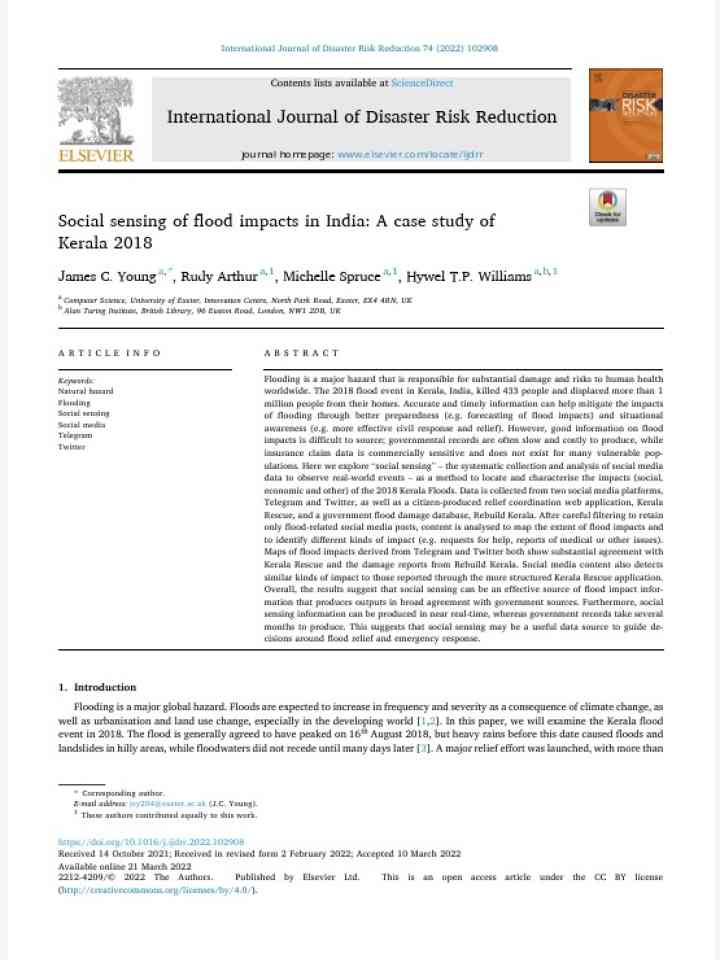
Social sensing of flood impacts in India: A case study of Kerala 2018
Here we explore “social sensing” – the systematic collection and analysis of social media data to observe real-world events – as a method to locate and characterise the impacts (social, economic and other) of the 2018 Kerala Floods.

Pagination

  • Previous page ‹ Previous
  • Page 1
  • Page 2
  • Current page 3
  • Page 4
  • Page 5
  • Page 6
  • Next page Next ›

More content for this organization may be available on PreventionWeb or on the site search.

Voluntary Commitments

The organization has no registered commitments.

The Sendai Framework Voluntary Commitments (SFVC) online platform allows stakeholders to inform the public about their work on DRR. The SFVC online platform is a useful toolto know who is doing what and where for the implementation of the Sendai Framework, which could foster potential collaboration among stakeholders. All stakeholders (private sector, civil society organizations, academia, media, local governments, etc.) working on DRR can submit their commitments and report on their progress and deliverables.

Contact information

https://www.journals.elsevier.com/international-journal-of-disaster-risk-reduct…

Is this page useful?

Yes No
Report an issue on this page

Thank you. If you have 2 minutes, we would benefit from additional feedback (link opens in a new window).

The International Recovery Platform (IRP) is a global partnership working to strengthen knowledge, and share experiences and lessons on building back better in recovery, rehabilitation, and reconstruction.

Latest IRP videos and photos: YouTube Flickr Contact IRP

Loading