PreventionWeb
Menu

National Institute of Disaster Management (India)

NIDM
India
Governments

Mission

To work as a think tank for the government by providing policy advice and facilitating capacity building services including strategic learning, research, training, system development and expertise promotion for effective disaster preparedness and mitigation.

Disaster Reduction Goal

1. To be a premier institute of excellence for training and research in disaster risk mitigation and management and to be recognized as one of the leading institutions at the international level in this field.
2. To strive relentlessly towards making a disaster free India by developing and promoting a Culture of Prevention and Preparedness at all levels.

DRR activities
Policies and Programmes in DRR

1. Develop training modules, undertake research and documentation in disaster management and organize training programmes
2. Formulate and implement a comprehensive human resource development plan
3. Assistance in national level policy formulation
4. Assistance to training and research institutes for programme development for various stakeholders
5. Assistance to state governments in formulation of policies, strategies, framework for capacity building
6. Develop educational materials
7. Promote awareness among stakeholders
8. Undertake and support research, conferences, publications on various aspects of DRR.

Membership in Key Networks

Sphere India (a network of humanitarian collaborative process)

Disaster Reduction Focal Point(s)

National Focal Point for SAARC Disaster Management Centre

Websites

http://www.nidm.gov.in
http://saarc-sdmc.nic.in
http://www.ndmindia.nic.in

Making disaster risk reduction a policy priority, institutional strengthening (HFA 1)

1. NIDM is secretariat to National Platform on DRR.
2. Policy support to national and state governments
3. Technical support to state governments and local bodies for policy and plan formulation, capacity building in DRR
4. Formulation and implementation of National Human Resource Development Plan in DRR
5. Brainstorming and advocacy for elected representatives

Risk assessment and early warning systems (HFA 2)

1. Micro-zonation studies and seismic risk analysis
2. Rapid Visual Screening of buildings
3. Geo-Informatics research studies

Education, information and public awareness (HFA 3)

1. India Disaster Knowledge Network
2. Regular training in all aspects of DRR to all stakeholders
3. Training of master trainers for School Safety
4. Media interactions and workshops
5. Online training programmes for greater outreach
6. Policy dialogues among stakeholders
7. Awareness strategy and IEC initiatives
8. Templates and toolkits for mainstreaming DRR into development.
9. Training programmes on Gender, Coastal Hazards, Geo-informatics, urban risk mitigation, minimum standards of relief, community based disaster management.

Reducing underlying risk factors (HFA 4)

1. Technical support to organizations for sustainable ecosystem development
2. Technical support in capacity building in reducing physical and socio-economic vulnerability.
3. Technical assistance in planning, recovery strategies, need analyses and risk transfer mechanisms
4. Corporate sector collaboration for CSR in DRR

Preparedness for effective response (HFA 5)

1. Incident Command System Training of master trainers
2. Training for NCC, NSS, volunteers
3. India Disaster Resource Network

Other activities

1. NIDM organized the launch of the South Asia campaign on Making Cities Resilient
2. HFA mid-term review in 2010
.
View our training calendar

Making Cities Resilient Campaign Activities

Launch of the campaign in South Asia.
Show more
Latest additions
Items: 30
Publication
Published on
30 March 2025
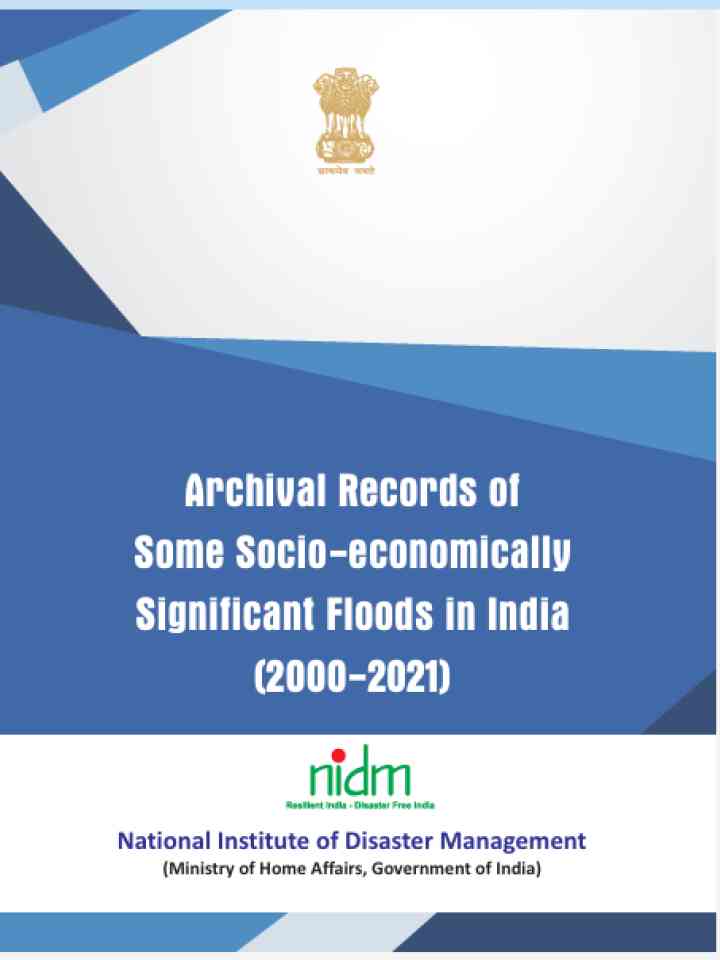
Archival records of some socio-economically significant floods in India (2000-2021)
The prepared database would be of immense use for those who are working on floods for different regions, as well as for decision makers, planners, policy makers and communities in flood affected areas.
Publication
Published on
29 November 2024
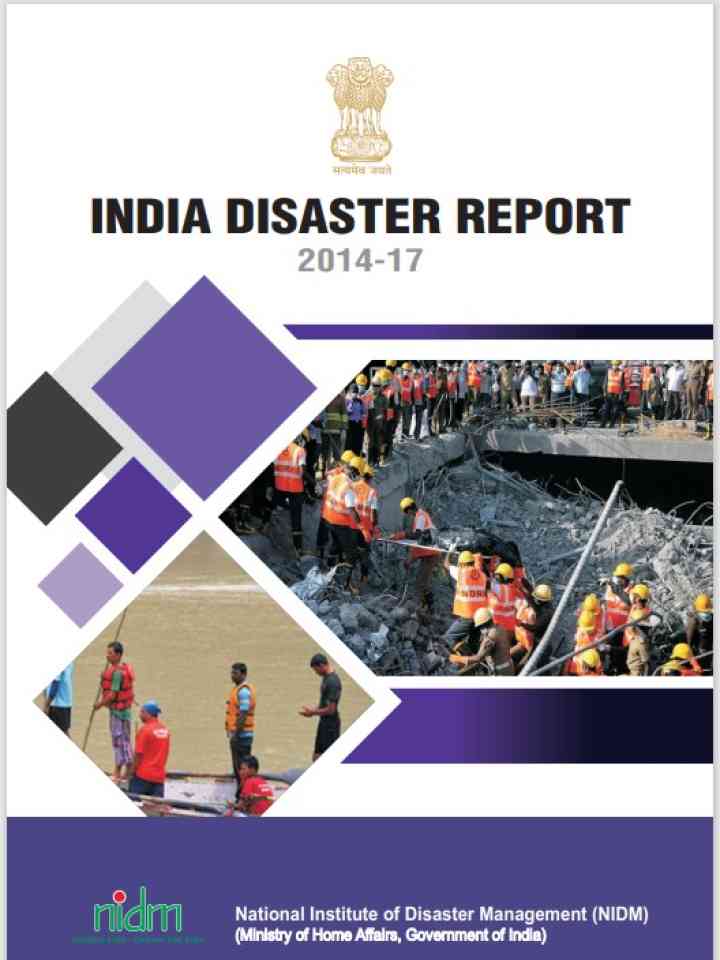
India Disaster Report 2014-17
The compendium of India Disaster Report 2014 to 2017 deals with major disasters, which have national intervention in terms of financing and mobilizing resources that have happened in India during this period.
Publication
Published on
29 November 2024
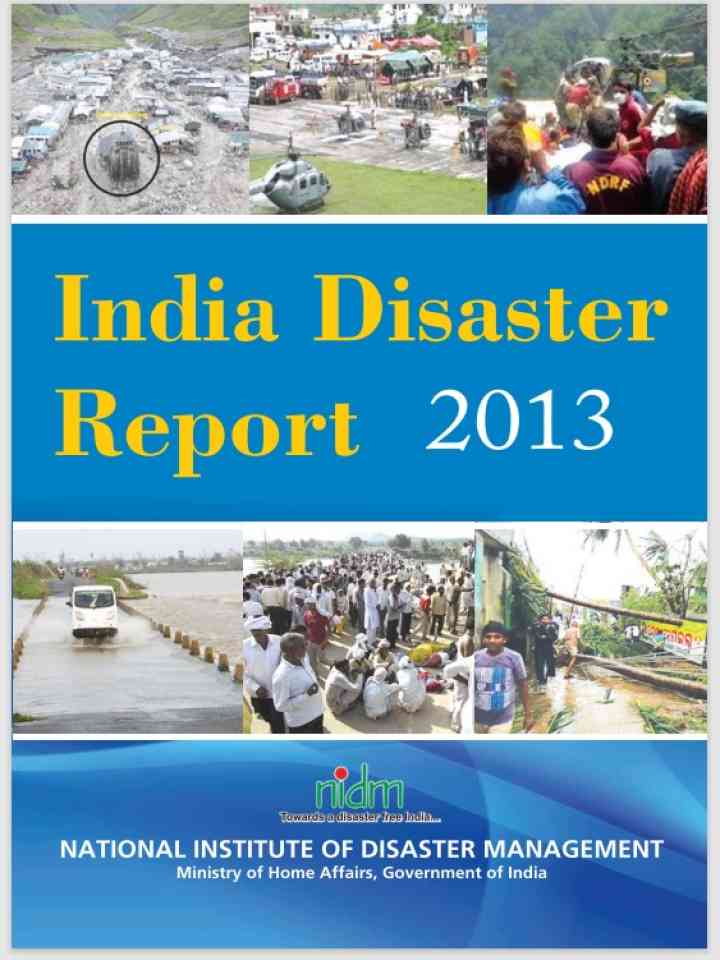
India Disaster Report 2013
The India Disaster Report 2013 documents the major disasters of the year with focus on the Uttarakhand Flash Floods and the Cyclone Phailin.
Publication
Published on
30 April 2024
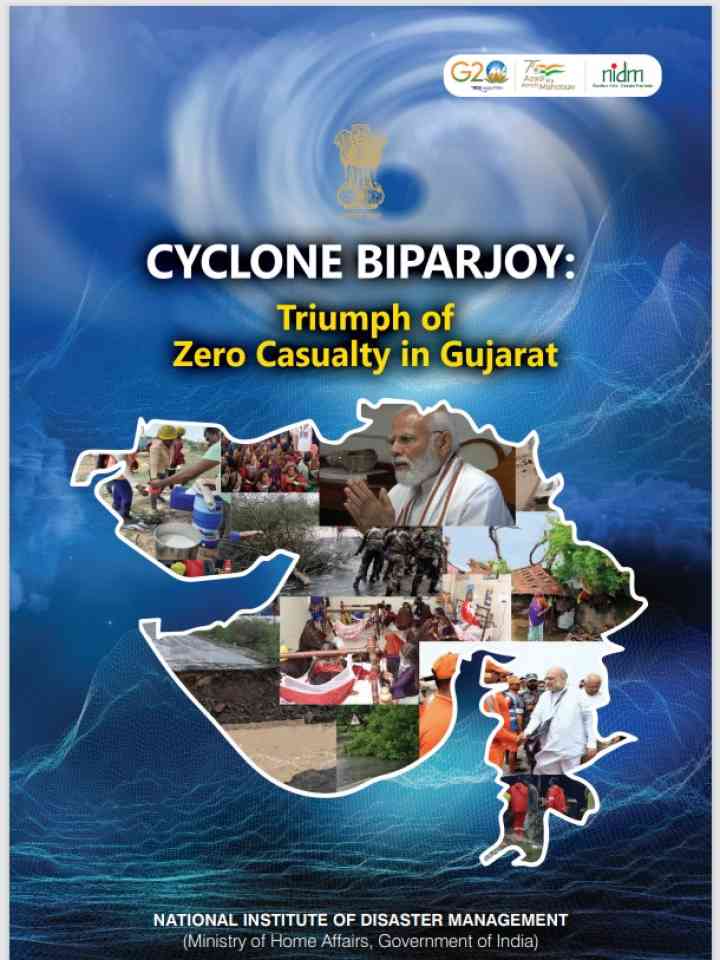
Cyclone Biparjoy: Triumph of Zero Casualty in Gujarat
The document highlights the proactive measures taken and the disaster management authorities in a coordinated manner as a team to achieve the Zero Casualty Goal during the Cyclone Biparjoy.
Publication
Published on
30 April 2023
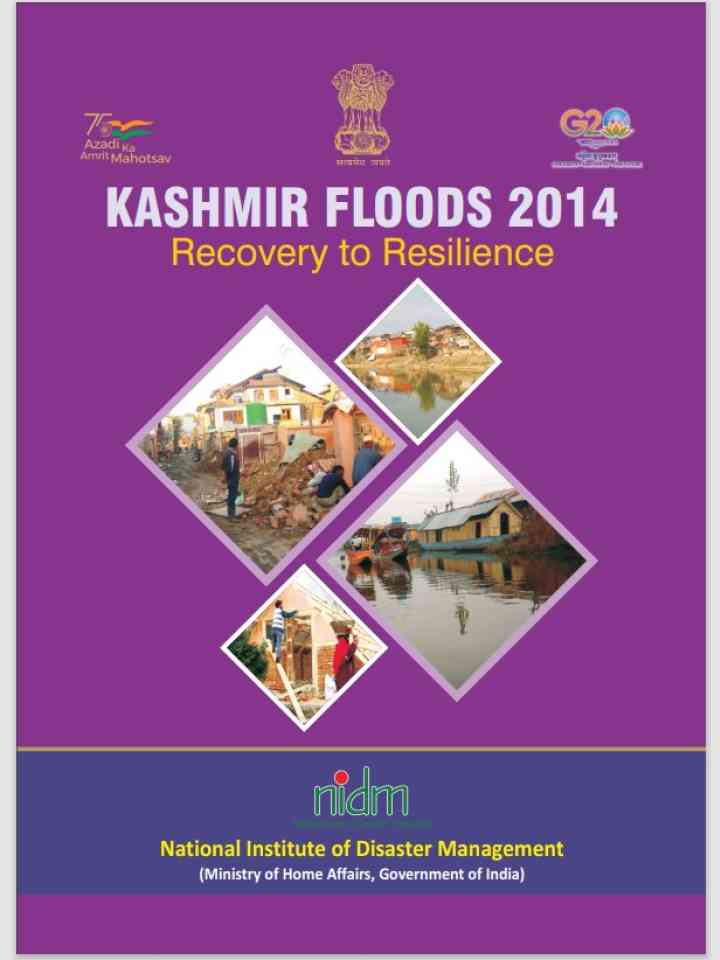
Kashmir Floods 2014 Recovery to Resilience
The flood of 2014 in the Kashmir Valley was the worst flood in the last hundred years. This document has also suggested long-term measures that should be taken for building resilience.
Publication
Published on
30 April 2023
Solid Waste Management in Post-Disaster Situations
This paper is an attempt to draw focus on the issue of managing solid waste in post-disaster situations in the context of India and to prepare conclusions, recommendations and way forward for managing wastes during and after the disasters.
Publication
Published on
30 April 2022
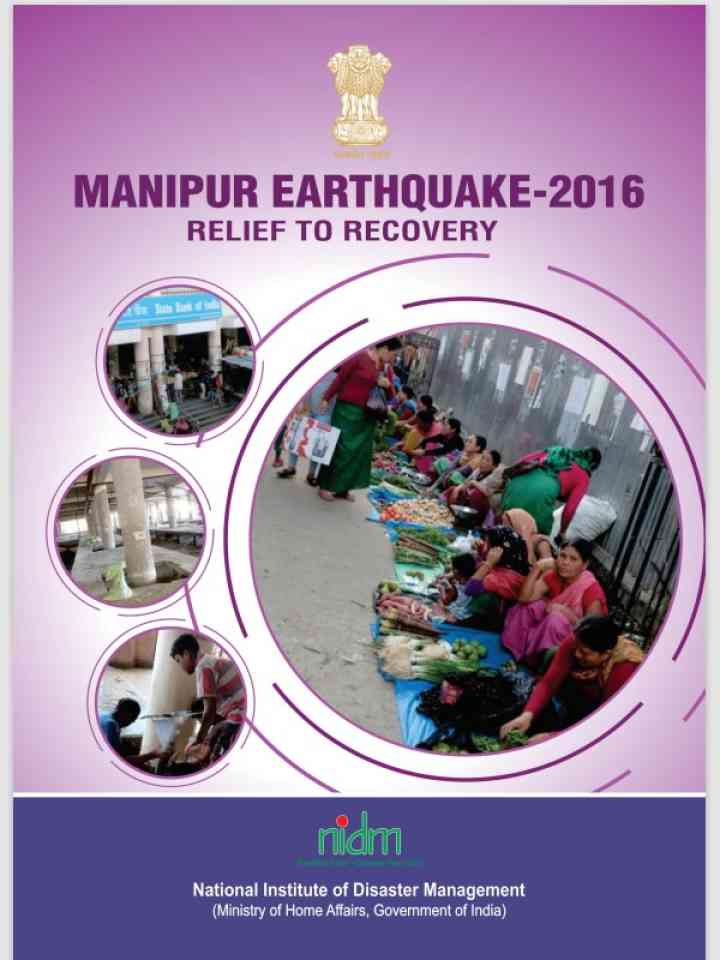
Manipur Earthquake 2016: Relief to Recovery
This document presents information and data about the Manipur earthquake in India for outlining the damage pattern, rescue, relief and recovery operations held and to study the post-earthquake measures taken.
Publication
Published on
2 February 2022
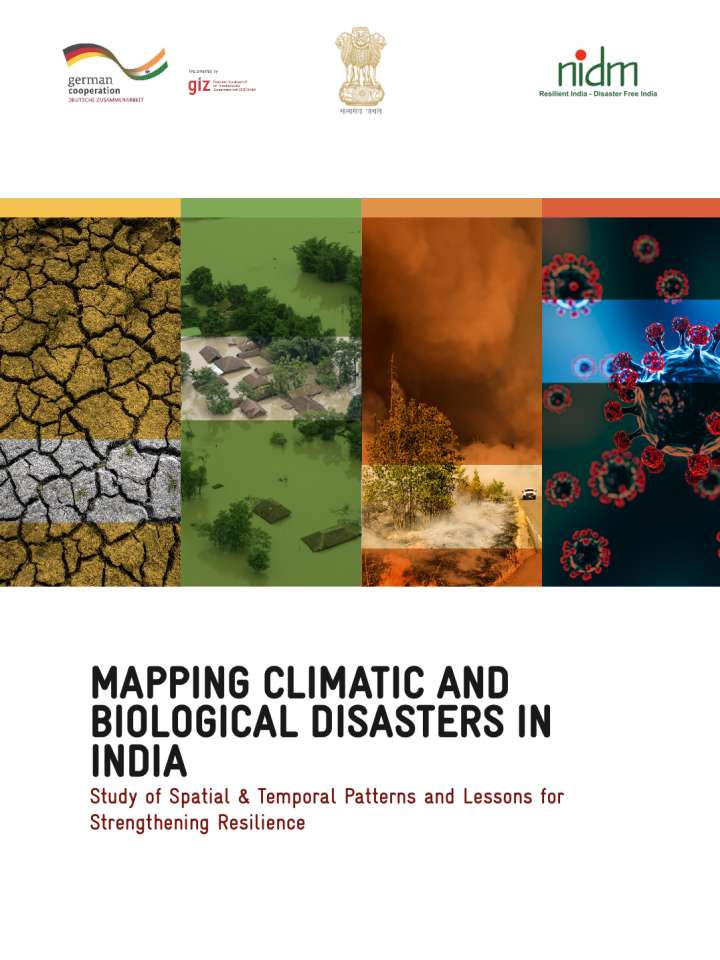
Mapping climatic and biological disasters in India: Study of spatial and temporal patterns and lessons for strengthening resilience
Spatio-temporal mapping of climatic and biological disaster outbreak in India has been undertaken using historical data and scientific tools to explore options to support for relief, recovery, resilience, and adaptation.

Pagination

  • Previous page ‹ Previous
  • Current page 1
  • Page 2
  • Page 3
  • Page 4
  • Next page Next ›

More content for this organization may be available on PreventionWeb or on the site search.

Voluntary Commitments

The organization has no registered commitments.

The Sendai Framework Voluntary Commitments (SFVC) online platform allows stakeholders to inform the public about their work on DRR. The SFVC online platform is a useful toolto know who is doing what and where for the implementation of the Sendai Framework, which could foster potential collaboration among stakeholders. All stakeholders (private sector, civil society organizations, academia, media, local governments, etc.) working on DRR can submit their commitments and report on their progress and deliverables.

Contact information

http://www.nidm.gov.in
[email protected]
+91 1123702432
Fax:
+91 9818997029
Facebook
Twitter

Is this page useful?

Yes No
Report an issue on this page

Thank you. If you have 2 minutes, we would benefit from additional feedback (link opens in a new window).

The International Recovery Platform (IRP) is a global partnership working to strengthen knowledge, and share experiences and lessons on building back better in recovery, rehabilitation, and reconstruction.

Latest IRP videos and photos: YouTube Flickr Contact IRP

Loading