PreventionWeb
Menu

ODI Global

United Kingdom of Great Britain and Northern Ireland
Academic & Scientific

Mission

ODI Global is an independent and trusted think tank, with more than 220 staff, including researchers, communicators and specialist support staff: established in 1960, ODI Global is non-partisan, non-profit and evidence-driven. ODI Global exists to have real impact for those who need it most. This is at the centre of our thinking about what to do, where to go and how we measure our success.

ODI Global is more than a think tank. We are a force for positive change. We lead thinking and agendas to build a more resilient, just and equitable future for all. We work to inspire people to act on injustice and inequality. Through research, convening and influencing, we turn bold ideas, evidence and broad expertise into actionable advice to confront global challenges.

Disaster Reduction Goal

ODI Global is recognised for its pioneering work on disaster risk reduction, loss and damage and disaster risk finance. We have helped shape key international processes, including the Sendai Framework for Disaster Reduction, and its implementation across different countries and contexts, and more recently, the Global Shield against Climate Risks and the Fund for Responding to Loss and Damage.

We also work with governments, agencies, multilateral development banks and funds to scale up resilience and risk finance and support for people who are most at risk from disasters, including those living in fragile and conflict-affected contexts and Small Island Developing States.

We have been generating new evidence for more than 10 years on a wide range of topics in disaster risk reduction: from climate-responsive social protection and anticipatory action, to addressing transboundary climate risks, to building urban resilience and supporting disaster recovery in urban settings, or in places where there is limited support from humanitarian agencies.

DRR activities

Visit the page: Addressing loss and damage, disaster risk reduction and finance.
Show more
Latest additions
Items: 17
Publication
Published on
13 April 2022
‘Building back better’ in the context of multi-hazards in the Caribbean
This paper examines the concept of recovery and ‘building back better’ in the context of the Caribbean, paying particular attention to the experience of the selected countries.
Publication
Published on
26 July 2020
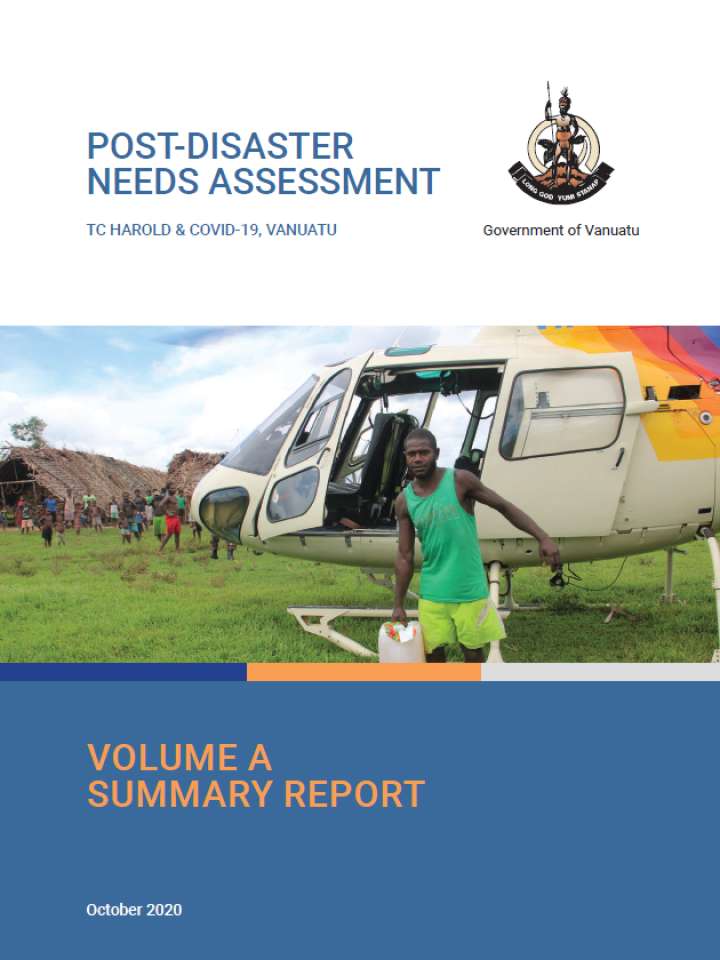
Vanuatu Tropical Cyclone Harold and COVID-19 Post Disaster Needs Assessment
The Vanuatu TC Harold and COVID-19 PDNA estimates the total compound impacts of TC Harold and COVID-19, identifies and quantifies needs across sectors, and supports the development of the Vanuatu Recovery Strategy 2020-2023.
Publication
Published on
17 September 2019
Barriers to urban shelter self-recovery in Philippines and Nepal: Lessons for humanitarian policy and practice
This study draws on the experiences and perspectives of households recovering from Typhoon Haiyan (Philippines 2013) and the Gorkha Earthquake (Nepal 2015). It reflects on challenges faced by households to self-recover from major disasters in urban environments, their interactions with humanitarian agencies, national and local institutions, infrastructures, markets and communities, and the influence of national and local governments’ policies and practices on self-recovery opportunities.
Publication
Published on
18 November 2018
Resilience Scan, January-March 2017: A review of literature, debates and social media activity on resilience
This Resilience Scan summarises writing and debates in the field of resulience during the first quarter of 2017. It comprises an 'expert view' that examines post-disaster recovery.
Publication
Published on
9 August 2018
How does resilience change over time? Tracking post-disaster recovery using mobile phone surveys
Knowing how climate hazards affect people’s resilience over time is crucial in designing more effective development and humanitarian interventions.
Publication
Published on
22 March 2018
Towards a more resilient Caribbean after the 2017 hurricanes
This document summarizes the discussions during a meeting that focused on recovery after the 2017 hurricanes in the Caribbean region.
Publication
Published on
29 January 2018
Building back better: a resilient Caribbean after the 2017 hurricanes
This briefing paper highlights how lessons from history and past recovery can inform decisions around 'building back better' after hurricanes Irma and Maria.  
Meetings and conferences
In person
30 January 2018
London
‘Building back better’: a resilient Caribbean
Description ‘Our devastation is so complete that our recovery has to be total’. This was Prime Minister Roosevelt Skerrit’s response after Hurricane Maria struck Dominica in September 2017.

Pagination

  • Previous page ‹ Previous
  • Current page 1
  • Page 2
  • Page 3
  • Next page Next ›

More content for this organization may be available on PreventionWeb or on the site search.

Voluntary Commitments

The organization has no registered commitments.

The Sendai Framework Voluntary Commitments (SFVC) online platform allows stakeholders to inform the public about their work on DRR. The SFVC online platform is a useful toolto know who is doing what and where for the implementation of the Sendai Framework, which could foster potential collaboration among stakeholders. All stakeholders (private sector, civil society organizations, academia, media, local governments, etc.) working on DRR can submit their commitments and report on their progress and deliverables.

Contact information

https://odi.org/en/
[email protected]
+44 (0)20 7922 0300
LinkedIn

Is this page useful?

Yes No
Report an issue on this page

Thank you. If you have 2 minutes, we would benefit from additional feedback (link opens in a new window).

The International Recovery Platform (IRP) is a global partnership working to strengthen knowledge, and share experiences and lessons on building back better in recovery, rehabilitation, and reconstruction.

Latest IRP videos and photos: YouTube Flickr Contact IRP

Loading