United Nations Office for Project Services (UNOPS)
Mission
UNOPS has been mandated by the United Nations General Assembly to be a central resource for the United Nations system in procurement, contracts management, civil works and physical infrastructure development, including the related capacity development activities.
UNOPS is an operational arm of the United Nations, supporting a range of partners in the implementation of around $1 billion worth of peace-building, humanitarian and development projects in more than 80 countries. UNOPS provides sustainable project management, infrastructure and procurement services that range from managing the construction of roads in Afghanistan to building shelters in Haiti and purchasing pharmaceuticals in Argentina. By managing around 1,000 projects for its partners at any given time, UNOPS makes significant, tangible contributions to results on the ground. A focus on high-quality results is built into the culture of UNOPS, with the economic, social and environmental aspects of sustainability core to its work.
Disaster Reduction Goal
UNOPS aims to create safer communities by expanding the capacity of the UN system, governments and other partners to implement disaster risk reduction activities that systematically build the resilience of nations and communities vulnerable to disasters. To achieve this goal, the organization focuses on infrastructure-based services with community involvement and institutional strengthening.
1. UNDRR and UNOPS have jointly established an interim secretariat of the Santiago network in 2024, made up of a small number of dedicated full-time resources who are fulfilling the role and responsibilities of the secretariat until the Director and permanent secretariat staff are in place.
The Santiago network plays a crucial role in enhancing the delivery of action and support to address climate change impacts in developing countries. It catalyzes technical assistance from various organizations, bodies, networks, and experts (OBNEs) to support developing countries in averting, minimizing, and addressing loss and damage caused by climate change.
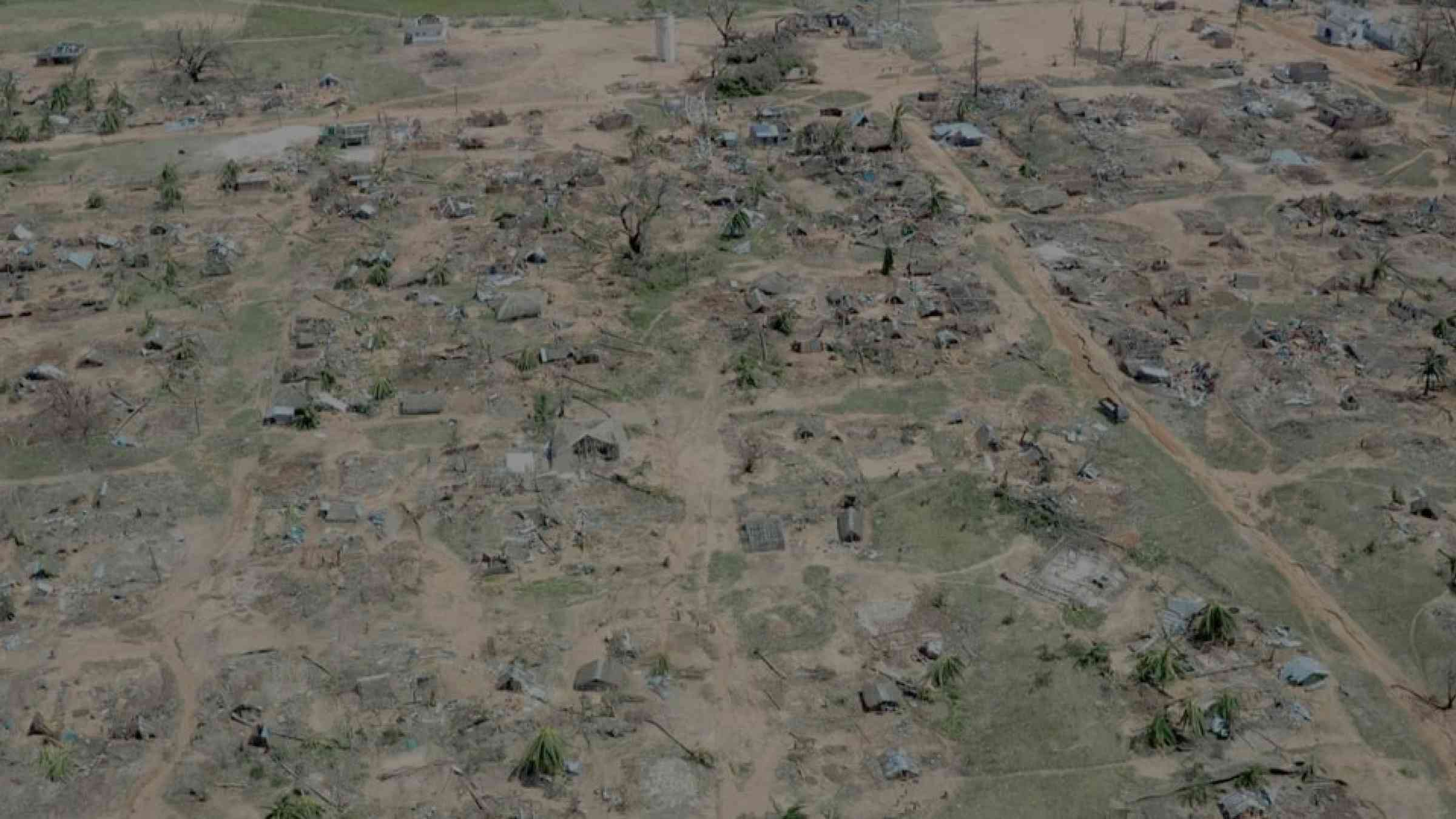
2. With half of our work delivered in fragile and conflict-affected situations in 2024, UNOPS helped partners implement their build back better efforts and better preparedness through strengthening resilience. With a mandate in infrastructure, we continued to provide physical work services, as well as providing advisory and technical assistance. Across the globe, we helped partners better plan, deliver and manage their infrastructure to be more sustainable, resilient and inclusive so the communities can withstand future shocks. Among examples are support for strengthening the national DRR strategy in Brazil, building climate-resilient roads in Yemen, and supporting crisis recovery in Somalia and Afghanistan after the Herat earthquake in 2023.
3. Supported by Germany's Federal Ministry for Economic Cooperation and Development (BMZ), and in collaboration with the GlobalABC and UN-Habitat, UNOPS has developed a practical toolkit to support countries in assessing and identifying key initiatives to decarbonise their buildings and construction sectors. The toolkit, 'Climate Action Roadmaps for Buildings and Construction', consists of step-by-step guidance, including tools and methodologies, that pave the way for countries to establish and implement effective plans, actions and priorities for decarbonising the sector.
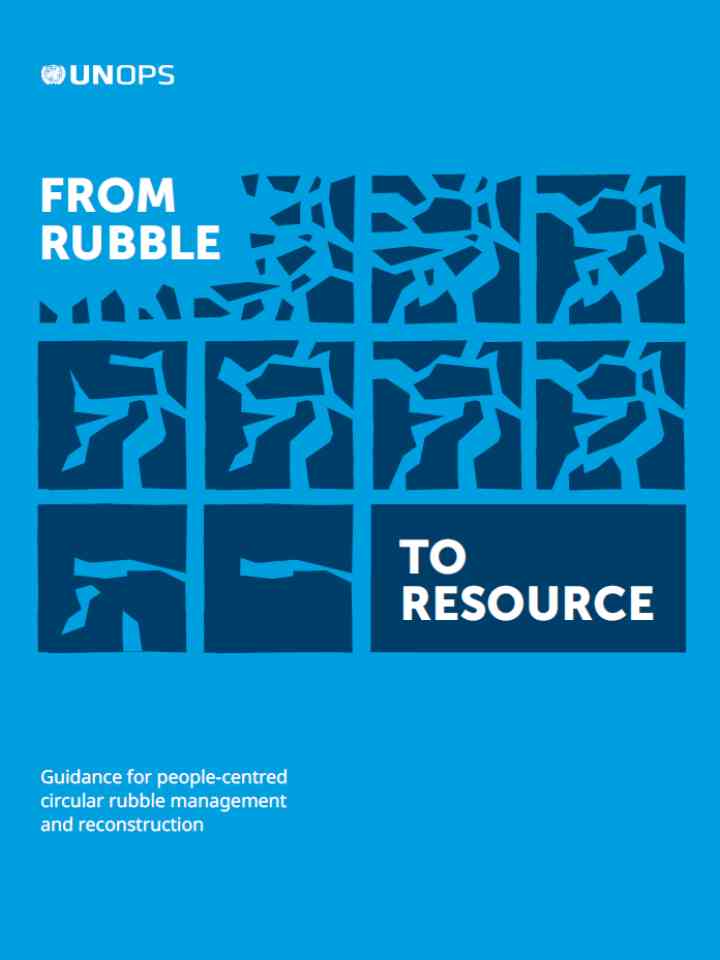
4. UNOPS contributed to the National Circularity Assessment Framework for Buildings, a circularity gap analysis for the buildings sector that helps countries reduce waste and environmental footprint while improving the economic and social impact of construction. This publication was promoted by One Planet Network and developed together with UNEP and UN-Habitat. After being piloted in Senegal and Bangladesh, NCAF is in the upscaling phase. Policies and Programmes in DRR
Highlights of impact since 2011
UNOPS contribution to disaster risk reduction (DRR) is twofold. UNOPS is dedicated to delivering sustainable results, ensuring that whenever possible DRR measures are incorporated in all the projects that it implements. Moreover, the organization uses its experience in both structural resilience building (e.g. resilient infrastructure services based on sound risk assessments) and non-structural resilience building (e.g. early warning systems, community participation and training) to function as a relevant implementing partner for specific infrastructure-based DRR services.
In relation to HFA priority 4 (reduce the underlying risk factors) UNOPS has developed a sustainable infrastructure policy, which reflects its commitment to ensuring that all of its work adheres to and promotes the highest possible international standards and quality. UNOPS has managed the design and construction of infrastructure projects such as schools, roads, bridges and hospitals to the highest standards, able to withstand extreme weather events.
UNOPS has also supported HFA priorities 2 and 5, by helping several partner countries monitor and prepare for recurring natural hazards, ranging from keeping mountain passes cleared of snow in Afghanistan, with funding from Japan, to supporting seismic monitoring in Argentina, for the Government.
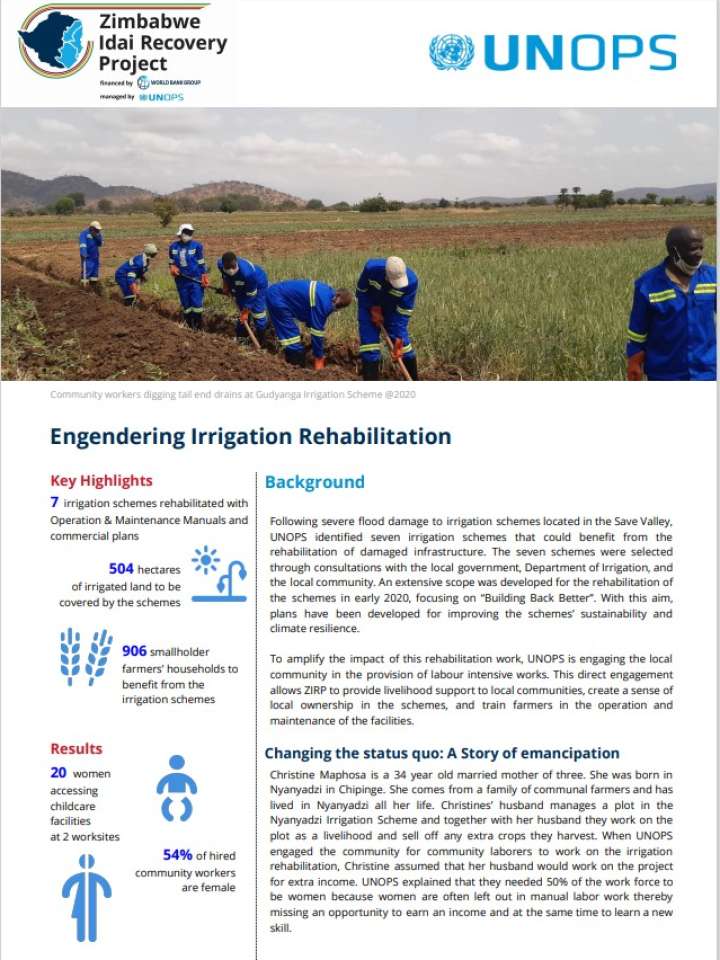
Moreover, UNOPS supports HFA priorities 3 and 5 through capacity development and community awareness activities. In 2011, almost 90 per cent of its projects concerning natural disasters included elements that focused on developing national capacity of communities, labourers or institutions. The organization has managed the direct training of more than 170,000 people to help build the resilience of communities to natural hazards. In Afghanistan for example, villagers of both sexes were taught how to limit flooding by building retaining walls in projects that supported gender empowerment and gave villagers a marketable skill, on behalf of the governments of Italy and Japan.
Membership in Key Networks
Inter-Agency Group (IAG)
Disaster Reduction Focal Point(s)


Voluntary Commitments
The Sendai Framework Voluntary Commitments (SFVC) online platform allows stakeholders to inform the public about their work on DRR. The SFVC online platform is a useful toolto know who is doing what and where for the implementation of the Sendai Framework, which could foster potential collaboration among stakeholders. All stakeholders (private sector, civil society organizations, academia, media, local governments, etc.) working on DRR can submit their commitments and report on their progress and deliverables.