PreventionWeb
Menu
PDNA - Post Disaster Needs Assessments

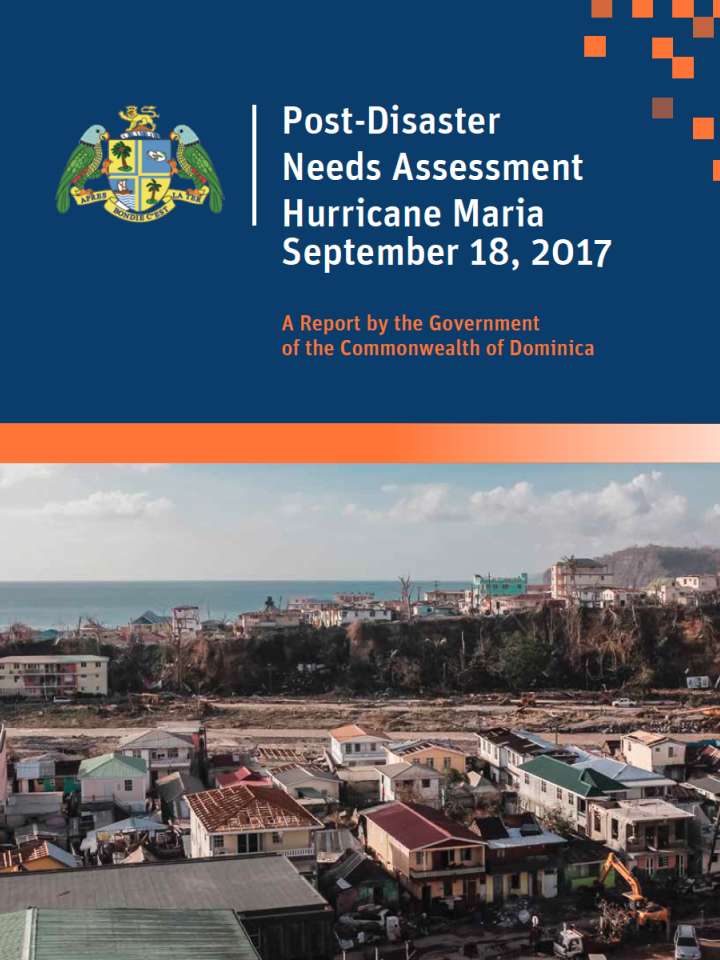
Post-Disaster Needs Assessment Hurricane Maria September 18, 2017, Commonwealth of Dominica

Source
Dominica - government
Global Facility for Disaster Reduction and Recovery, the (GFDRR)
United Nations Development Programme (UNDP)

On September 18, 2017, Hurricane Maria hit Dominica, bringing intense rainfall which caused flashfloods and landslides. Hurricane Maria was one of the most rapidly intensifying storms in recent history, intensifying to a category 5 hurricane.

The impacts of Hurricane Maria were severe for both the country’s economy as well as the human development of its citizens. As of November 8, 2017, 30 persons had lost their lives as a result of Hurricane Maria (26 identified and 4 unidentified), and 34 were declared missing. A significant proportion of the labor force is unemployed as an immediate consequence of Maria, with estimates that the decline in the production of goods and services may continue for one to two years.

The PDNA report covers the damage, losses, and recovery needs across various sectors following the disaster. A recovery strategy and summary of identified priority actions for recovery is included in the report.
Download

Hurricane Maria 2017 Dominica Post-Disaster Needs Assessment.pdf PDF, 2.2 MB English

Last checked: 10 February 2022

Explore further

Hazards Cyclone, Hurricane and Typhoon
Themes Capacity development Governance Data and information management Livelihood Recovery Recovery planning Small Island Developing States (SIDS) Social impacts and social resilience
Country and region Dominica
Dominica 2017 pdna
Number of pages
143 p.
Publication year
2017

Also featured on

PreventionWeb

Is this page useful?

Yes No
Report an issue on this page

Thank you. If you have 2 minutes, we would benefit from additional feedback (link opens in a new window).

The International Recovery Platform (IRP) is a global partnership working to strengthen knowledge, and share experiences and lessons on building back better in recovery, rehabilitation, and reconstruction.

Latest IRP videos and photos: YouTube Flickr Contact IRP

Loading