PreventionWeb
Menu
PDNA - Post Disaster Needs Assessments

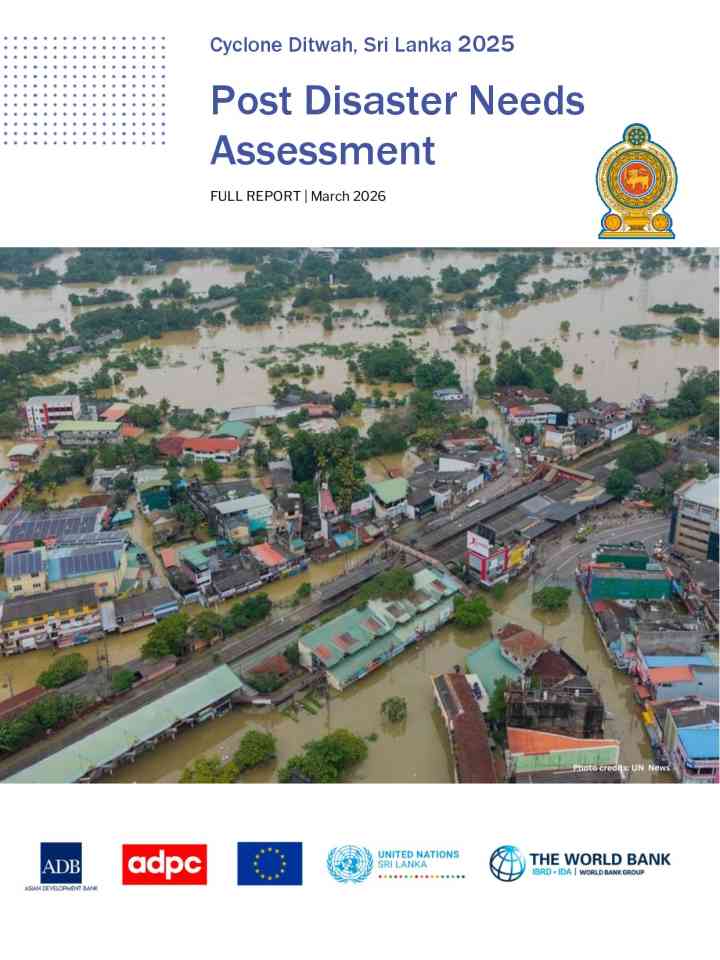
Post-Disaster Needs Assessment (PDNA) Report: Cyclone Ditwah, Sri Lanka 2025

Source
Asian Development Bank (ADB)
Asian Disaster Preparedness Center
World Bank, the

This is a comprehensive assessment that will guide Sri Lanka's recovery and reconstruction efforts following one of the most devastating disasters in its recent history. Developed under the Government-led "Rebuilding Sri Lanka" Presidential Task Force, the PDNA Report provides a comprehensive analysis of damages, losses, and recovery needs across 22 severely affected districts. The assessment establishes a robust evidence base to support recovery planning, prioritization of interventions, and resource mobilization for resilient reconstruction.

The publication of the PDNA Report also supports the Government's broader national recovery programme, "Rebuilding Sri Lanka," a comprehensive initiative designed to coordinate recovery, reconstruction, and resilience-building efforts in the aftermath of Cyclone Ditwah.
Download

Post-Disaster Needs Assessment (PDNA) Report: Cyclone Ditwah, Sri Lanka 2025 PDF, 4.4 MB English

Last checked: 3 June 2026

Editors' recommendations

  • Sri Lanka country climate and development report
  • Sri Lanka Rapid Post Disaster Needs Assessment, Floods and Landslides, May 2017
  • Community rapid assessment report: the impact of Cyclone Ditwah on persons with disabilities in Sri Lanka 2025-2026
  • Global Rapid Post-Disaster Damage Estimation (GRADE) report: Cyclone Ditwah 2025, Sri Lanka

Explore further

Themes Recovery
Country and region Sri Lanka
Post-Disaster Needs Assessment (PDNA) Report: Cyclone Ditwah, Sri Lanka 2025 thumbnail
Number of pages
195 p.
Publication year
2026

Also featured on

PreventionWeb

Is this page useful?

Yes No
Report an issue on this page

Thank you. If you have 2 minutes, we would benefit from additional feedback (link opens in a new window).

The International Recovery Platform (IRP) is a global partnership working to strengthen knowledge, and share experiences and lessons on building back better in recovery, rehabilitation, and reconstruction.

Latest IRP videos and photos: YouTube Flickr Contact IRP

Loading