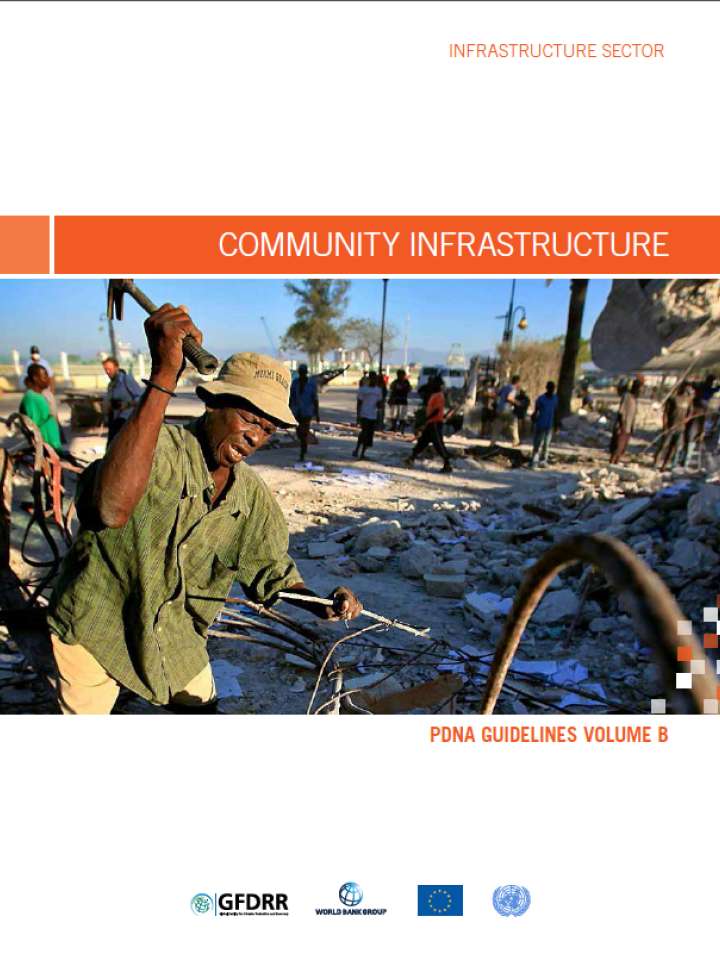
These guides support a consistent and coherent approach to the post-disaster assessment, provide an objective and comprehensive estimate of recovery needs, while facilitating quick decision-making and action
This document, Guidelines for Assessing the Human Impact of Disasters, has been developed as part of the PDNA guidelines, and similarly follows a people-centred, human-recovery approach.
This guide explains how to conduct a PDNA in Conflict Situations, and complements existing guidelines developed by the tripartite partnership to support post-disaster needs assessments and recovery planning.
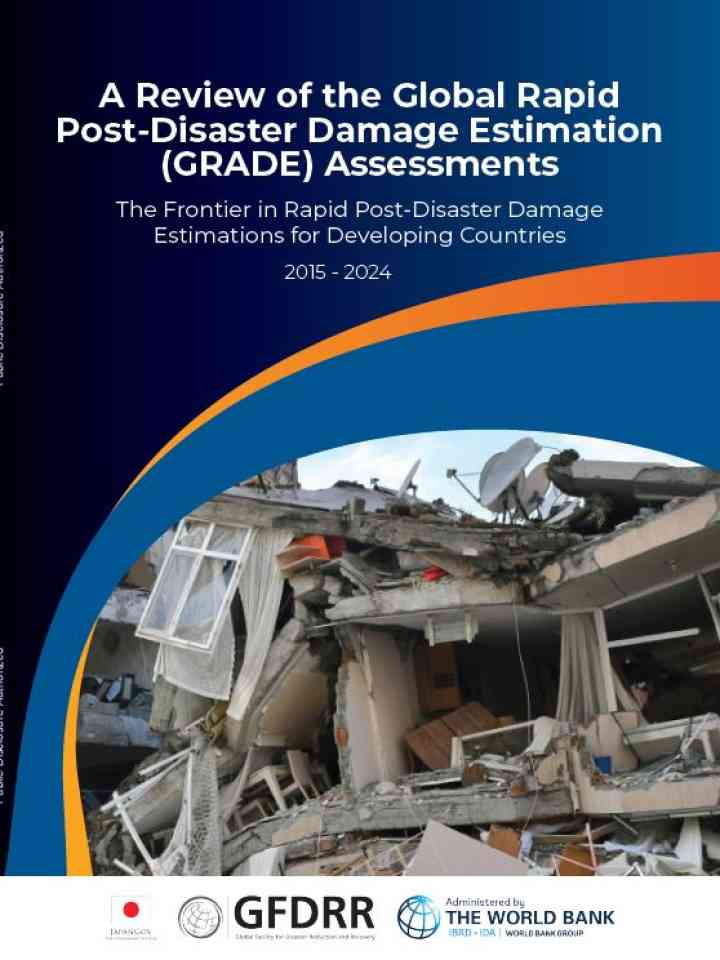
This Post-Disaster Needs Assessment (PDNA) review is the first instance of the participating institutions assessing the demonstrated effectiveness of PDNAs as the practice has evolved over the 55 post-disaster assessments conducted since 2008.
World Bank, the
United Nations Development Programme (UNDP)
European Commission
Global Facility for Disaster Reduction and Recovery, the (GFDRR)
This section of the PDNA Handbook describes the manner in which macroeconomic disaster impact may be estimated on based on quantification of the destruction of assets and disruption of socio-economic activities caused by disasters of any kind and origin.
World Bank, the
Global Facility for Disaster Reduction and Recovery, the (GFDRR)
This Post-Disaster Needs Assessment (PDNA) guidance supports DRR assessment from a broader perspective for recovery planning and response, focusing on DRR and BBB-related policies, institutions, practices that are not covered by other sectoral assessments
World Bank, the
Global Facility for Disaster Reduction and Recovery, the (GFDRR)
This guidance complements the Volume A Guidelines of the PDNA methodology, and aims to assist in carrying out a PDNA of culture sector in order to conduct an integrated assessment of the impacts of disaster effects on the sector.
Global Facility for Disaster Reduction and Recovery, the (GFDRR)
This chapter is part of the PDNA Guidelines Volume B for the Productive Sector. It provides guidance for those working in the Agricultural Sector on conducting a post-disaster needs assessment.
Global Facility for Disaster Reduction and Recovery, the (GFDRR)
This tool represents a harmonized and coordinated approach, providing for an objective, comprehensive and government-led assessment of the post disaster damages, losses and recovery needs, and paving the way for a consolidated recovery framework.
World Bank, the
European Commission
United Nations Development Group
Global Facility for Disaster Reduction and Recovery, the (GFDRR)
This study evaluates how attention mechanisms and explainable AI (XAI) techniques can improve the reliability and interpretability of deep learning models for post-disaster building damage assessment using satellite imagery.
International Journal of Disaster Risk Reduction (Elsevier)
This entry explains the concept, methodology, and importance of post-disaster damage and needs assessment (PDNA) in supporting effective recovery, reconstruction, and disaster risk reduction.
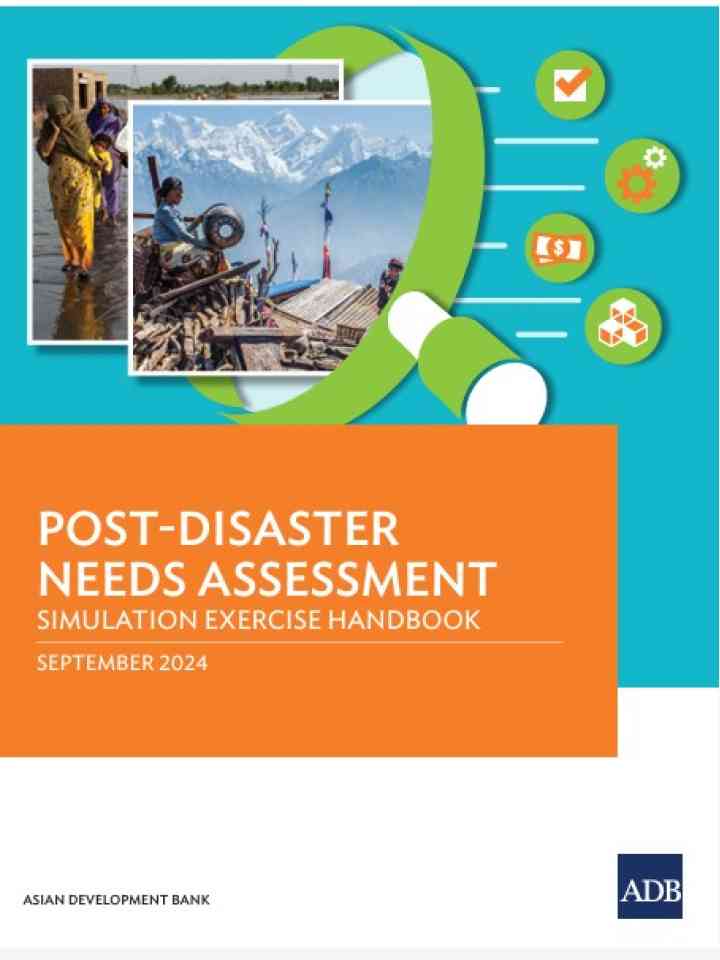
Designed to walk ADB staff through a Post-Disaster Needs Assessment simulation, this handbook outlines training schedules, introduces methodologies, and provides practical exercises to identify and analyze the broad impacts of a disaster.
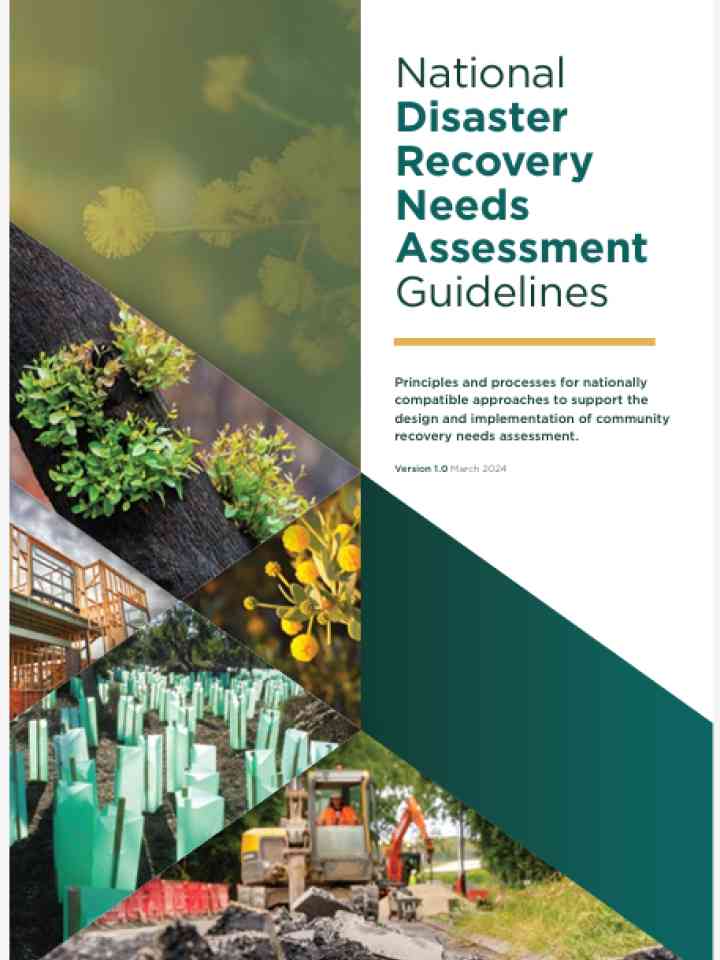
In partnership the Community Outcomes and Recovery Sub-committee, Queensland Reconstruction Authority and the National Emergency Management Agency developed the National Disaster Recovery Needs Assessment Guidelines.
The guidelines are a set of documents for assessing the effects and impacts of disasters, as well as providing a methodology for planning for the disaster recovery.