PreventionWeb
Menu

Save the Children International

SCI
United Kingdom of Great Britain and Northern Ireland
Non Governmental Organizations

Mission

Save the Children is the world's leading independent organization for children. Our vision is a world in which every child attains the right to survival, protection, development and participation. Our mission is to inspire breakthroughs in the way the world treats children and to achieve immediate and lasting change in their lives.

Disaster Reduction Goal

Save the Children seeks to ensure that children’s needs and capacities are considered in how people mitigate risk, prepare for, react to and recover from disasters and adapt to long-term trends. We work to make this happen at all levels by building partnerships and collaborating with children, communities, civil society, local and national governments, and regional and international organisations. Governments as primary duty bearers have the main responsibility for the implementation of the post 2015 DRR framework, and we support them in it.

Save the Children integrates risk reduction and resilience building into sector based programming “full spectrum”; meaning that it is considered in both development and humanitarian contexts. It is crucial that we reduce risk where we can. When this is not possible, it is crucial that we build resilience in high-risk areas before disaster strikes, so that the communities we work with are better able to manage the challenges during crises and recover quickly.

DRR activities
Websites

http://resourcecentre.savethechildren.se
Show more
Latest additions
Items: 38
Publication
Published on
30 June 2014
Recovery Analysis for Urban and Peri-Urban Coastal Zones in Eastern Leyte
This assessment was carried out just over six months on from Typhoon Yolanda and it concludes with a summary of recommendations for recovery programming.
Publication
Published on
30 April 2014
Are we there yet? Children’s views on Haiyan recovery and the road ahead
One year on from Typhoon Haiyan (local name Yolanda), this report is based on consultations with 162 children who survived the storm, ages 6 to 17 years.
Publication
Published on
13 February 2014
See me, ask me, hear me: children’s recommendations for recovery three months after Typhoon Haiyan
This document reports on children's experiences during the typhoon Haiyan that hit the Philippines on 8 November 2013, and about their recommendations for response and assistance.
Publication
Published on
2 October 2013
Localising the humanitarian toolkit: lessons from recent Philippines disasters
This paper explores some of the issues highlighted by recent disaster responses in the Philippines, with a focus primarily on Tropical Storm Washi in 2011 and Typhoon Bopha in 2012.
Publication
Published on
2 August 2013
Japan: two years on - Save the Children’s response and recovery program
This document reports on the recovery efforts led by Save the Children in Japan. The report is comprised of four sections: (i) the first section of the report touches on their community grants initiative, their work with child-participation in disaster risk reduction, and their work to mitigate the effects on children of the Fukushima disaster; (ii) the second section contains success stories of their work in recovery; (iii) the third section outlines ideas for the future of their work in Japan; (iv) and section four explains the financial resources of the organization.
Publication
Published on
23 May 2013
Towards the resilient future children want: a review of progress in achieving the Children’s Charter for Disaster Risk Reduction
This report aims to respond to the question of how the five priorities for disaster risk reduction (DRR), identified by children from 21 hazard-prone countries in the Children’s Charter for DRR, can be achieved, exploring the enabling factors and
Publication
Published on
27 November 2012
Comprehensive school safety: a toolkit for development and humanitarian actors in the education sector
This toolkit is intended for education sector planners, policy-makers and program developers as well as humanitarian assistance providers, and advocates of universal education.
Publication
Published on
31 May 2012
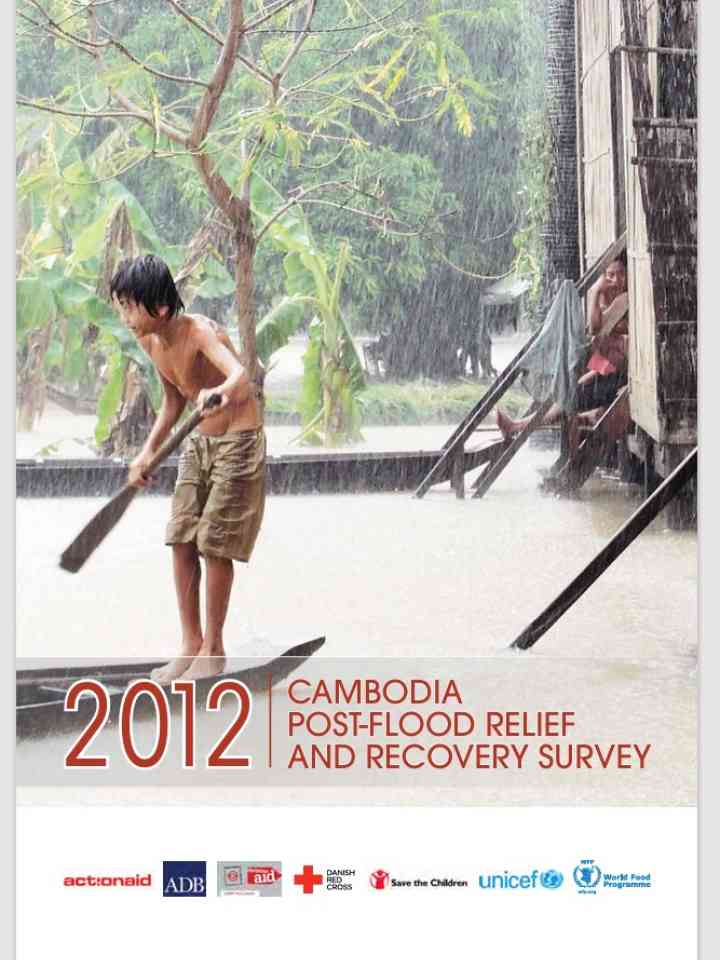
Cambodia - Post-Flood Relief and Recovery Survey, May 2012
This document aims to assess the impact of the floods on households, including their characteristics, effects on agriculture, financial terms of loans, and recommendations for effective communication and emergency response strategies.

Pagination

  • Previous page ‹ Previous
  • Page 1
  • Page 2
  • Current page 3
  • Page 4
  • Page 5
  • Next page Next ›

More content for this organization may be available on PreventionWeb or on the site search.

Voluntary Commitments

The organization has no registered commitments.

The Sendai Framework Voluntary Commitments (SFVC) online platform allows stakeholders to inform the public about their work on DRR. The SFVC online platform is a useful toolto know who is doing what and where for the implementation of the Sendai Framework, which could foster potential collaboration among stakeholders. All stakeholders (private sector, civil society organizations, academia, media, local governments, etc.) working on DRR can submit their commitments and report on their progress and deliverables.

Contact information

http://www.savethechildren.net
[email protected]
+258-1 31 30 26
Fax:
+258-1 31 30 26

Is this page useful?

Yes No
Report an issue on this page

Thank you. If you have 2 minutes, we would benefit from additional feedback (link opens in a new window).

The International Recovery Platform (IRP) is a global partnership working to strengthen knowledge, and share experiences and lessons on building back better in recovery, rehabilitation, and reconstruction.

Latest IRP videos and photos: YouTube Flickr Contact IRP

Loading