PreventionWeb
Menu

United Nations - Headquarters

UN
United States of America
UN & International Organizations

Mission

In 1945, representatives of 50 countries met in San Francisco at the United Nations Conference on International Organization to draw up the United Nations Charter. The Organization officially came into existence on 24 October 1945, when the Charter had been ratified by China, France, the Soviet Union, the United Kingdom, the United States and a majority of other signatories. United Nations Day is celebrated on 24 October.

The purposes of the United Nations, as set forth in the Charter, are to maintain international peace and security; to develop friendly relations among nations; to cooperate in solving international economic, social, cultural and humanitarian problems and in promoting respect for human rights and fundamental freedoms; and to be a centre for harmonizing the actions of nations in attaining these ends.

The UN Office for Disaster Risk Reduction (UNDRR) was established in 1999 to facilitate the implementation of the International Strategy for Disaster Reduction (ISDR). It was created to be the focal point in the United Nations system for the coordination of disaster risk reduction, and ensures synergies among the relevant activities of United Nations agencies and regional organisations, and related activities in socio-economic and humanitarian fields.
Show more
Latest additions
Items: 54
Publication
Published on
10 February 2011
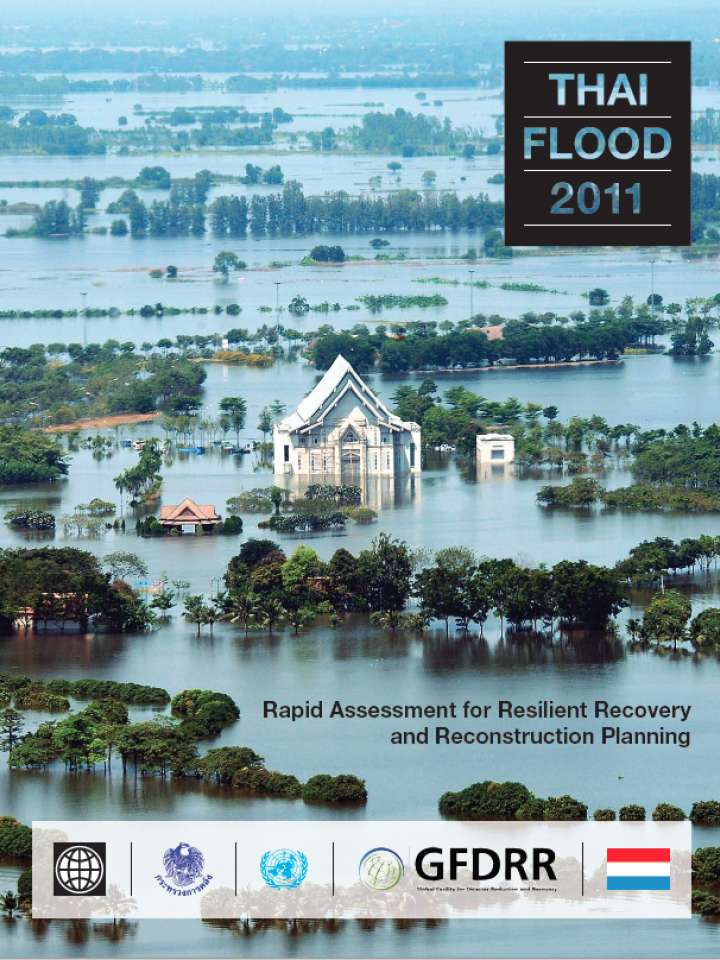
2011 Thailand Floods - Rapid Assessment for Resilient Recovery and Reconstruction Planning
This report outlines the damage and loss estimates, social and economic impacts, and proposed strategies for resilient recovery and reconstruction planning in the aftermath of the 2011 Thailand Floods.
Publication
Published on
9 February 2011
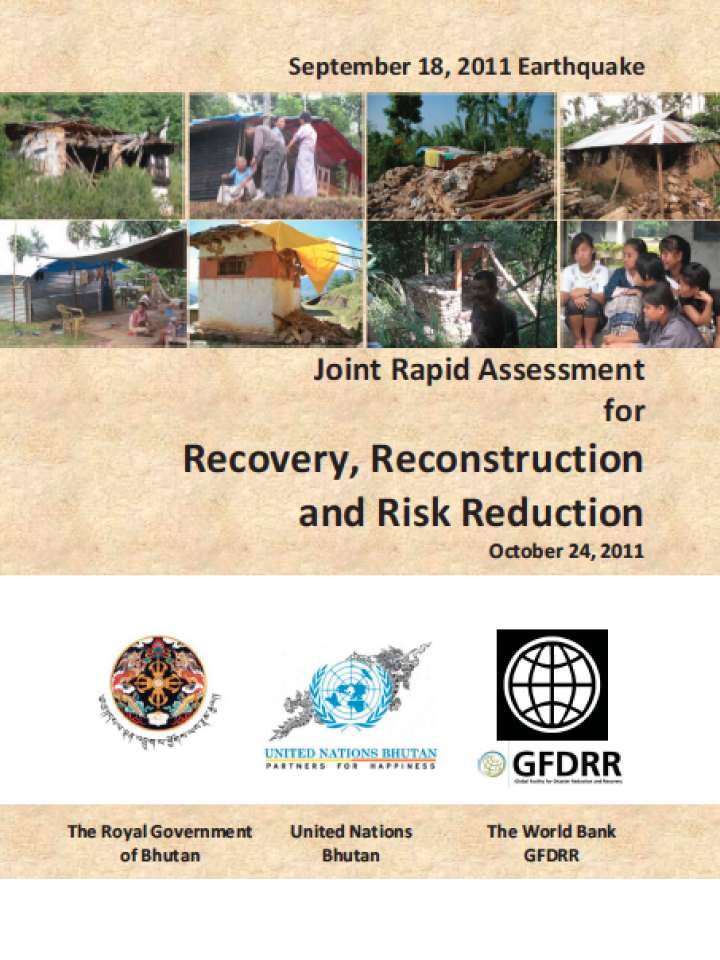
2011 Bhutan Earthquake- Joint Rapid Assessment for Recovery, Reconstruction and Risk Reduction
This Joint Rapid Assessment presents an assessment of the damage and loss following the 2011 earthquake in Bhutan. A framework for early recovery, reconstruction, and disaster risk reduction is also presented in the latter section of this Assessment.
Publication
Published on
22 June 2010
Haiti interim risk management plan: March–December 2010
Haiti 2010 earthquake response: seismic, geological and building hazards:
Publication
Published on
25 March 2010
Renewing hope, rebuilding lives: partnership between the United Nations and the European Commission in post-crisis recovery
This document focuses on the joint United Nations-European Union support to countries recovering from natural disasters or conflict, which aims to rebuild not only lives and livelihoods, but also people’s hopes and aspirations for a better future.
Publication
Published on
16 March 2010
Building community resilience to natural disasters through partnership: sharing experience and expertise in the region
Discussion paper of the project:
Publication
Published on
6 December 2009
2009 Floods in Burkina Faso - Assessment of damage, losses, reconstruction and recovery needs
This post-disaster needs assessment provides estimates of the damages and losses, and the costs for reconstruction and recovery following the 2009 floods in Burkina Faso. 
Publication
Published on
26 November 2009
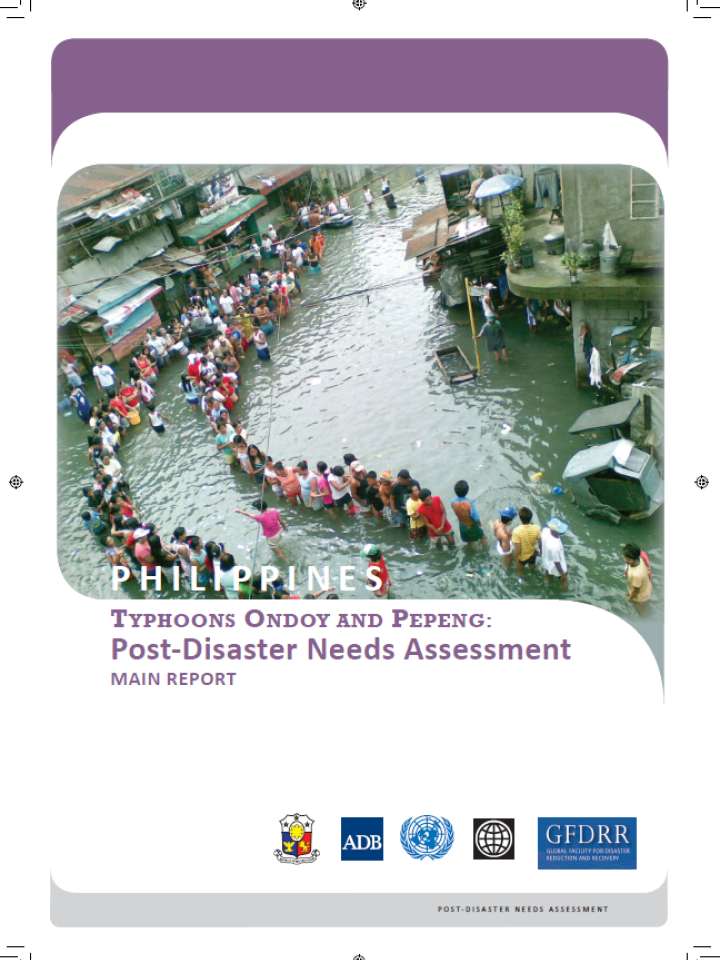
Typhoons Ondoy and Pepeng: Post-Disaster Needs Assessment
This Post-Disaster Needs Assessment analysis covers damages, losses, and economic and social impacts from Ondoy and Pepeng, providing a basis for determining recovery and reconstruction needs.
Publication
Published on
26 November 2009
Cambodia Post-Ketsana Disaster Needs Assessment
The Post-Disaster Needs Assessment (PDNA) evaluates the damages and losses from the impacts of Typhoon Ketsana, and addresses needs for recovery, resilient reconstruction and sustainable restoration of livelihoods of the affected population.

Pagination

  • Previous page ‹ Previous
  • Page 1
  • Page 2
  • Page 3
  • Page 4
  • Current page 5
  • Page 6
  • Page 7
  • Next page Next ›

More content for this organization may be available on PreventionWeb or on the site search.

Voluntary Commitments

The organization has no registered commitments.

The Sendai Framework Voluntary Commitments (SFVC) online platform allows stakeholders to inform the public about their work on DRR. The SFVC online platform is a useful toolto know who is doing what and where for the implementation of the Sendai Framework, which could foster potential collaboration among stakeholders. All stakeholders (private sector, civil society organizations, academia, media, local governments, etc.) working on DRR can submit their commitments and report on their progress and deliverables.
UN Logo

Contact information

http://www.un.org/
Facebook
LinkedIn
Twitter
YouTube

Is this page useful?

Yes No
Report an issue on this page

Thank you. If you have 2 minutes, we would benefit from additional feedback (link opens in a new window).

The International Recovery Platform (IRP) is a global partnership working to strengthen knowledge, and share experiences and lessons on building back better in recovery, rehabilitation, and reconstruction.

Latest IRP videos and photos: YouTube Flickr Contact IRP

Loading