From tragedy to resiliency: A journey from the 2006 Guinsaugon Landslide
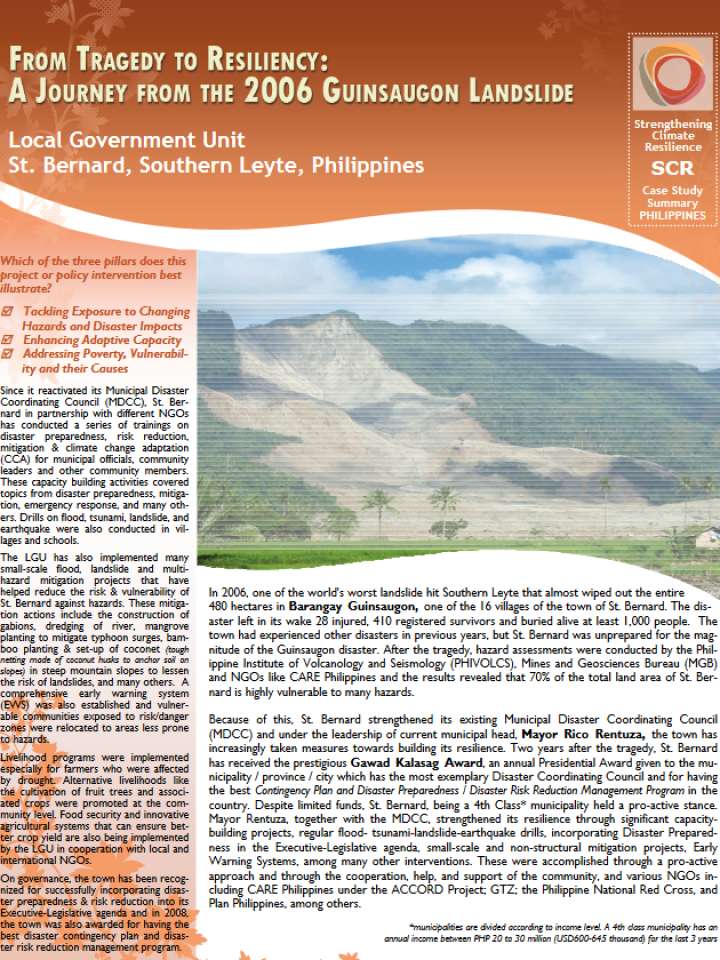
This case study focuses on the recovery experience of St. Bernard, Southern Leyte, Philippine, in the wake of the 2006 Southern Leyte Landslide. One of the deadliest landslides in recent history, the Southern Leyte Landslide was triggered by heavy rains that caused flooding and mudslides, burying the entire village, killing an estimated 1,420 people.
The case study highlights the lessons learned from the town's implementation of disaster risk reduction and climate change adaptation activities. The case study identifies multi-sectoral participation and listening to the voice of the most vulnerable as key factors in St. Bernard's success in building resilience to disasters. During the formulation of the Barangay Development Planning, active participation from all sectors in the community was solicited, and the voice of the most vulnerable was given priority. The case study also provides resources for further information on the SCR programme and the St. Bernard experience.
Explore further