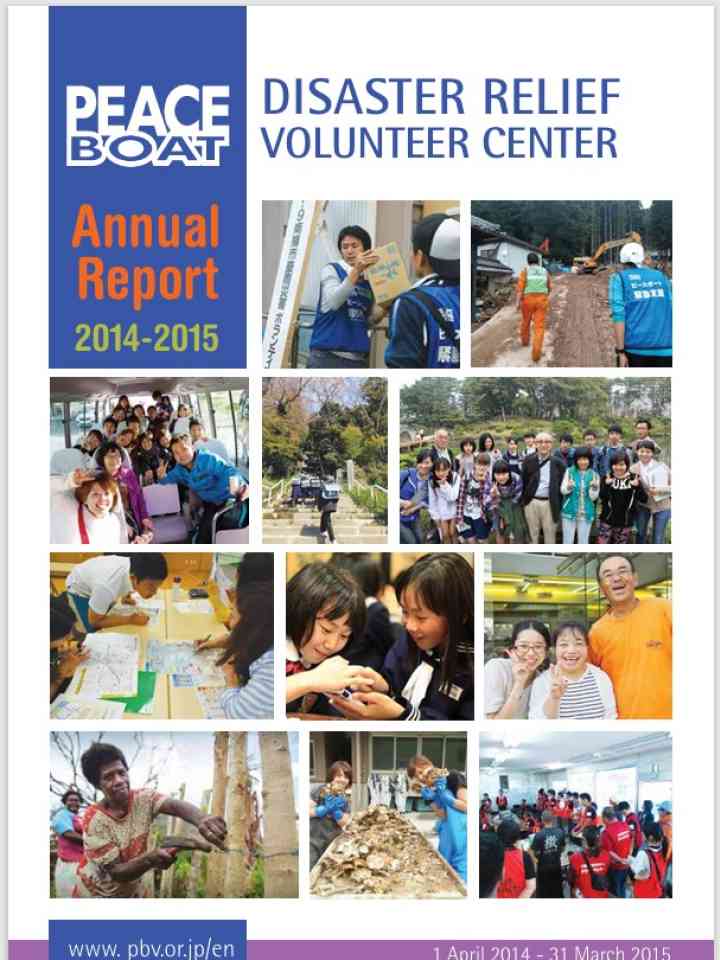
Peace Boat Disaster Relief Volunteer Center (PBV) Annual Report (April 2014 – March 2015)
Four years on from the Great East Japan Earthquake and Tsunami, reconstruction is well underway, including the construction of the bridge between the urban and port areas of Ishinomaki, and the seawalls along the banks of the Kyu-Kitagawa River, which were heavily damaged by the tsunami. Along with this rebuilding of infrastructure, residents of temporary houses who were displaced by the disaster are gradually transitioning into newly built public housing facilities. In neighboring Onagawa, much of the land surface has been raised in order to protect the town from future tsunamis, and the long-awaited rebuilding of the railway connecting Ishinomaki and Onagawa has been completed. The newly built Onagawa train station serves as a symbol of progress and marks a significant milestone for the recovery of the area.
Despite this kind of progress, many areas still face a number of challenges, including depopulation, a rapidly ageing population, low birth rates, and a decline in industries. Disasters Occurring on a Frequent Basis Many important lessons were learnt from the Great East Japan Earthquake. It is crucial that these first-hand experiences and lessons are shared, so that communities can prepare themselves better for the next disaster. Rural communities struck by disasters are often disproportionately affected if they lack resources (especially people) to help one another. When disaster-related damage exceeds coping capacity, volunteers from external areas play a major role in providing vital support. This highlights the increasing importance of working together and offering mutual support in times of crises.
Explore further