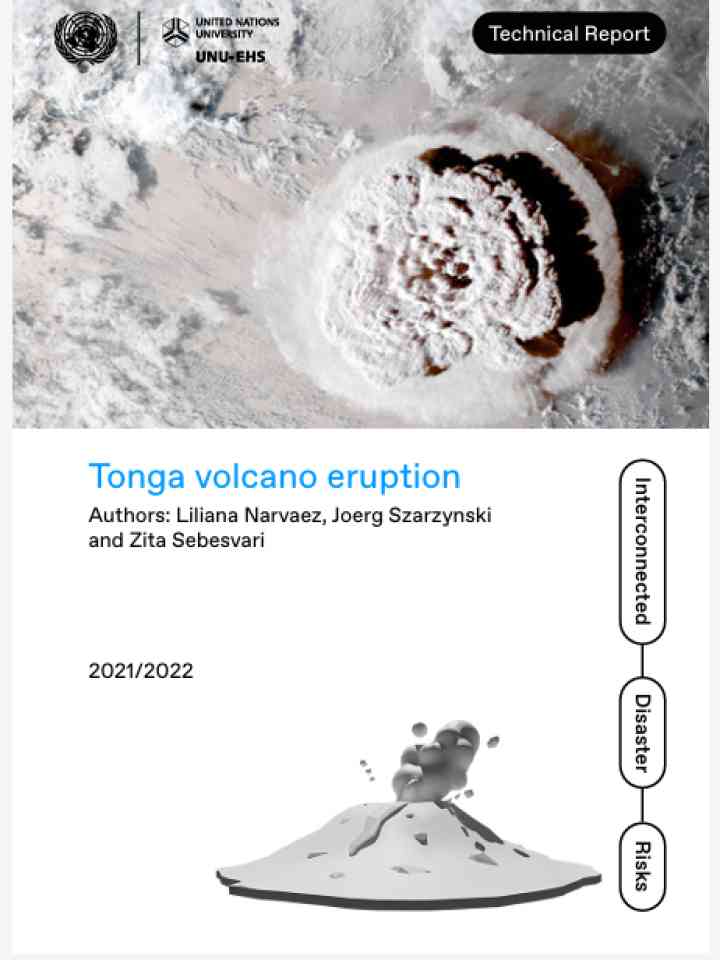
The report documents the impacts of the Hunga Tonga–Hunga Haʻapai submarine volcanic eruption, which caused widespread disruption across Tonga through ashfall, tsunami waves, and shockwaves. The event severely affected communication systems, water supply, housing, coastal infrastructure, and livelihoods, particularly in low-lying and outer island communities. The assessment situates the eruption as a rare but high-impact geological disaster with cascading effects across multiple sectors.
Using post-disaster assessments, sectoral damage reviews, and government and partner inputs, the report details the scale of physical damage and service disruption. It highlights contamination of freshwater supplies due to volcanic ash, damage to crops and fisheries, loss of housing and community facilities, and interruptions to transport and telecommunications. The report also notes the compounding challenges faced by Tonga as a Small Island Developing State, including geographic isolation and limited redundancy in critical infrastructure systems.
The report emphasizes recovery priorities focused on restoring essential services, strengthening disaster preparedness, and integrating resilience into reconstruction efforts. It underscores the importance of multi-hazard risk management, improved early warning systems, and regional and international cooperation to address future volcanic and tsunami risks. Overall, the document supports informed recovery planning and long-term resilience building in the face of complex geological hazards.
Explore further