PreventionWeb
Menu

United Nations Economic and Social Commission for Asia and the Pacific (UN-ESCAP)

UN-ESCAP
UN & International Organizations

Mission

ESCAP is the regional development arm of the United Nations for the Asia-Pacific region. With a membership of 62 Governments, 58 of which are in the region, and a geographical scope that stretches from Turkey in the west to the Pacific island nation of Kiribati in the east, and from the Russian Federation in the north to New Zealand in the south, ESCAP is the most comprehensive of the United Nations five regional commissions.

DRR activities

1. Subregional Risk Analysis and Localized Early Warning Action Plans: In 2024, ESCAP launched the Asia-Pacific Disaster Report - Subregional Editions, providing localized climate risk diagnostics and early warning gaps across five subregions. These analyses support national planning and risk-informed development strategies.

ENEA - https://shorturl.at/sY9IN NCA - https://shorturl.at/T6nLZ SEA - https://shorturl.at/6wcLI SSWA - https://shorturl.at/i53Qu Pacific - https://shorturl.at/WLaxs

2. Strengthening Early Warning for All (EW4All) Through Regional Cooperation To operationalize the UN Secretary-General's Early Warnings for All initiative, ESCAP expanded and customized the Asia Pacific Risk and Resilience Portal to function as a decision-support tool for national and subnational stakeholders. The Portal integrates high-resolution data on hazards, exposure, and infrastructure with user-uploadable layers, enabling rapid, location-specific risk assessments. In countries like Tajikistan, the Portal has supported implementation of Sendai Priority 1 (risk knowledge) by localizing climate risk information, and Priority 2 (governance) by aligning national actors on early warning gaps across all four EW4All pillars. Its impact-based forecasting features further support real-time monitoring and Pillar 2 (observation and forecasting), helping countries strengthen preparedness and anticipatory action systems.

3. ESCAP Multi-Donor Trust Fund for Tsunami, Disaster and Climate Preparedness Report Since 2005, the ESCAP Multi-Donor Trust Fund for Tsunami, Disaster and Climate Preparedness has served as a regional mechanism to strengthen early warning systems in the Indian Ocean and beyond. In 2024, under this Trust Fund, ESCAP released the policy report Tsunami Preparedness Within a Multi-Hazard Context, which assessed the exposure of over 20 million people and $203 billion in critical infrastructure across 13 Indian Ocean countries.

The report catalyzed regional dialogue on aligning tsunami early warning systems with broader climate adaptation and multi-hazard frameworks, reinforcing the Trust Fund's value in advancing Sendai Priority 1 (understanding disaster risk) and Priority 4 (enhancing preparedness for effective response). It also spotlighted gaps in localized risk knowledge, last-mile communication, and inclusive preparedness, offering evidence-based recommendations to strengthen tsunami risk governance and integrate it into national and regional resilience strategies

4. Joining the Santiago Network on Loss and Damage ESCAP officially joined the Santiago Network as a technical organization supporting loss and damage efforts, bringing its analytical capacity and regional platform to assist vulnerable countries in accessing expertise, data, and financing to address climate-induced disasters.

5. Advancing Science-Based Policy for the Third Pole Region In response to escalating glacial melt risks, ESCAP facilitated multi-country collaboration through the Third Pole Climate Forum, promoting early warning systems and regional water governance for transboundary river basins such as the Ganges, Brahmaputra, and Mekong. This work directly benefits over 1.3 billion people across South and Central Asia.[SS1]

Trust Fund for Tsunami, Disaster and Climate Preparedness

The Trust Fund for Tsunami, Disaster and Climate Preparedness was established by ESCAP in 2005. The destructive Indian Ocean Tsunami that occurred in December 2004 stressed the need for an effective regional disaster preparedness mechanism in the Indian Ocean and Southeast Asia. The Trust Fund contributes to narrowing the capacity gaps in the region and ensures the development of an integrated regional early warning system.

Contact: [email protected]

Access the website

Show more
Latest additions
Items: 15
Meetings and conferences
Online
27 March 2023 - 30 March 2023
Bangkok
Asia-Pacific Forum on Sustainable Development 2023
The Forum provides a regional perspective on the implementation of the 2030 Agenda by identifying regional trends and consolidating and sharing best practices and lessons learned.
Meetings and conferences
Online
30 June 2022
Regional Conference on "Response and Recovery: Mobilising financial resources for development in the time of COVID-19
This regional conference will showcase the ESCAP Macroeconomic Model - a powerful evidence-based tool for countries in the region to assess and forecast the impact of various fiscal policy packages on the achievement of sustainable recovery.
Meetings and conferences
In person
28 March 2022 - 31 March 2022
Online and Bangkok
Asia-Pacific Forum on Sustainable Development (APFSD) 2022: Building back better from COVID-19 while advancing the full implementation of the 2030 Agenda in Asia and the Pacific
The Asia-Pacific Forum on Sustainable Development (APFSD) is an annual and inclusive intergovernmental forum and a regional platform for supporting countries, in particular those with special needs, in the implementation of the 2030 Agenda for Sustainable Development while serving as a regional preparatory meeting to the high-level political forum.
Publication
Published on
23 December 2021
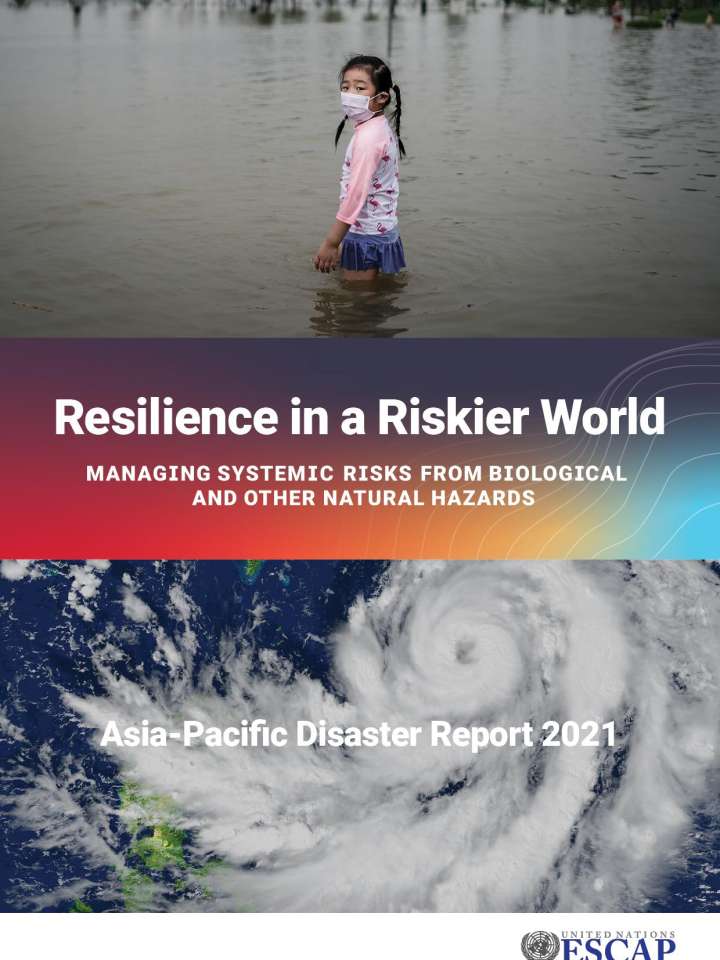
Asia-Pacific disaster report 2021: Resilience in a riskier world: Managing systemic risks from biological and other natural hazards
The Asia-Pacific Disaster Report 2021 addresses the complexity of these converging and cascading risks by analysing natural and biological hazards simultaneously.
Publication
Published on
12 November 2021
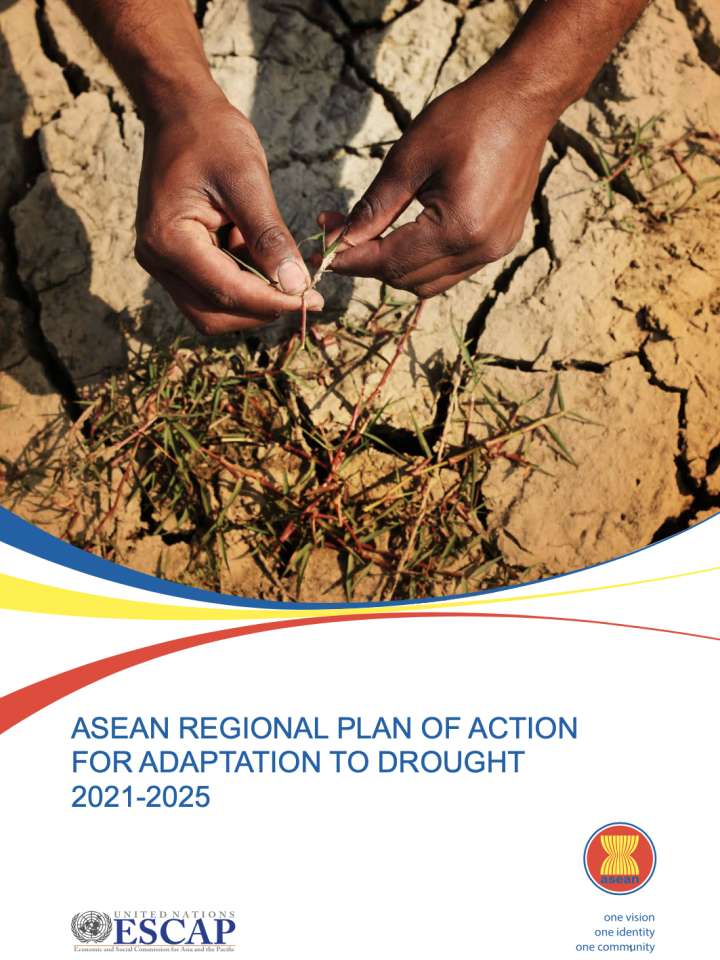
ASEAN Regional plan of action for adaptation to drought 2021-2025
This report aims to enhance coordination at the regional and national (international) level for achieving sustainable management of drought by considering the impact of drought on the livelihood of people, natural resources and ecosystem.
Publication
Published on
27 November 2020
Ready for the dry years: Building resilience to drought in South-East Asia (2nd edition)
This second edition of Ready for the Dry Years reveals that the severity of two drought events during 2015-2016 and 2018-2020 exceeds anything recorded in the past two decades, since the major El Niño of 1997-1998.
Publication
Published on
1 June 2020
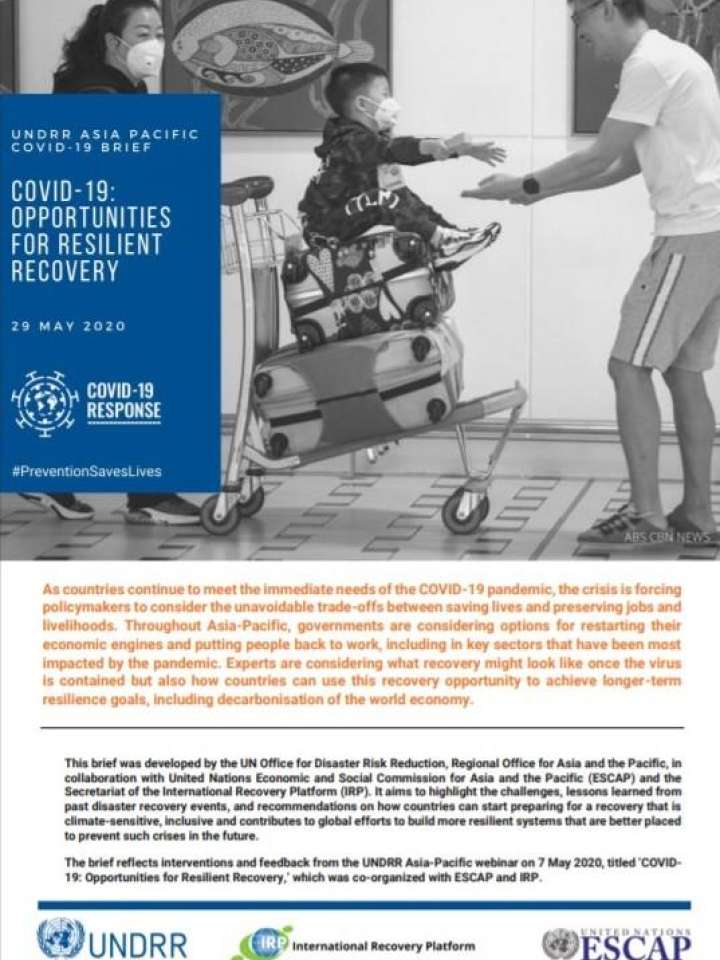
UNDRR Asia-Pacific COVID-19 brief: Opportunities for resilient recovery
This brief focuses on recovery from the COVID-19 crisis, and the challenges therein, weighing the COVID-19 crisis against past recovery efforts, and offers policy guidance to shape the recovery pathway that will lead the region to a more resilient “new normal”.
Training event
Online
07 May 2020
Webinar: COVID-19 - Opportunities for resilient recovery
As countries continue to meet the immediate needs of the COVID-19 pandemic, the crisis is forcing policymakers to consider the unavoidable trade-offs between saving lives and preserving jobs and livelihoods.

Pagination

  • Previous page ‹ Previous
  • Current page 1
  • Page 2
  • Next page Next ›

More content for this organization may be available on PreventionWeb or on the site search.

Voluntary Commitments

The organization has no registered commitments.

The Sendai Framework Voluntary Commitments (SFVC) online platform allows stakeholders to inform the public about their work on DRR. The SFVC online platform is a useful toolto know who is doing what and where for the implementation of the Sendai Framework, which could foster potential collaboration among stakeholders. All stakeholders (private sector, civil society organizations, academia, media, local governments, etc.) working on DRR can submit their commitments and report on their progress and deliverables.

UN-ESCAP Logo

Contact information

http://www.unescap.org
[email protected]
0-800-8362567
Facebook
LinkedIn
Twitter
YouTube

Is this page useful?

Yes No
Report an issue on this page

Thank you. If you have 2 minutes, we would benefit from additional feedback (link opens in a new window).

The International Recovery Platform (IRP) is a global partnership working to strengthen knowledge, and share experiences and lessons on building back better in recovery, rehabilitation, and reconstruction.

Latest IRP videos and photos: YouTube Flickr Contact IRP

Loading