This paper discusses the opportunity to build government capacity to make use of various new financing instruments, such as reserve funds, contingent lines of credit, and insurance programs, for post-disaster recovery and reconstruction. By preparing
World Bank, the
Global Facility for Disaster Reduction and Recovery, the (GFDRR)
This paper measures the longer-term effect of a major earthquake on the local economy, using night-time light intensity measured from space, and investigate whether insurance claim payments for damaged residential property affected the local recovery process. It focuses on the destructive Canterbury Earthquake Sequence (CES) 2010-2011 in New Zealand as a case study.
In 2018, the state of Kerala witnessed large-scale flooding, which affected millions of people and caused 400 or more deaths. This document examines the return period of extreme rainfall and the potential role of reservoirs in the recent flooding.
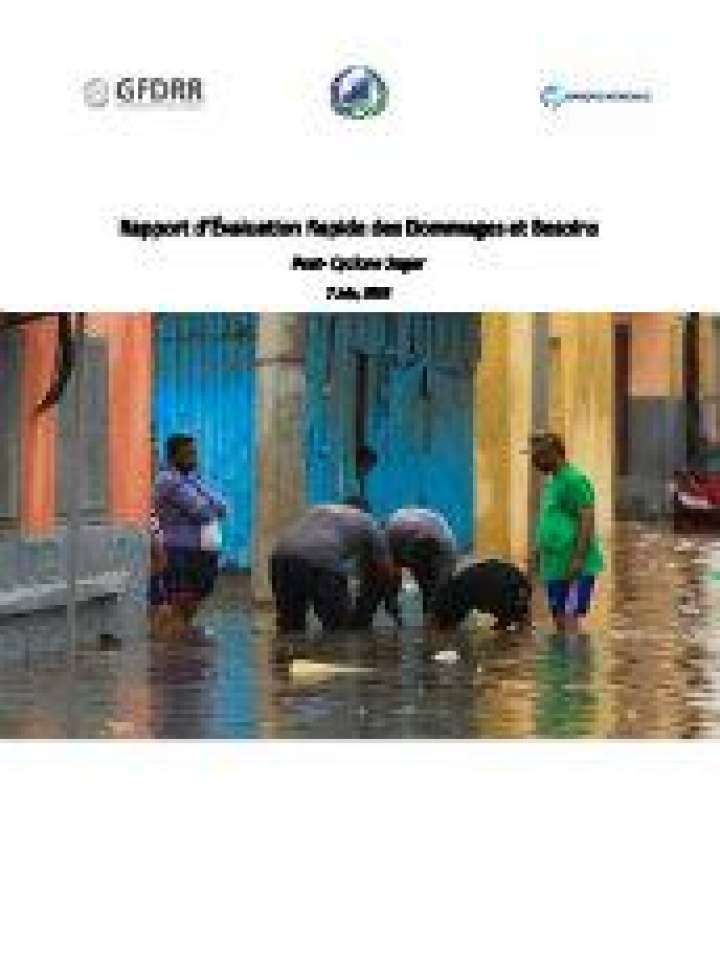
This report presents the results of the rapid assessment of the damage caused by Tropical Cyclone Sagar in Djibouti City and the most affected areas, and offers recommendations and a preliminary estimate of recovery and reconstruction needs.
World Bank, the
Global Facility for Disaster Reduction and Recovery, the (GFDRR)
The Southwest monsoon season 2018 resulted in devastating flooding in Kerala. This memorandum details the impact of the flooding across all major state sectors, including agriculture, fisheries, housing, utilities, and infrastructure.
This economic and disaster recovery plan lays out the Government of Puerto Rico’s strategic vision and goals and provides a detailed framework for achieving them.
This study aims to fill a knowledge gap on the extent to which community-level mitigation activities impact business disaster recovery efforts in the US. Using data gathered from 25 semi-structured interviews with businesses and local government staff
The development of sustainable insurance solutions requires thorough risk assessment, modelling and layering. Agricultural and climate risks are mainly of a systemic nature, i.e. they affect a large geographic area or large parts of the population