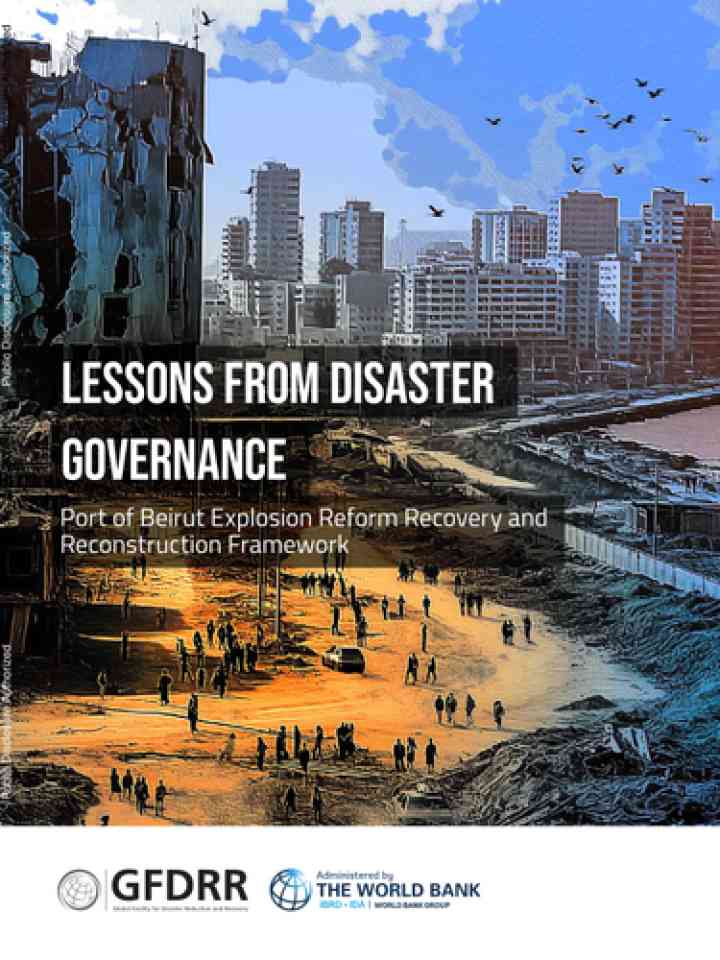
This case study aims to present the lessons learned from Lebanon’s Reform, Recovery and Reconstruction Framework (3RF) as an example of developing post-disaster recovery governance structures in a context of FCV, specifically under compounded crises.
This report is shedding light on the profound challenges Pakistan faces due to climate change. It is a national level survey conducted in 16 districts in four provinces across Pakistan.
The objective of the Somalia 2023 Deyr Floods R-PDNA is to inform, guide and catalyse the sustainable and resilient recovery of Somalia's flood-affected communities.
United Nations - Headquarters
Global Facility for Disaster Reduction and Recovery, the (GFDRR)
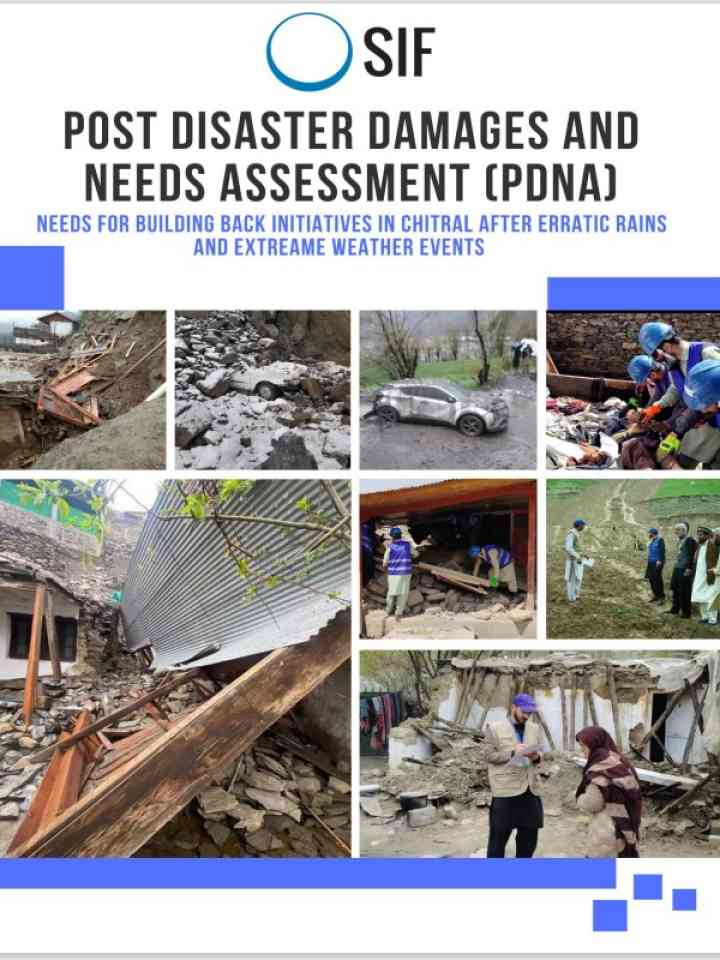
The post-disaster multisectoral needs assessment report presented here provides a crucial glimpse into the profound effects of climate change on the district of Chitral in 2024.
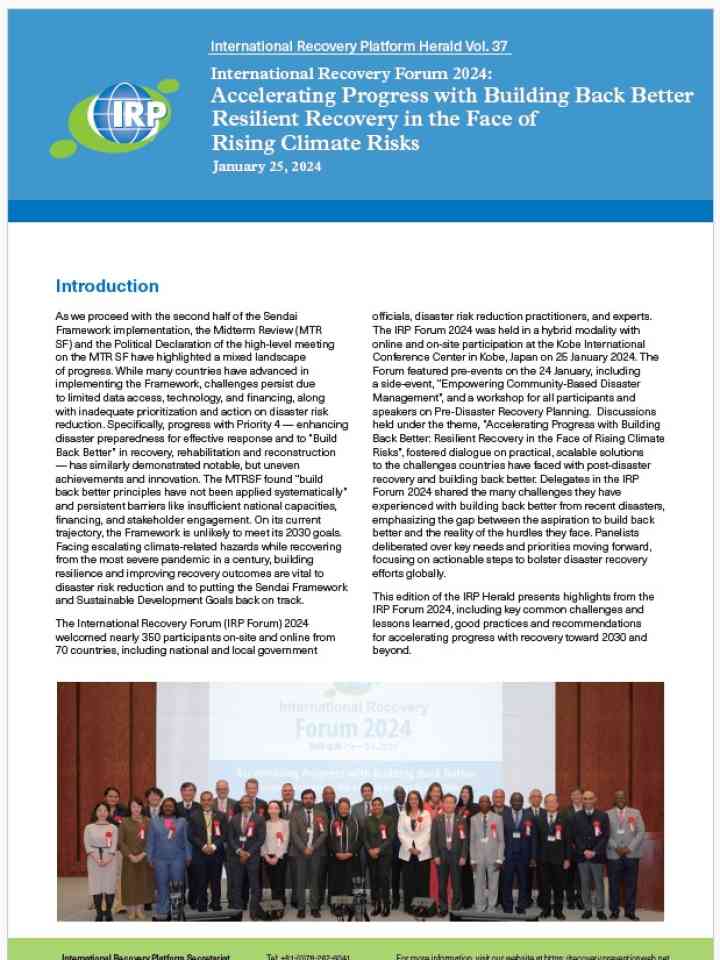
IRP Herald Volume 37 is the knowledge report for the International Recovery Forum 2024: Accelerating Progress with Building Back Better: Resilient Recovery in the Face of Rising Climate Risks
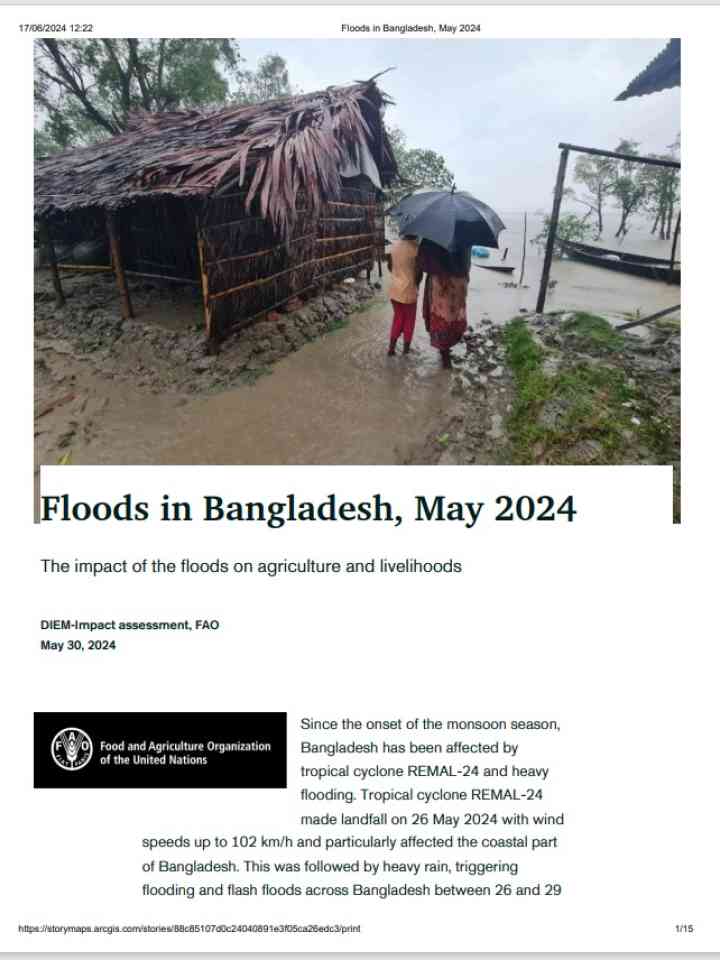
In May 2024, Bangladesh experienced severe flooding due to tropical cyclone REMAL-24 and heavy rains, affecting over 768,000 hectares of land, damaging significant agricultural areas and impacting livelihoods across the country.
Food and Agriculture Organization of the United Nations (FAO)
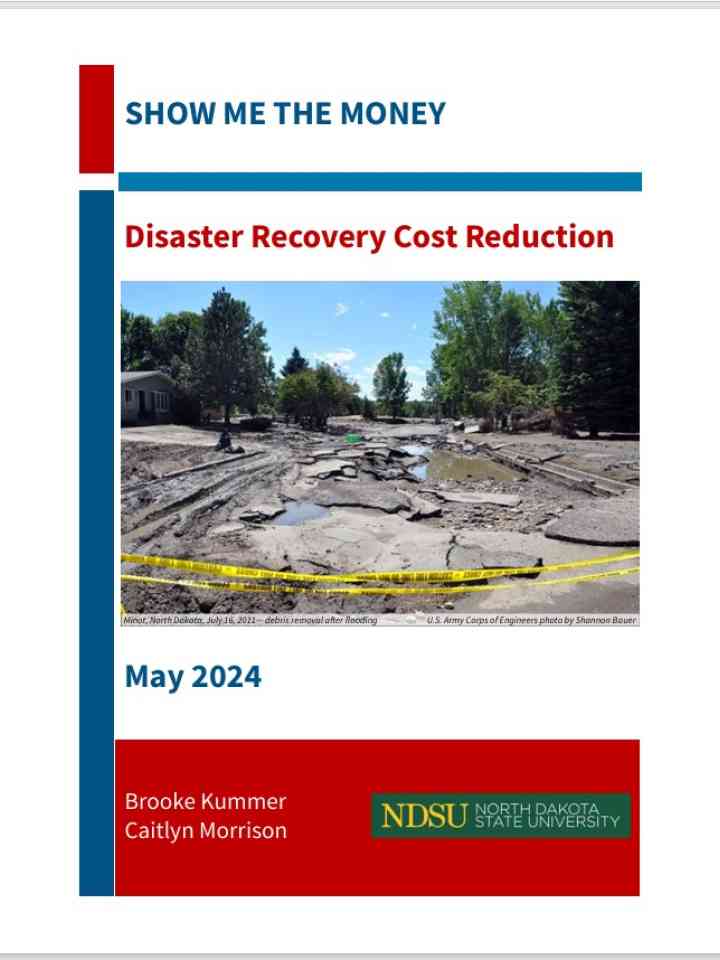
This report focuses on gaining insight into the ways in which local policy in rural areas affects disaster recovery costs and on a gap between federal expectations and rural realities was identified.
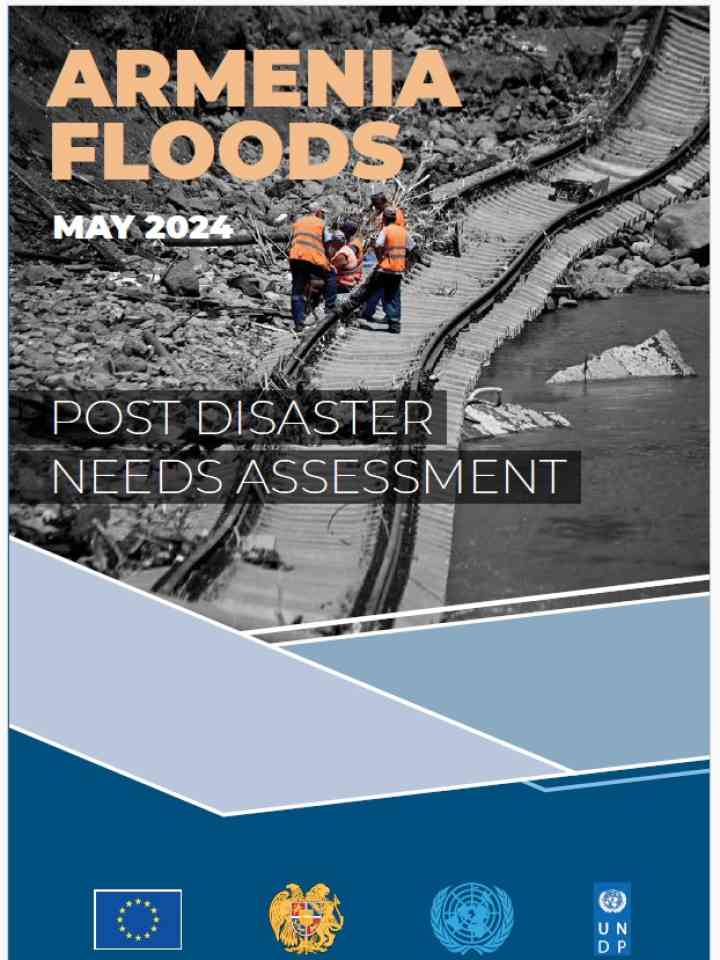
This PDNA provides assesses the damages and recovery needs in the Lori and Tavush regions, and proposes strategies to rebuild affected areas sustainably, integrating the Build Back Better principles and fostering resilience against future disasters.
This is a joint rapid assessment of Severe Cyclone 'Remal', a moderately intense and deadly tropical cyclone that affected West Bengal and Bangladesh in May 2024.