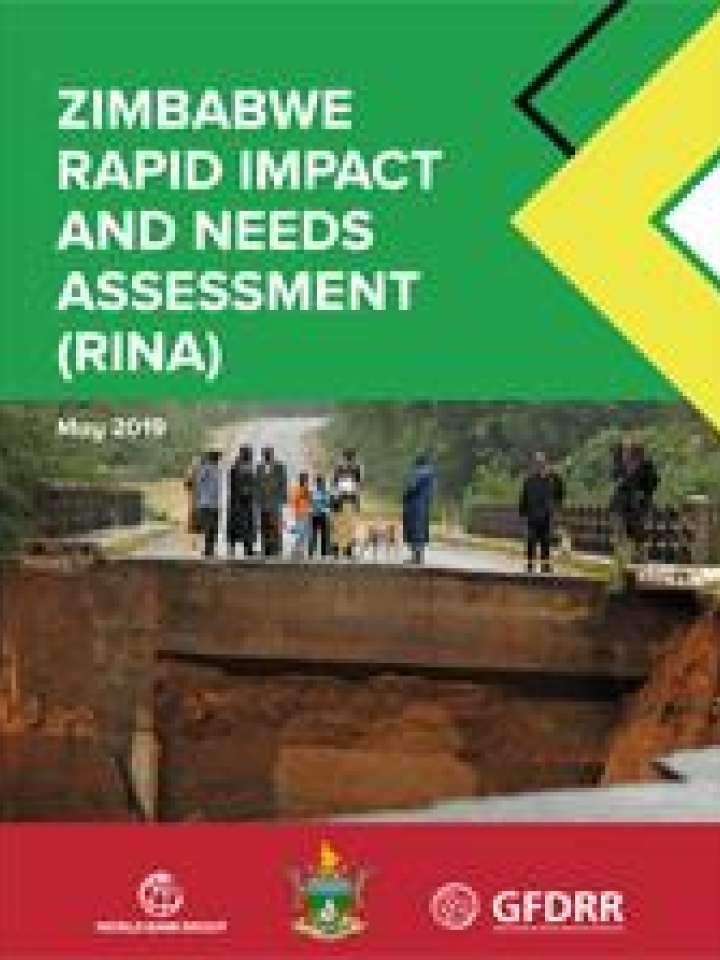
The Zimbabwe Rapid Impact and Needs Assessment (RINA) is an effort to assess and quantify cyclone recovery and resilience building needs across ten sectors.
World Bank, the
Global Facility for Disaster Reduction and Recovery, the (GFDRR)
The goal of this paper is to examine how government continuity planning contributes to strengthening the public sector’s disaster preparedness, resulting in enhanced resilience of the public sector. The paper analyzes basic principles of government continuity planning using Complex Adaptive Systems (CAS) theory while summarizing recent developments in theory and practice of government continuity planning. Government continuity plans (GCPs) are a recently focused concept in disaster preparedness, compared to business continuity plans (BCPs) in the private sector. Both GCPs and BCPs are designed to prepare governments and businesses for future disasters. The need for BCPs was widely recognized after the Great East Japan Earthquake (GEJE) and Tsunami in 2011, the Floods in Thailand in 2011, and Hurricane Sandy in New York in 2012.
United Nations Office for Disaster Risk Reduction (UNDRR)
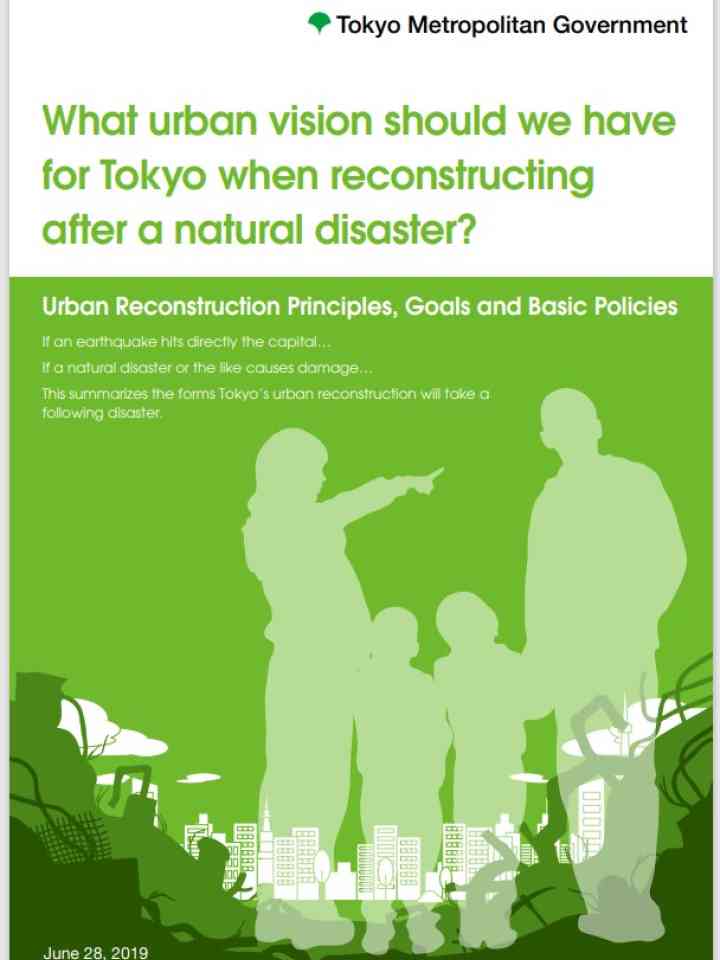
The urban reconstruction principles, goals and basic policies mentioned in this document will be used to implement programs and refine its reconstruction guidelines and plans when Tokyo suffers damage from natural disaster.
Recognizing a potential of World Risk Index (WRI), this paper will, based on the preliminary analysis results, exhibit a basic framework of the sectoral breakdown of WRI as an initial step toward establishing a practical reference to guide recovery needs for BBB in Post-Disaster Needs Assessment (PDNA).
United Nations Office for Disaster Risk Reduction (UNDRR)
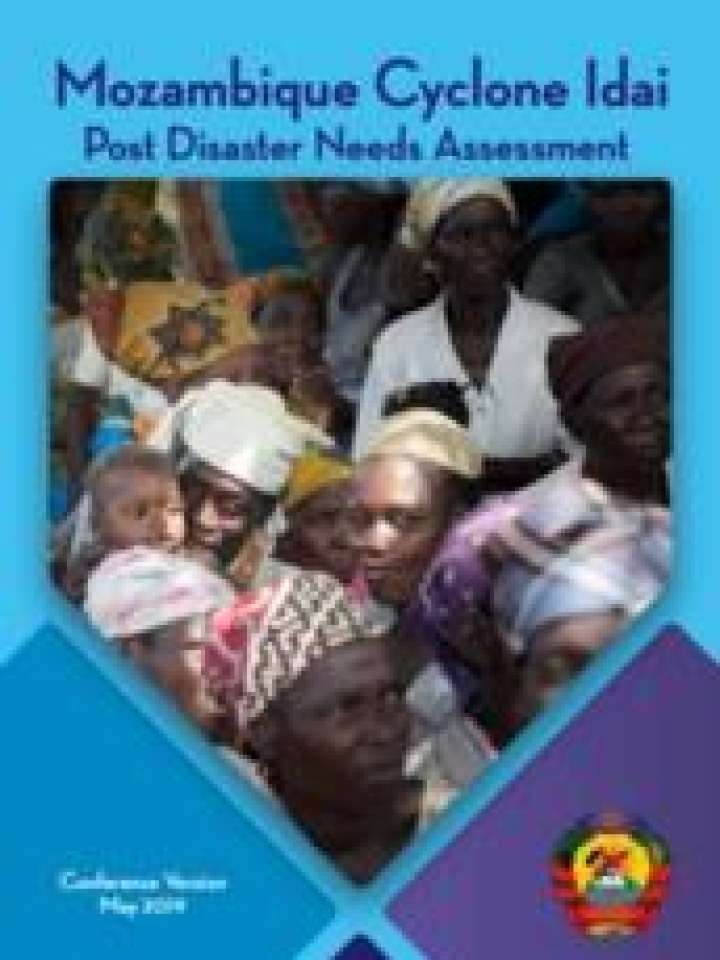
This report summarizes the identified damage, loss and recovery needs across 16 socio-economic sectors in the affected provinces and discusses a recovery strategy that will be further developed by the Cabinet for the Reconstruction of Post-Cyclone Idai.
World Bank, the
United Nations Development Programme (UNDP)
Mozambique - government
African Development Bank
Global Facility for Disaster Reduction and Recovery, the (GFDRR)
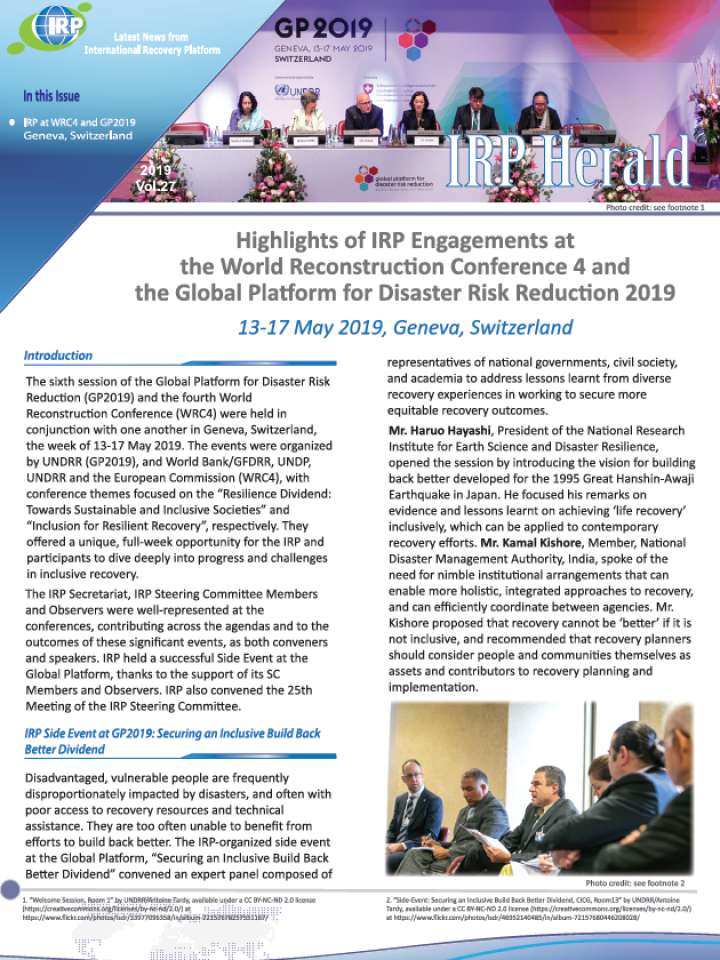
IRP Herald Volume 27 is the knowledge report for IRP events at the World Reconstruction Conference 4 and the Global Platform for Disaster Risk Reduction 2019.
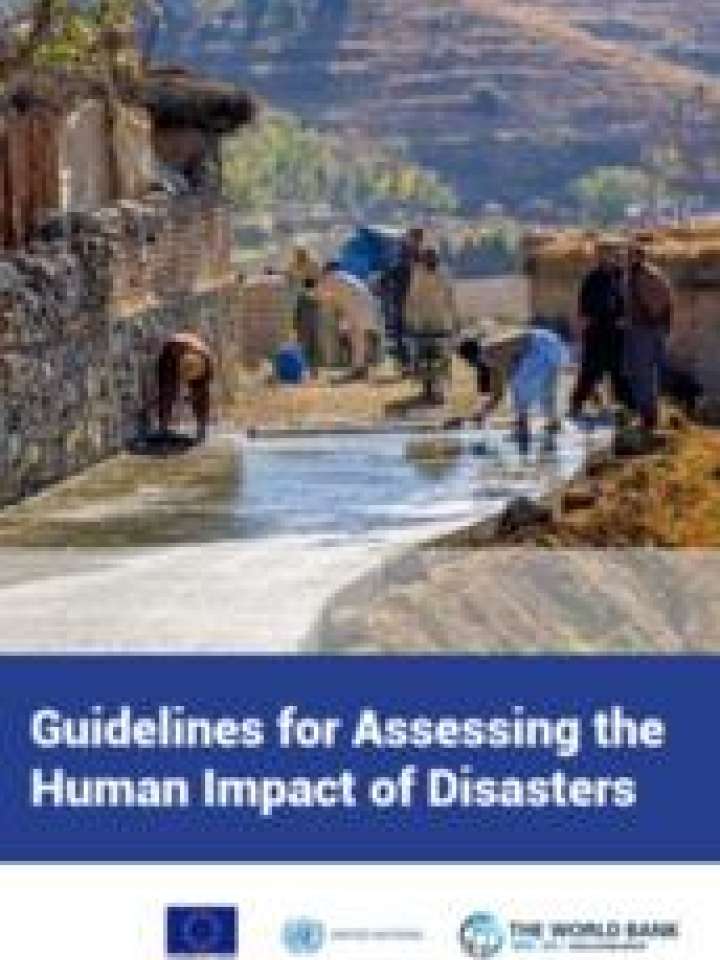
This document, Guidelines for Assessing the Human Impact of Disasters, has been developed as part of the PDNA guidelines, and similarly follows a people-centred, human-recovery approach.
The 2018 Kerala floods highlighted the need for ecosystem-based recovery, risk-informed land use planning, inclusive disaster response, and leveraging youth and technology to build resilience against future climate-induced hazards.
World Bank, the
Global Facility for Disaster Reduction and Recovery, the (GFDRR)
European Union
United Nations Office for Disaster Risk Reduction (UNDRR)
This guide explains how to conduct a PDNA in Conflict Situations, and complements existing guidelines developed by the tripartite partnership to support post-disaster needs assessments and recovery planning.