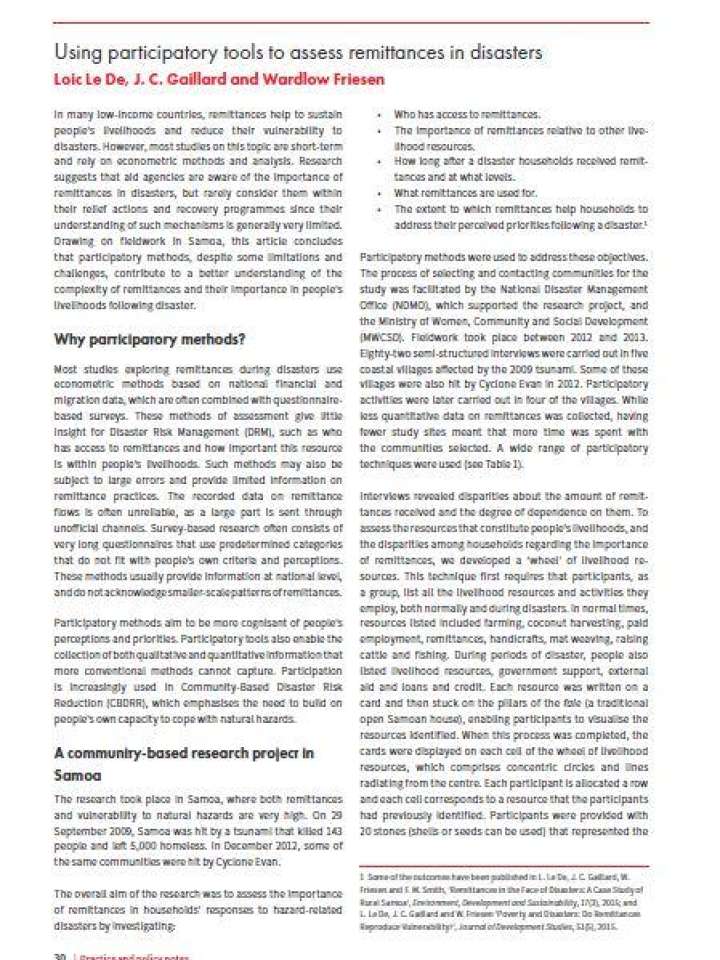
This issue of Humanitarian Exchange, co-edited with Humanitarian Policy Group (HPG) Research Fellow Eva Svoboda, focuses on the crisis in Iraq. The article featured here is on "Using participatory tools to assess remittances in disaster". In many low
This research project explores areas in which resilience practitioners’ (RPs) and emergency responders’ (ERs) can influence on a community during a Natural Hazzard Emergency (NHE), and how this affects a community’s capacity to recover. This is important because a community’s ability to effectively recover from impacts of an NHE has implications for that community’s future resilience, and its ability to adapt to the effects of climate change. In this report the influence of RPs and ERs on a community’s capacity to recover is examined.
National Centre for Resilience (University of Glasgow)
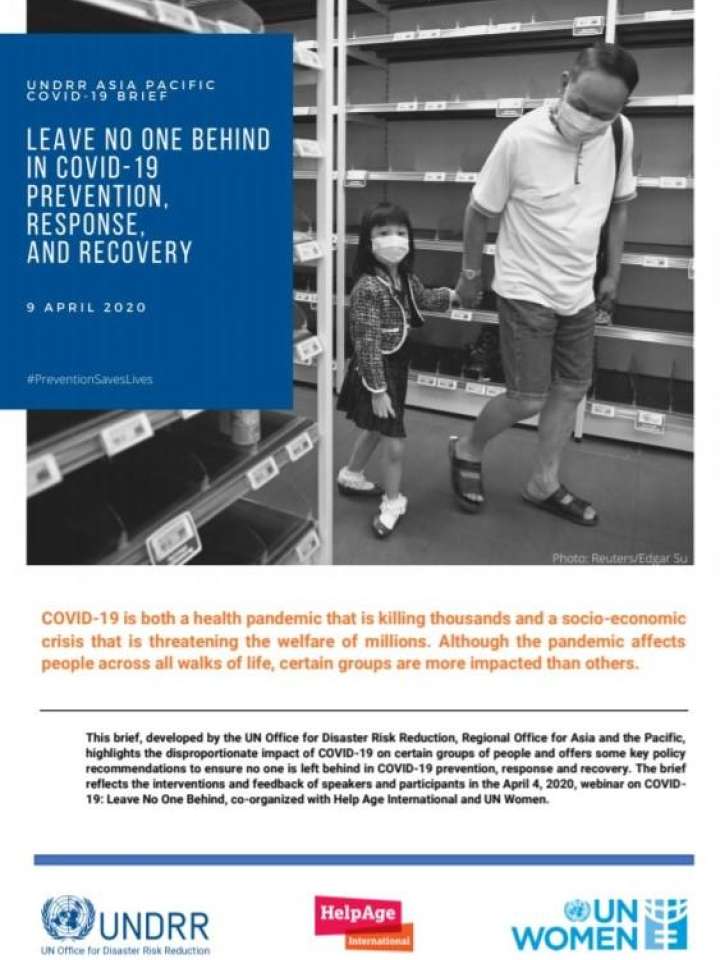
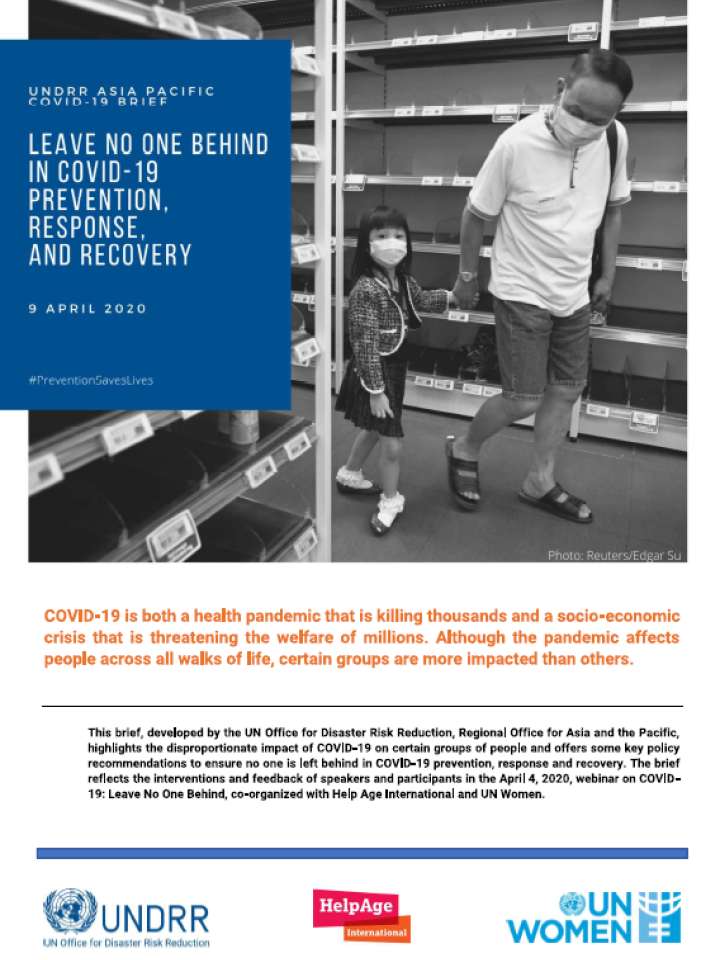
Coronavirus disease 2019 (COVID-19) is both a health pandemic that is killing thousands and a socio-economic crisis that is threatening the welfare of millions. Although the pandemic affects people across all walks of life, certain groups are more
United Nations Office for Disaster Risk Reduction - Regional Office for Asia and Pacific
Rather than recommend a single dominant option for pandemic response in Australia, the authors present and explain two options for the nation’s consideration – elimination or controlled adaptation. Any choice between these two options entails a delicate trade-off between protecting health, supporting the economy and societal well-being. This report also focusses on the impact of the virus and short term recovery.
This brief highlights the disproportionate impact of COVID-19 on certain groups of people and offers some key policy recommendations to ensure no one is left behind in COVID-19 prevention, response and recovery.
United Nations Office for Disaster Risk Reduction - Regional Office for Asia and Pacific
This brief presents a series of resilience lessons from Cyclone Idai based on key informant interviews and background research, and highlights opportunities for strengthening early warning and climate information services in Malawi.
One of the many opportunities for mobile surveys to support the development sector comes in tracking resilience and post-disaster recovery. Collecting information in disaster-affected regions is often dangerous, costly and time consuming. This is where
Building Resilience and Adaptation to Climate Extremes and Disasters
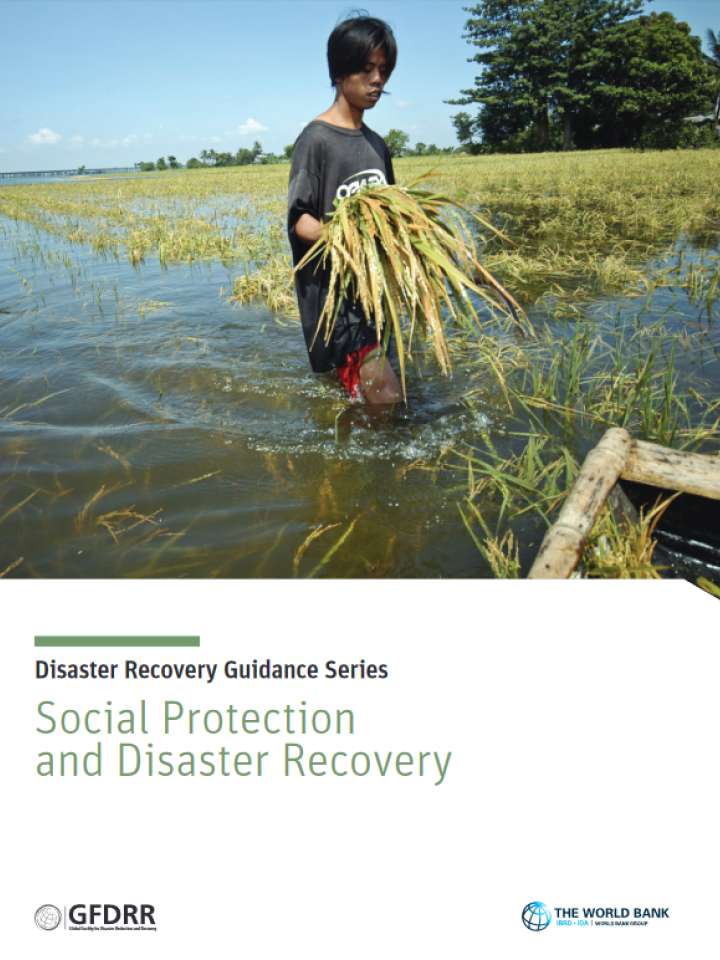
This note highlights the critical contribution that social protection can make to a broader disaster recovery effort by providing assistance directly to disaster-affected households.
World Bank, the
Global Facility for Disaster Reduction and Recovery, the (GFDRR)
This compendium compiles good practices on post disaster recovery, to disseminate and highlight the work and recovery processes that are being carried out in different countries of the Africa, Asia, ECIS and LAC regions.
This brief is offered to define the COVID-19 recovery context and to supplement existing guidance with key principles and practices to guide recovery planning.