This brief provides an overview of social protection programmes in the context of disaster risk management and adaptive capacity in Nepal. The country has a large portfolio of social protection programs, which, however, are not yet adaptive. The programs
This publication tries to highlight the importance of reducing disaster mortality. Even the global level policy instrument Sendai Framework that guides the actions of nations in disaster management has enshrined "substantial reduction disaster mortality"
This research aims to identify strategies for long-term recovery related to housing, livelihood, and community activities in villages divided by the dyke in Hinthada Township, Ayeyarwady Region, Myanmar, using household surveys.
This guidance presents Red Cross and Red Crescent staff, members and volunteers with a set of minimum standards for protection, gender and inclusion (PGI) in emergencies. It aims to ensure that the emergency programming of the International Federation of
International Federation of Red Cross and Red Crescent Societies (IFRC)
Hurricane Maria was one of the most devastating storms in United States history. The tremendous force of the hurricane, along with the associated wind, rain, flooding, and critical infrastructure damage, caused incredible disruption to lives and
Based on a case study of the flood disaster of the river Danube in 2013, and particularly the Bavarian city of Deggendorf, this study investigates the role of social vulnerability in recovery projects and planning.
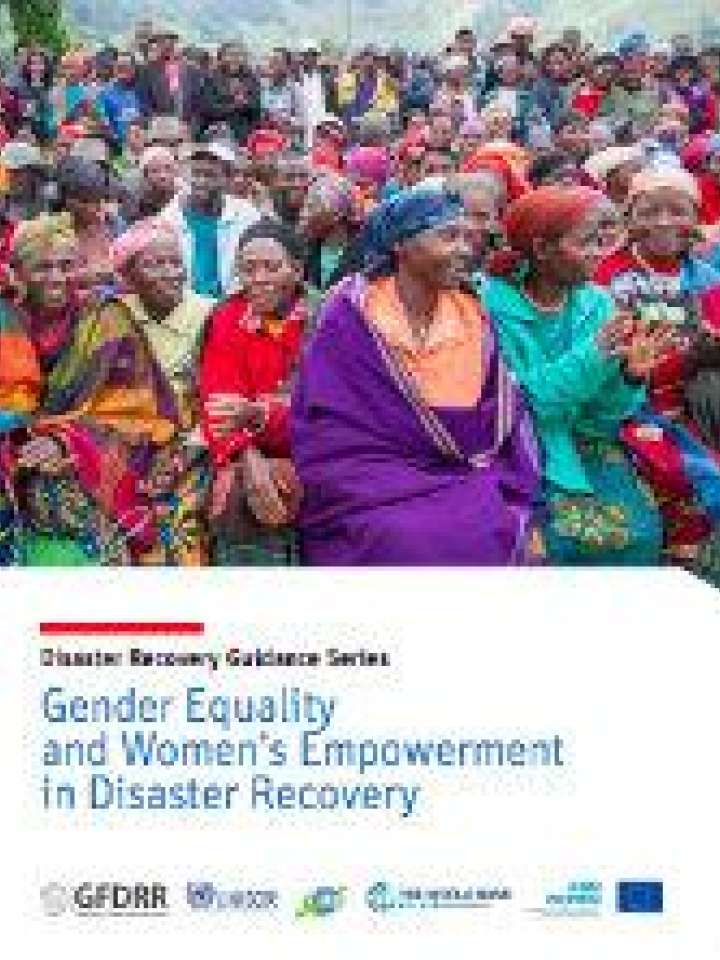
This Guidance Note aims to provide action-oriented guidance to local and national government officials and key decision makers who face post-disaster challenges and to assist them in incorporating gender-responsive recovery and reconstruction efforts.
World Bank, the
Global Facility for Disaster Reduction and Recovery, the (GFDRR)
Pacific island countries are exposed to significant risks from natural disasters. As a disaster relief measure, Fiji allowed pre-retirement pension withdrawls in the wake of Cyclone Winston in 2016. Motivated by this policy action, this paper provides a
This report shows how the benefits of building back better could be greatest among the communities and countries that are hit by disasters most intensely and frequently.
World Bank, the
Global Facility for Disaster Reduction and Recovery, the (GFDRR)
This paper uses qualitative case study analysis to explore post-quake transformations in a rural context. The aim is to gain insight into the distinctive dynamics of disaster response mechanisms, focusing on two initiatives.