This guidance presents people-centred circular approaches to rubble management and reconstruction after disasters and conflicts. It outlines practical measures to reuse and recycle rubble while supporting recovery, livelihoods and sustainable rebuilding.
United Nations Office for Project Services (UNOPS)
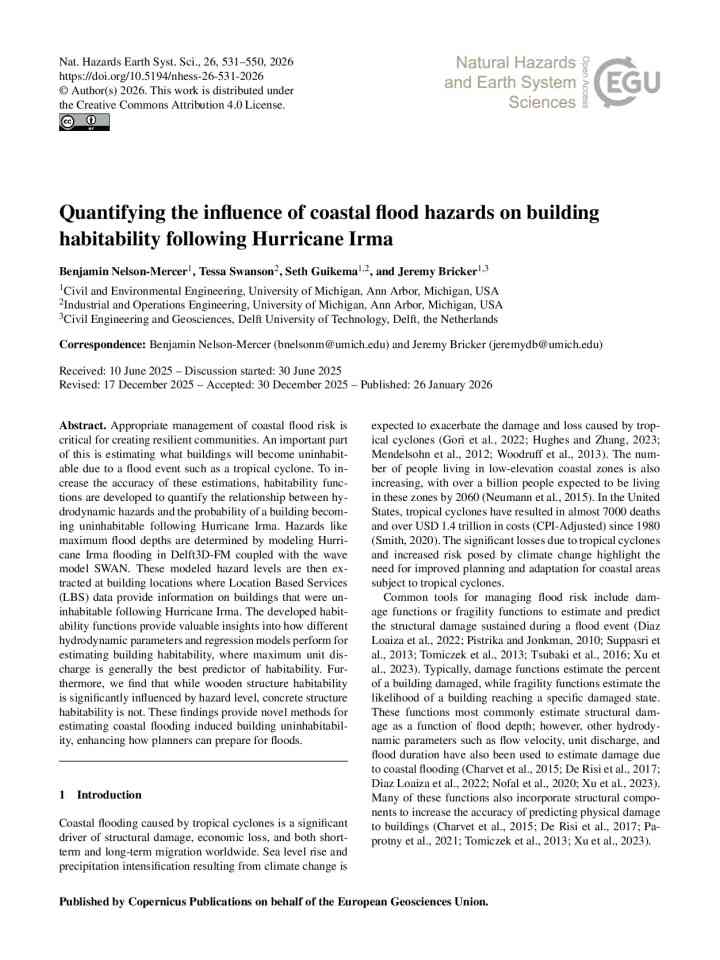
This study develops habitability functions to quantify the relationship between hydrodynamic hazards and the probability of buildings becoming uninhabitable following Hurricane Irma.
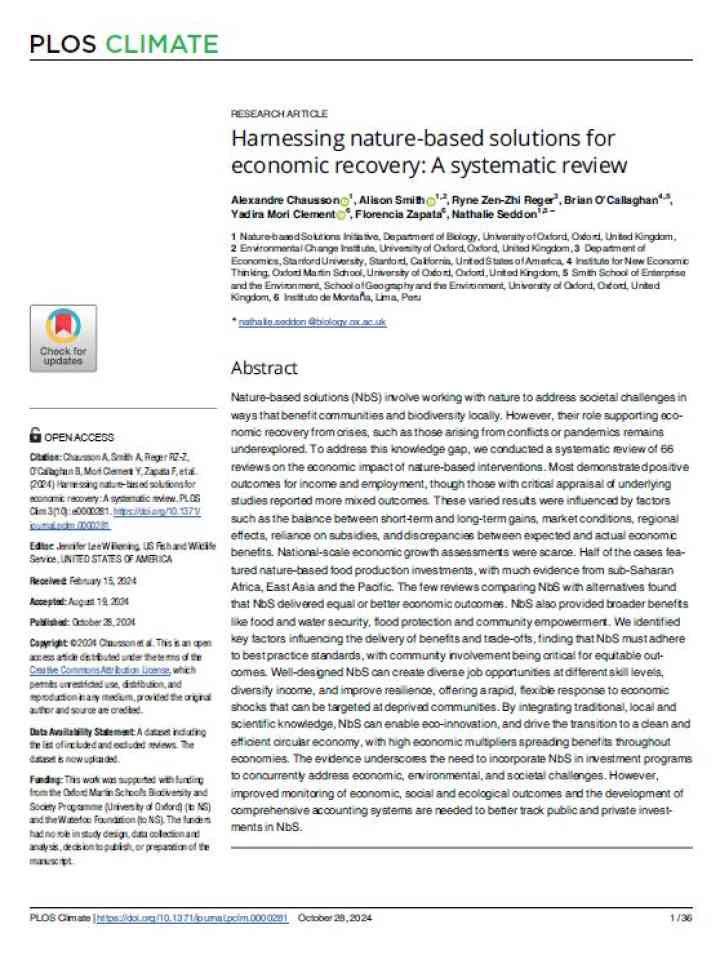
This review shows that Nature-based Solutions (NbS) are often more labor intensive than other potential investment options, thus providing significant potential for job creation.
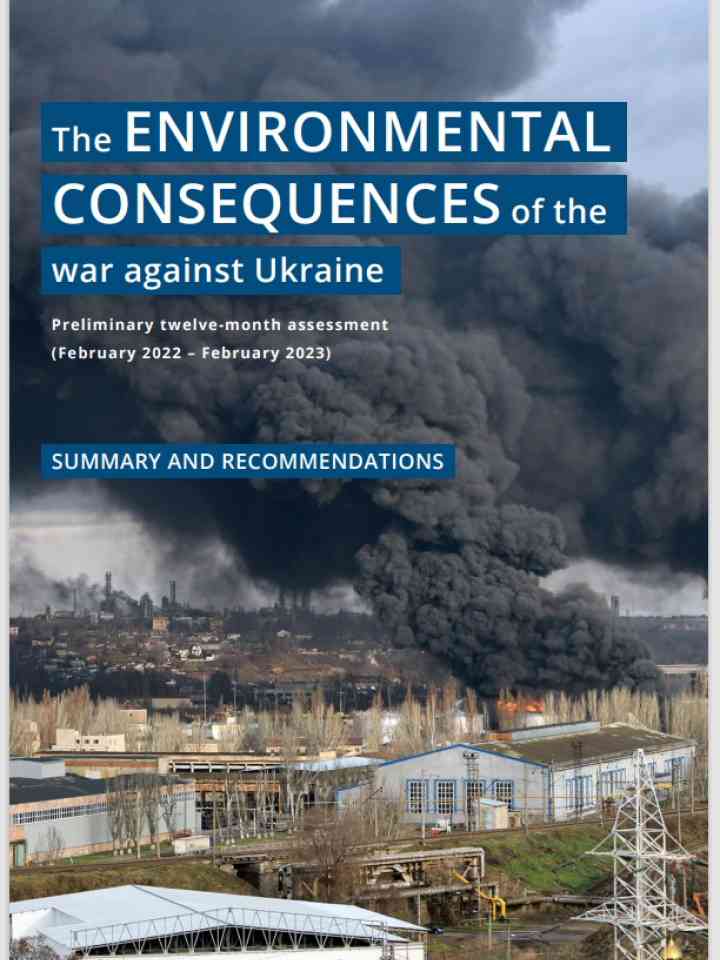
This report contributes to response and recovery planning in Ukraine by providing a preliminary assessment of the environmental damage and risks caused between February 2022 and February 2023.
This paper is an attempt to draw focus on the issue of managing solid waste in post-disaster situations in the context of India and to prepare conclusions, recommendations and way forward for managing wastes during and after the disasters.
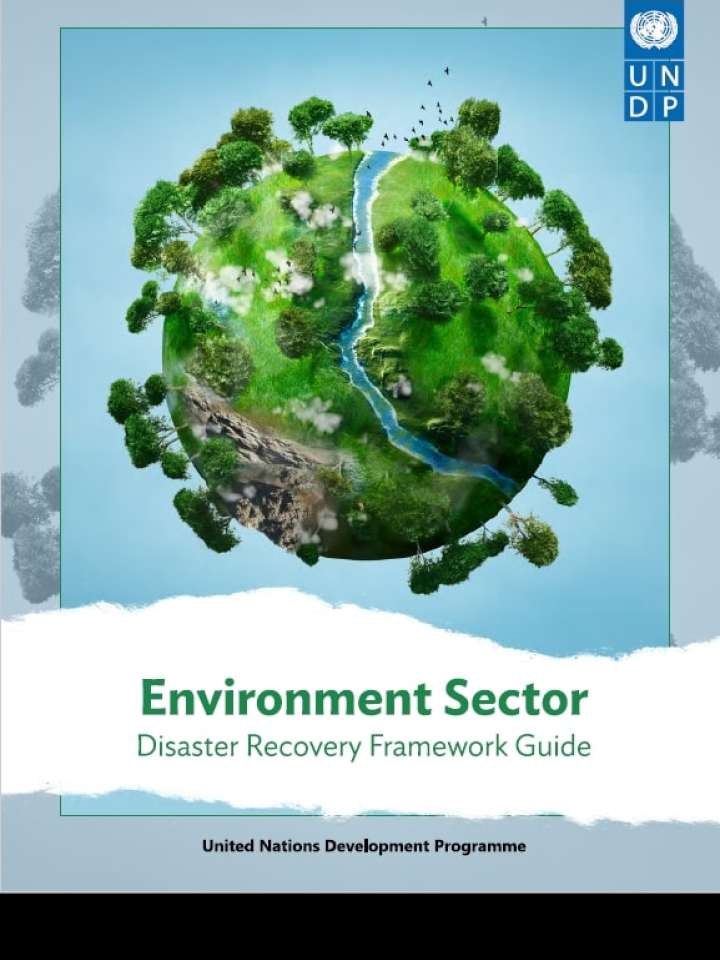
The DRF–Environment Guide is a companion to the main DRF Guide, with stepwise guidance on development of environmental recovery policy, team structure, stakeholders, etc. It walks through the process of establishing a comprehensive recovery framework.
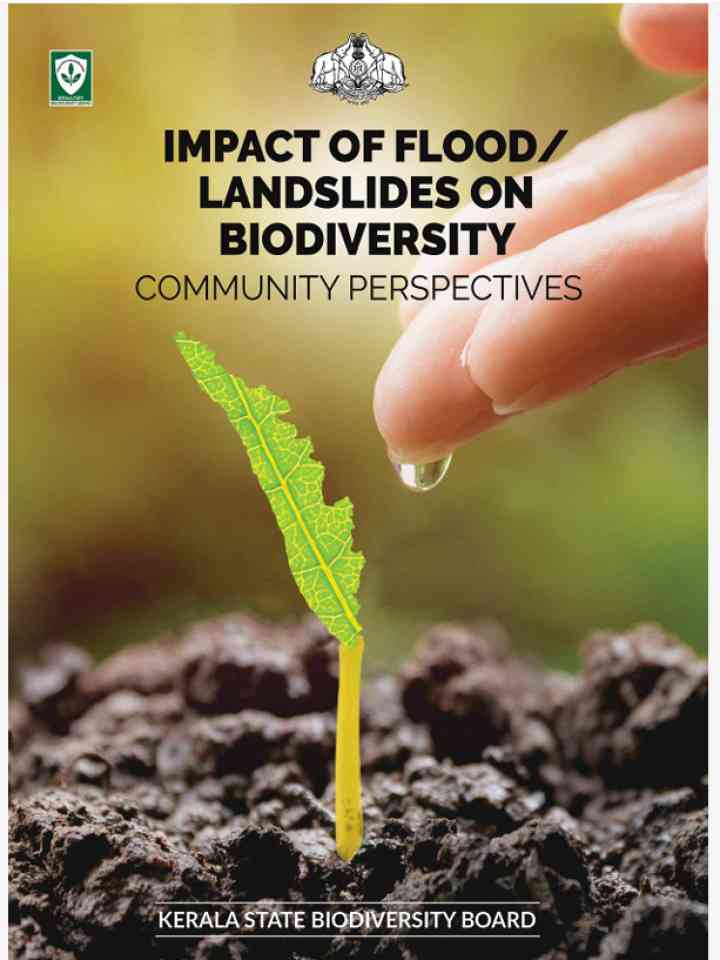
The objective of the process was to undertake a rapid assessment of the damages to ecosystem and biodiversity after the floods/ landslides and to lay the foundation for a recovery and ecosystem based reconstruction process at local level.
This knowledge report highlights the key lessons and recommendations emerging from the discussions during the 15 sessions of the 5th World Reconstruction Conference.
United Nations Office for Disaster Risk Reduction (UNDRR)
United Nations Development Programme (UNDP)
Global Facility for Disaster Reduction and Recovery, the (GFDRR)
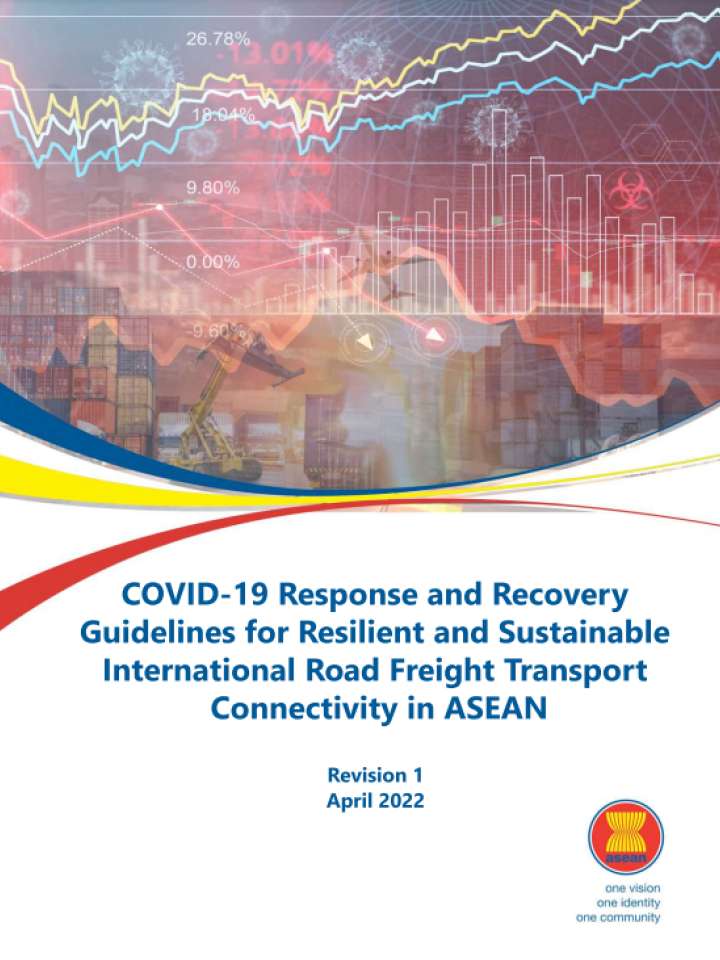
The Guidelines were designed to support ASEAN Member States in establishing their regional and national transport connectivity recovery plans with a focus on resilience and sustainability.
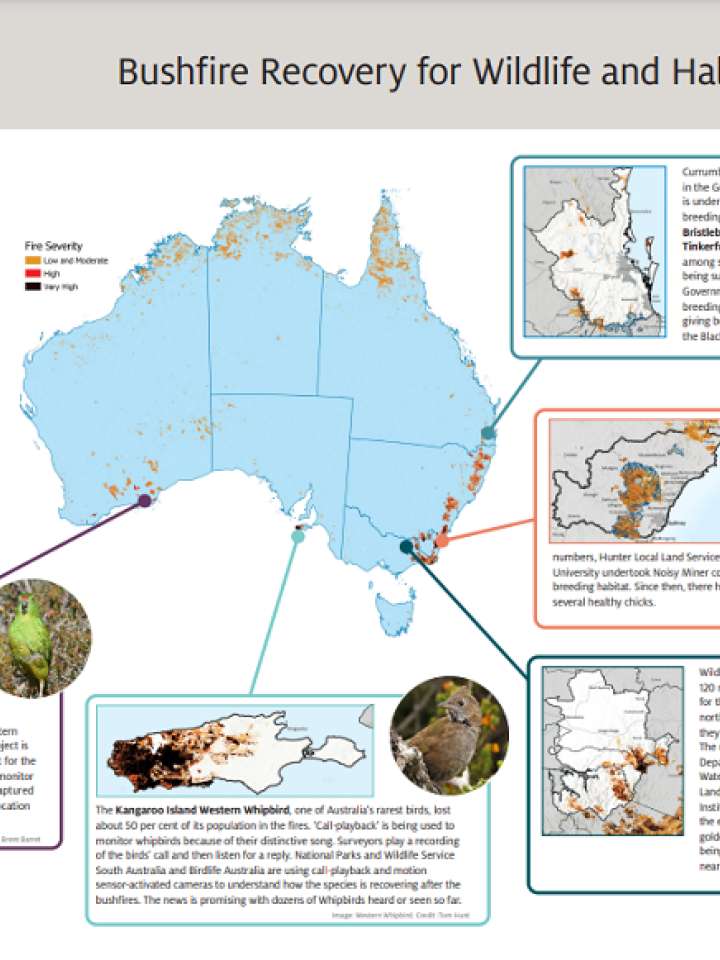
This infographic shows the overview of the Australian Government's efforts including impacts, funding and action, to support the recovery of its native wildlife and their habitats from the devastating Black Summer bushfires of 2019-20.