This cross-sectional study examined the relationship between resilience and environmental factors, such as housing damage and lifestyle, in older survivors six months after the Noto Peninsula earthquake.
The paper analyzes how recovery from consecutive disasters can either weaken or strengthen societal resilience, emphasizing the need for long-term, multi-hazard recovery planning.
Institute for Environmental Studies
Potsdam Institute for Climate Impact Research
ETH Zurich
Swiss Federal Office of Meteorology and Climatology (MeteoSwiss)
The prepared database would be of immense use for those who are working on floods for different regions, as well as for decision makers, planners, policy makers and communities in flood affected areas.
This study aims to analyze changes in life expectancy and years of life lost in Fukushima Prefecture after the Great East Japan Earthquake, showing that implementation of effective measures and policies in the region contributed to a successful recovery.
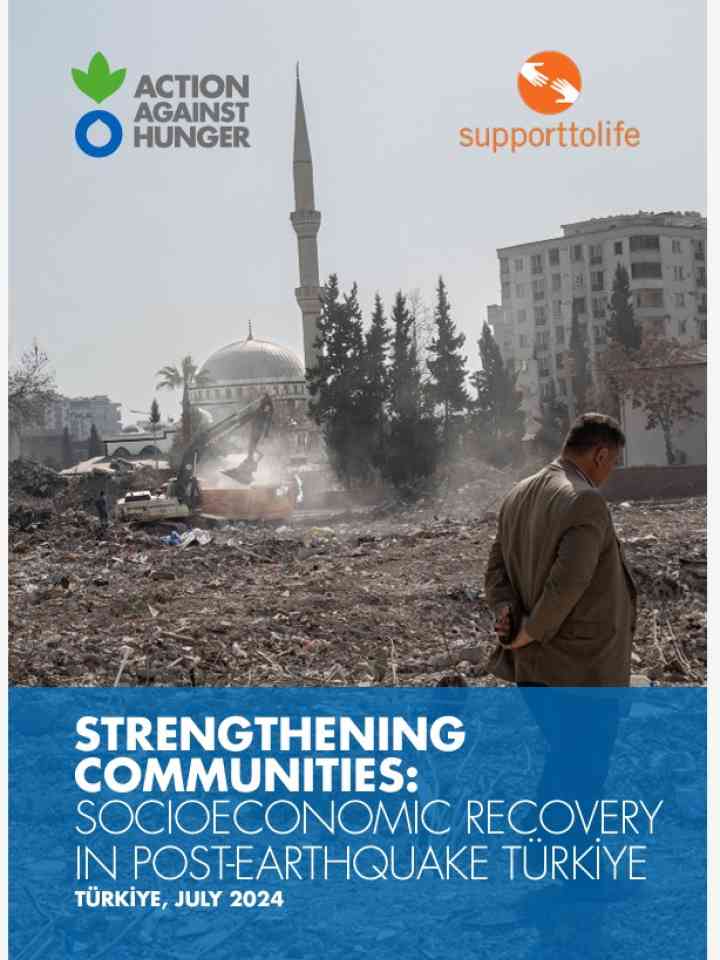
By providing a comprehensive assessment of the current socioeconomic conditions, this document aims in their efforts to contribute to the economic recovery of the areas affected by the 2023 earthquakes and support affected populations.
The ANU Disaster Solutions Update and Roundtable 2024 aims to identify the key challenges regarding funding for resilience, recovery, and insurance; and discuss the research to address financing challenges.
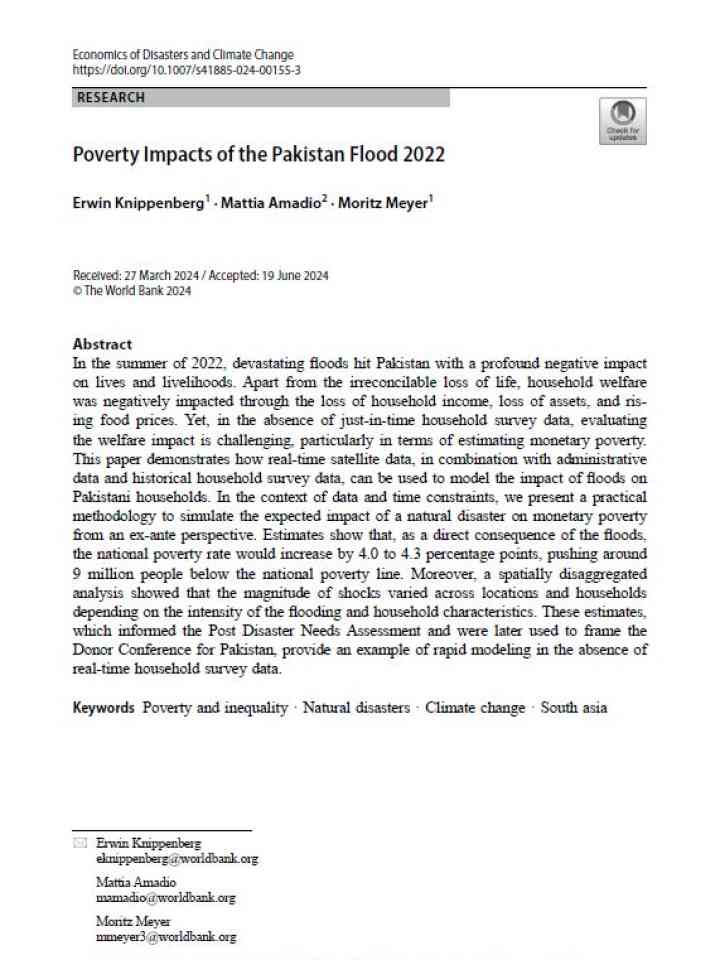
This paper demonstrates how real-time satellite data, in combination with administrative data and historical household survey data, can be used to model the impact of 2022 floods on Pakistani households.
Economics of Disasters and Climate Change (Springer)
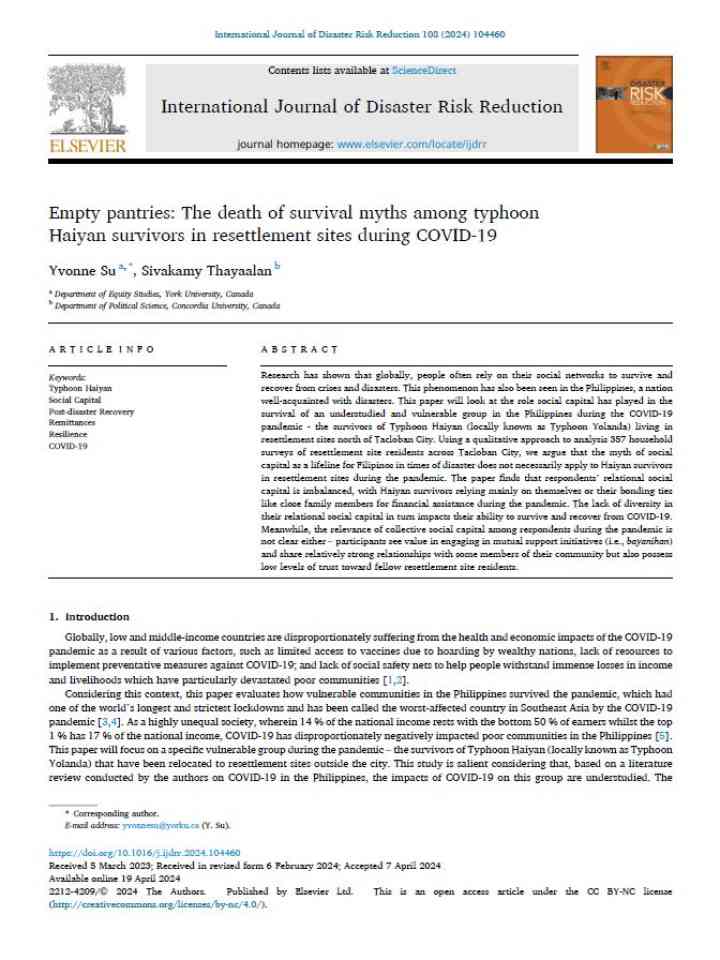
This paper looks at the role social capital has played in the survival of an understudied and vulnerable group in the Philippines during the COVID-19 pandemic - the survivors of Typhoon Haiyan (locally known as Typhoon Yolanda).
International Journal of Disaster Risk Reduction (Elsevier)