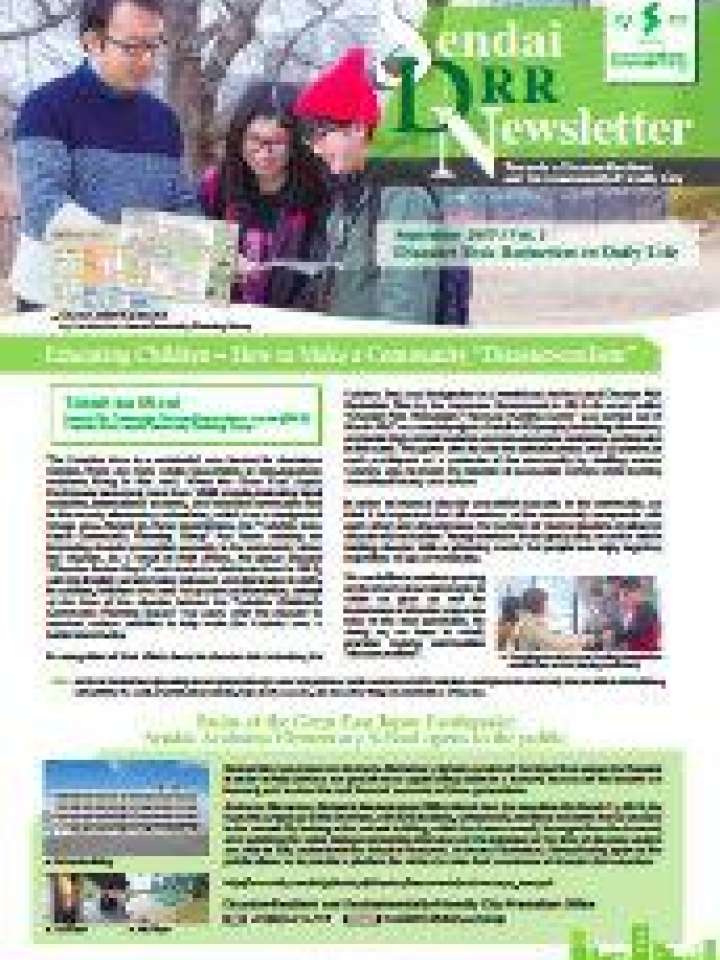
This newsletter published by the city of Sendai shares experiences and lessons from the Great East Japan Earthquake experienced in Sendai and the Tohoku region, conveys measures for preventing and mitigating disasters by various stakeholders, and
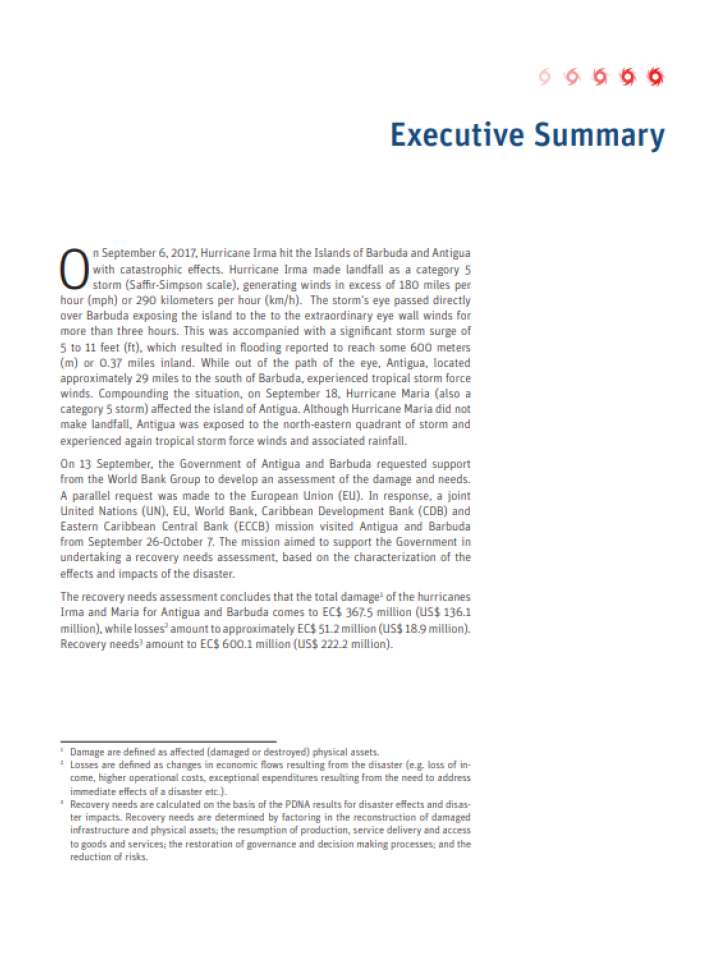
The PDNA report covers the damage, losses, and recovery needs following hurricanes Irma and Maria, which impacted Barbuda and Antigua in 2017. A recovery strategy and summary of identified priority actions for recovery is included in the report.
Antigua and Barbuda - government
World Bank, the
Global Facility for Disaster Reduction and Recovery, the (GFDRR)
This is the Post Disaster Needs Assessment (PDNA) Tools for India developed by the Government of India under National Cyclone Risk Mitigation Project assisted by the World Bank.
This report documents the major challenges associated with designing adaptive post-disaster private financing products and creating solutions that can reduce such barriers. It serves as a launch point for any organization beginning to think about creative
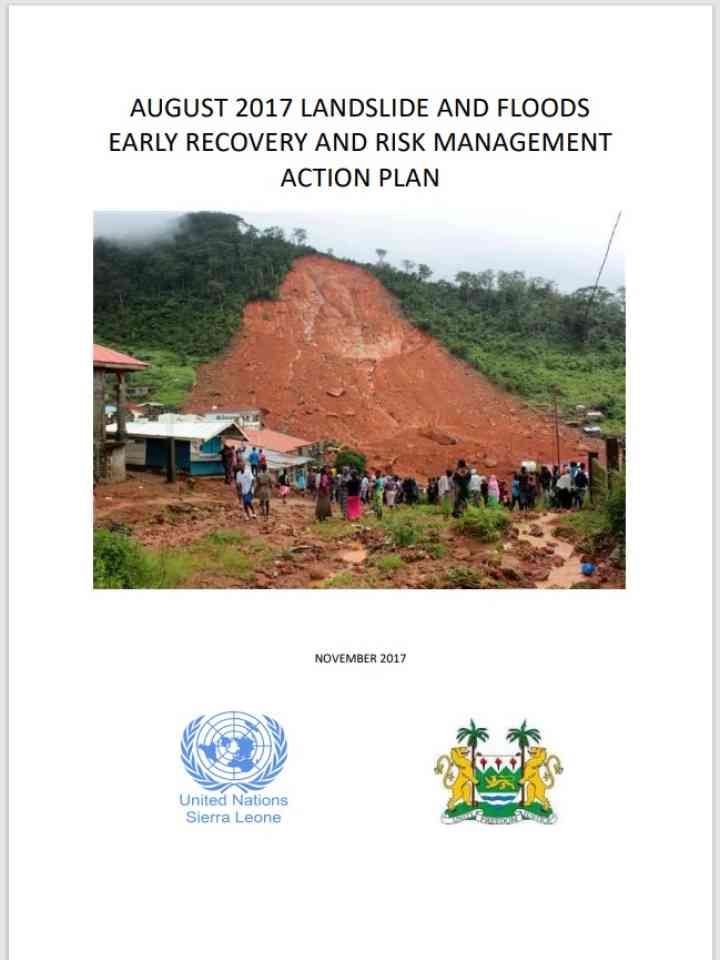
On 14 August 2017, Freetown, the capital city of Sierra Leone was affected by devastating landslide and floods affecting over 7,000 people both from the Western Rural and Western Urban districts of the country .
This study of Colorado’s 2013 floods aims to help communities learn how to improve recovery decisions that decrease their vulnerability to a wide variety of hazards and prepare for future disasters that may strike. It explores policy planning, lessons, and changes made in the aftermath of the 2013 floods in the seven affected communities (Boulder, Lyons, Longmont, Estes Park, Loveland, Evans and Greeley).
This working paper presents the findings from a pilot research project that investigated how disaster-affected households in low- and middle-income countries rebuild their homes in situations where little or no support is available from humanitarian agencies. The project was an interdisciplinary collaboration involving social scientists, geoscientists, structural engineers and humanitarian practitioners.
This guidance highlights key environmental issues throughout the recovery and reconstruction process and is designed for humanitarian agencies, government officials, and community groups involved in supporting affected populations for recovery and longer-term reconstruction.
World Wildlife Fund Environment and Disaster Management