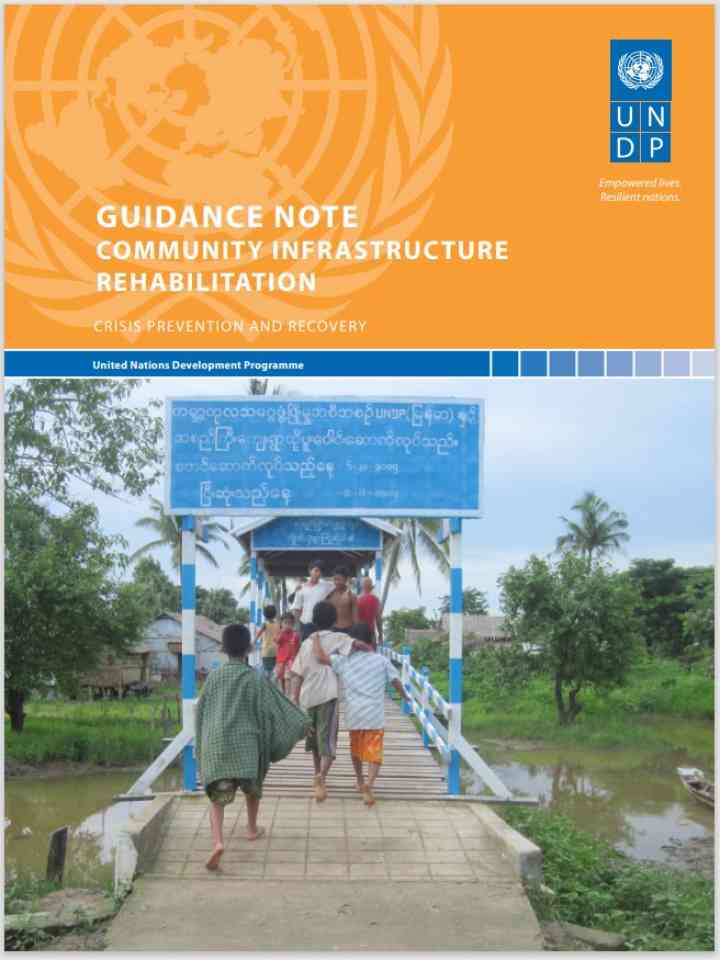
This provides practical advice on how to plan, design and implement a short-term project that swiftly links governments and communities in the assessment, repair and reconstruction of essential community infrastructure.
This publication provides guidance from experience with integrating cross-cutting issues into post-tsunami recovery efforts, and synthesizes valuable analyses, ideas, lessons learnt and recommendations.
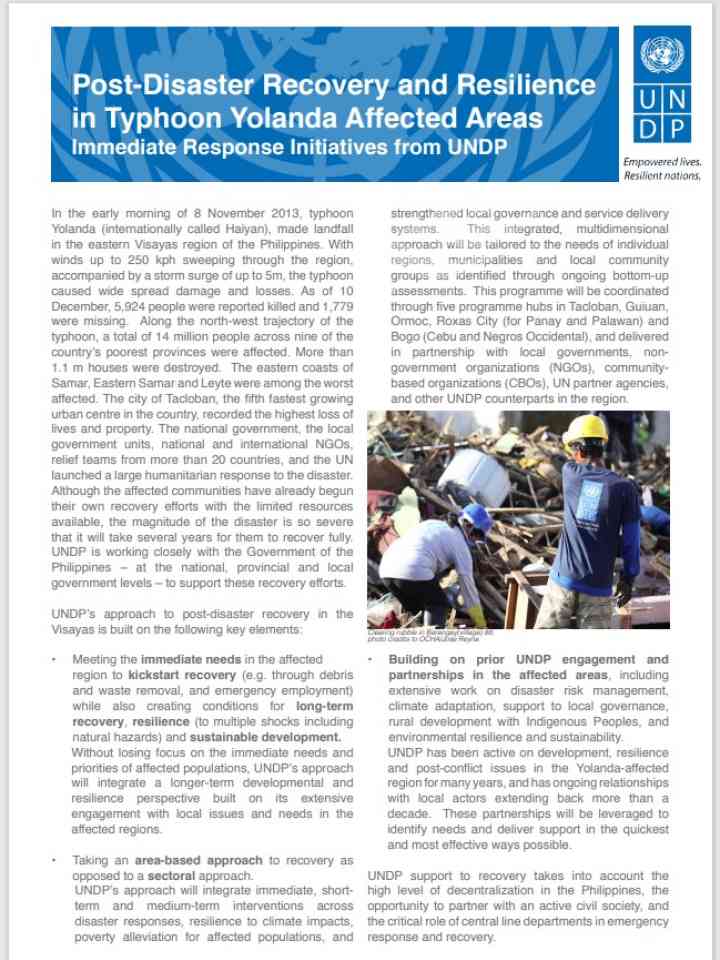
This artcle is immideate response report of affected area after the typhoeen Yolanda(Haiyan), made landfall in the eastern Visayas region of the Philippines.
This report presents an overview of the current situation in the 14 most affected districts by the 2015 Nepal Earthquake and UNICEF's work with children and their communities to ensure reconstruction with resilience.
This document presents the main outcomes, shared lessons and proceedings from the forum on post-disaster recovery organized by ADB in Manila on 20–21 October 2015. This forum provided a venue to share common challenges and possible solutions on planning and managing recovery programs based on lessons and good practices.
This paper analyzes the period of overlap between response and recovery phases in the Philippines occurred three to seven months post-Typhoon Haiyan from February 2014 to July 2014. It highlights the need to define a period of transition from response to recovery of the health sector as it may have important implications on the health system functioning as a whole.
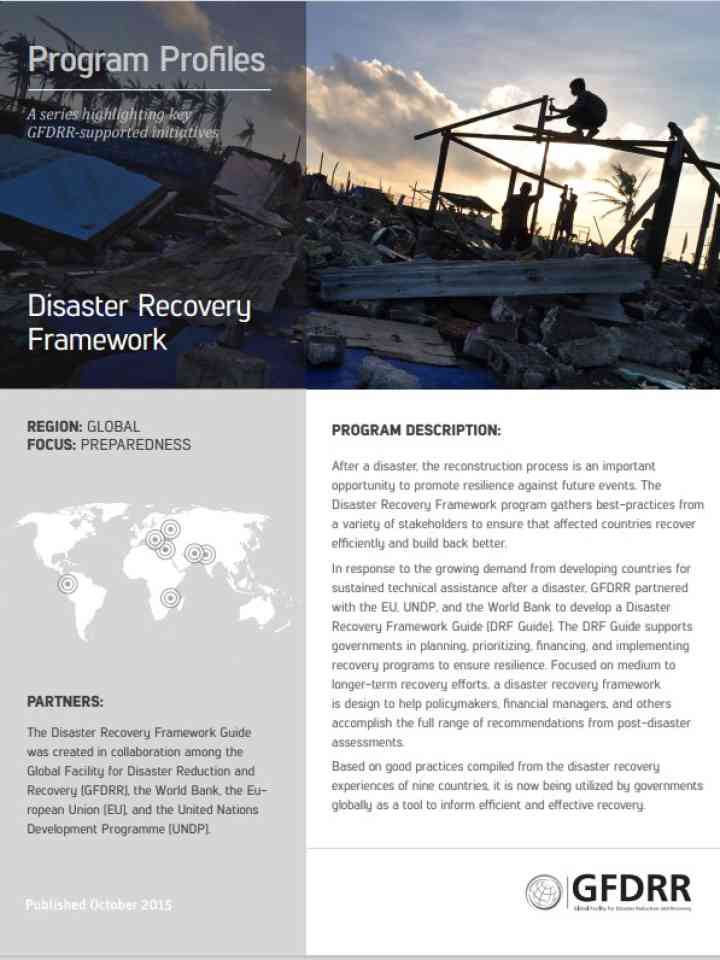
This is an overview of the Disaster Recovery Framework Programme, which collects best practices from various stakeholders to help affected countries recover efficiently and build back better after disasters.
World Bank, the
Global Facility for Disaster Reduction and Recovery, the (GFDRR)