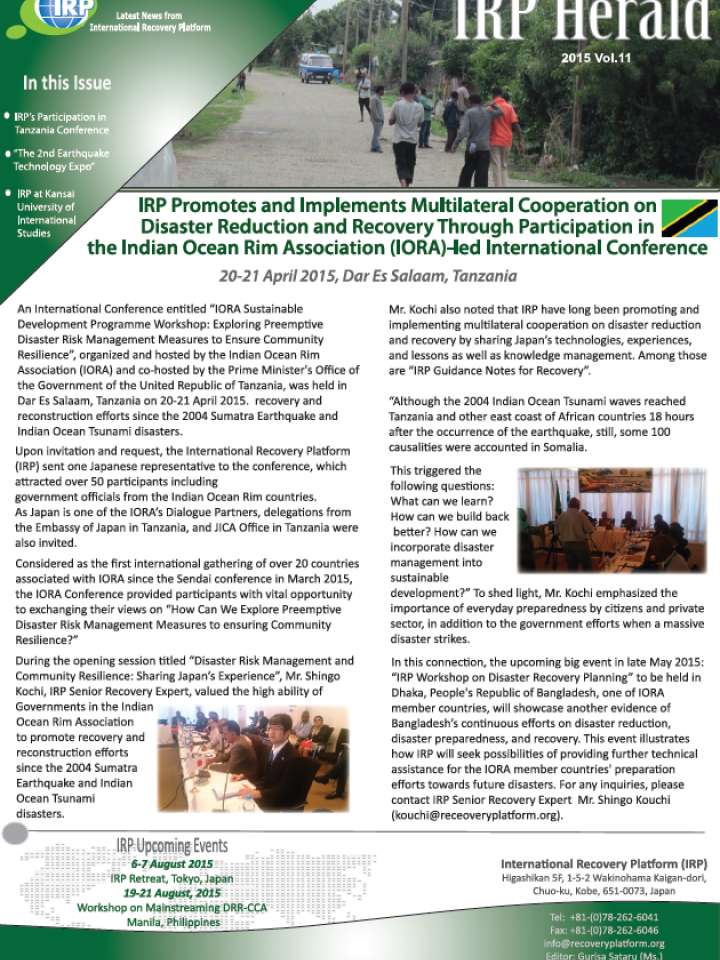
IRP Herald Volume 11 is the knowledge report for the conference “IORA Sustainable Development Programme Workshop: Exploring Preemptive Disaster Risk Management Measures to Ensure Community Resilience” in Tanzania, and the 2nd Earthquake Technology Expo.
In this research report, Oxfam puts the humanitarian system under the lens and finds that it must change to remain effective; with locally led humanitarian action whenever possible; adequate funding to state and non-state actors in affected countries; and
This paper reviews mid-August 2014 floods in Western Nepal that killed over 200 people to draw lessons that go beyond the immediate events. The findings in the study are based on research and interviews with officials, emergency responders, and residents.
Institute for Social and Environmental Transition - International (ISET)
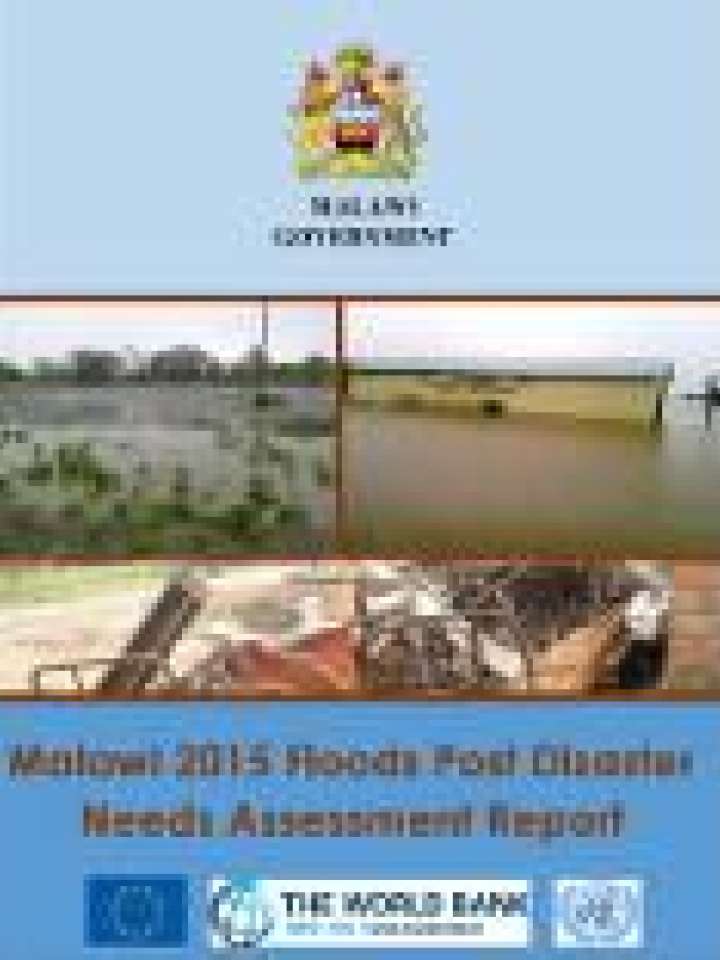
The PDNA report indicates that the Malawi 2015 floods affected 1,101,364 people, displaced 230,000 and killed 106 people. The assessment focuses on medium to long term reconstruction and provides the guiding principles for recovery.
Malawi - government
Global Facility for Disaster Reduction and Recovery, the (GFDRR)
This report examines the level of preparedness of the Government of Malawi for facilitating and regulating the entry and operation of international actors during disasters that require external support and to provide recommendations on how to strengthen
International Federation of Red Cross and Red Crescent Societies (IFRC)
The study presents a series of complementary options for development of a national disaster risk financing strategy, based on a preliminary fiscal risk analysis and a preliminary review of the current budget management of natural disasters in Pakistan
This Framework guides recovery activities both pre-event and post-event and describes the potential roles and responsibilities of City agencies, as well as community players, in recovering Seattle to a fully functioning state following a disaster.
This edition of Asian Disaster Management News focuses on disaster recovery: the governance, economics, and social impacts. It includes features on i) recovery planning, ii) the needs of survivors in post-disaster needs assessments, iii) defining the post-disaster financial requirements for recovery, iv) measuring the social impacts of a disaster and in-depth analysis of the disaster’s impact on food security, poverty, health, and livelihoods, v) building institutional capacity for assessment and recovery, vi) resilient recovery, vii) risk insurance.
IDMC's report explores the challenges in providing sustainable housing assistance to informal urban settlers displaced by disasters. It looks at nine case studies from Asia, America and Europe.
The report presents a comprehensive post disaster needs assessment exercise, launched with response and relief efforts at the request of the Government of Nepal, with the objective to estimate damages and losses caused by the earthquake.
Nepal - government
Global Facility for Disaster Reduction and Recovery, the (GFDRR)