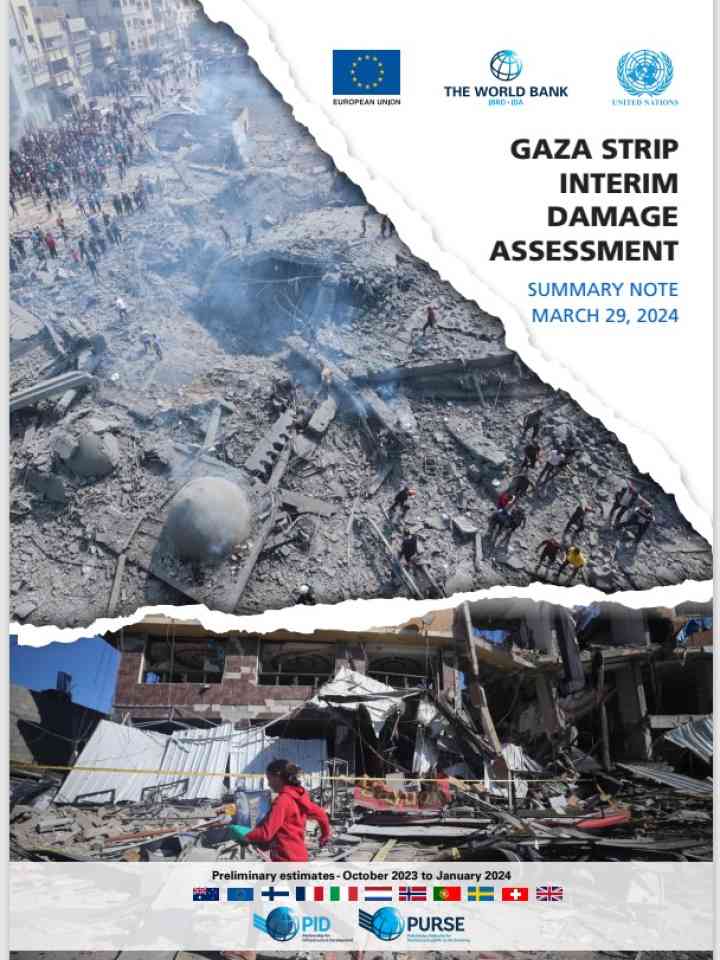
This interim damage assessment note provides a preliminary estimate of the impact of the ongoing conflict in the Gaza Strip up to the end of January 2024.
In partnership the Community Outcomes and Recovery Sub-committee, Queensland Reconstruction Authority and the National Emergency Management Agency developed the National Disaster Recovery Needs Assessment Guidelines.
This systematic review provides insights on the effects of school closures during the COVID-19 pandemic and of measures to reduce learning loss while schools were closed.
This paper outlines the use of collaborative approaches by a climate change and disaster community of practice across seven local government areas in the Northern Rivers region, New South Wales, Australia.
International Journal of Disaster Risk Reduction (Elsevier)
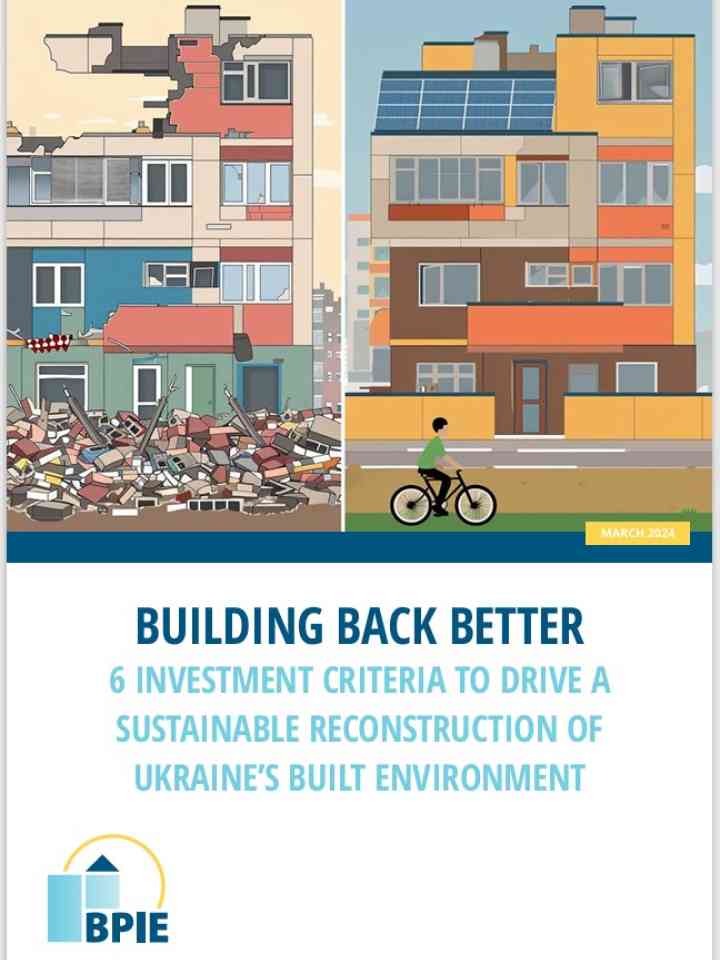
Following the "build back better" principle, the report calls on multilateral donors and the Ukrainian government to allocate funding to projects that meet ambitious energy efficiency, renewable energy, climate adaptation, and circularity criteria.
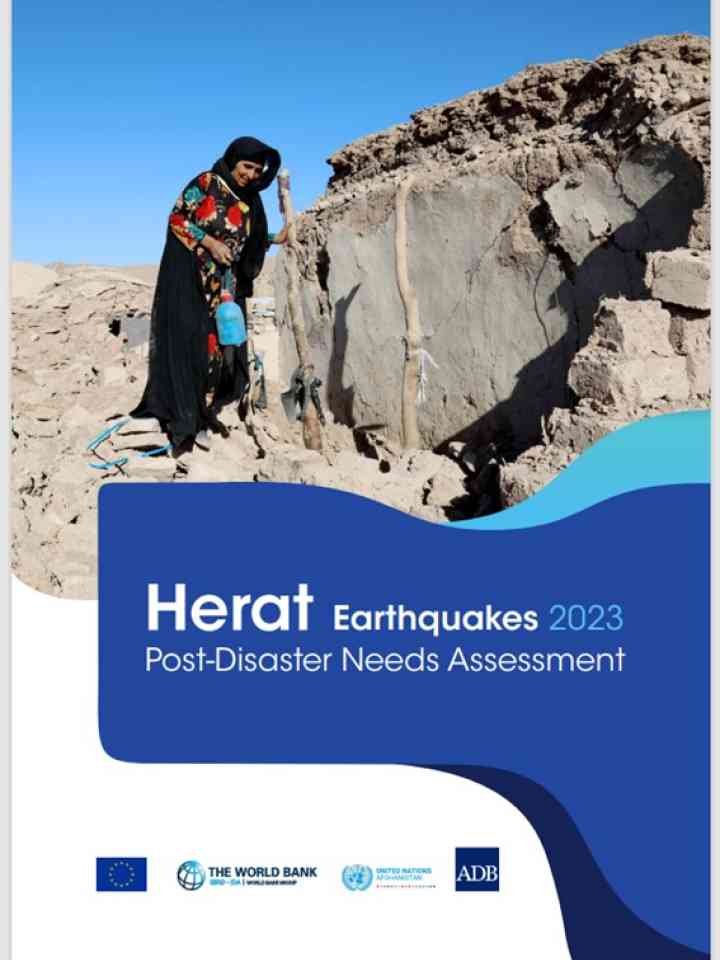
This PDNA report provides an assessment of the severe impacts of the earthquakes which struck Herat, Afghanistan in October 2023, and provides a vision and guiding principles for recovery.
Asian Development Bank (ADB)
European Union
World Bank, the
Global Facility for Disaster Reduction and Recovery, the (GFDRR)
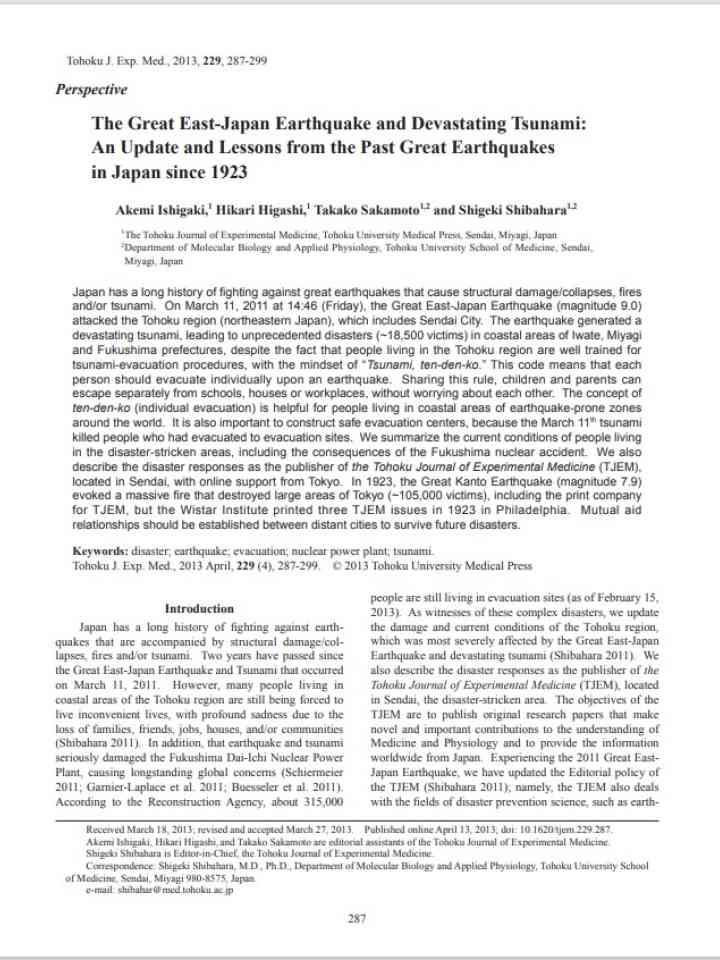
Japan has a long history of fighting against great earthquakes that cause structural damage/collapses, fires and/or tsunami. The Tohoku region are well trained for tsunami-evacuation procedures, with the mindset of “Tsunami, ten-den-ko.”
The Great East Japan Earthquake Tsunami on March 11, 2011, caused unprecedented damage mainly in northeast Japan. This paper introduces the characteristics of the tsunami and resultant damage.