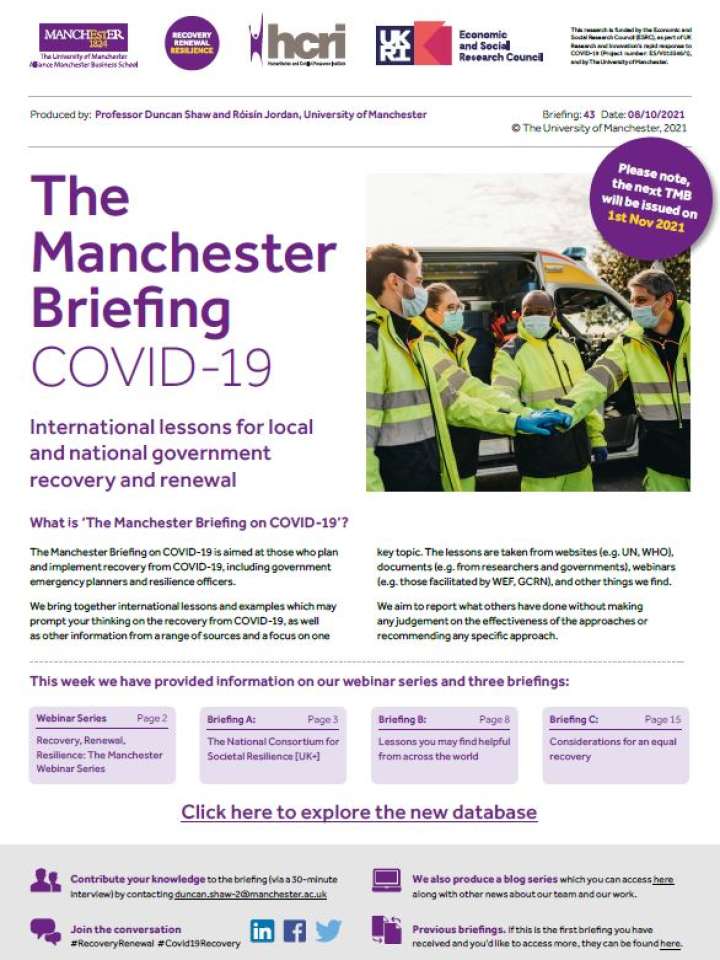
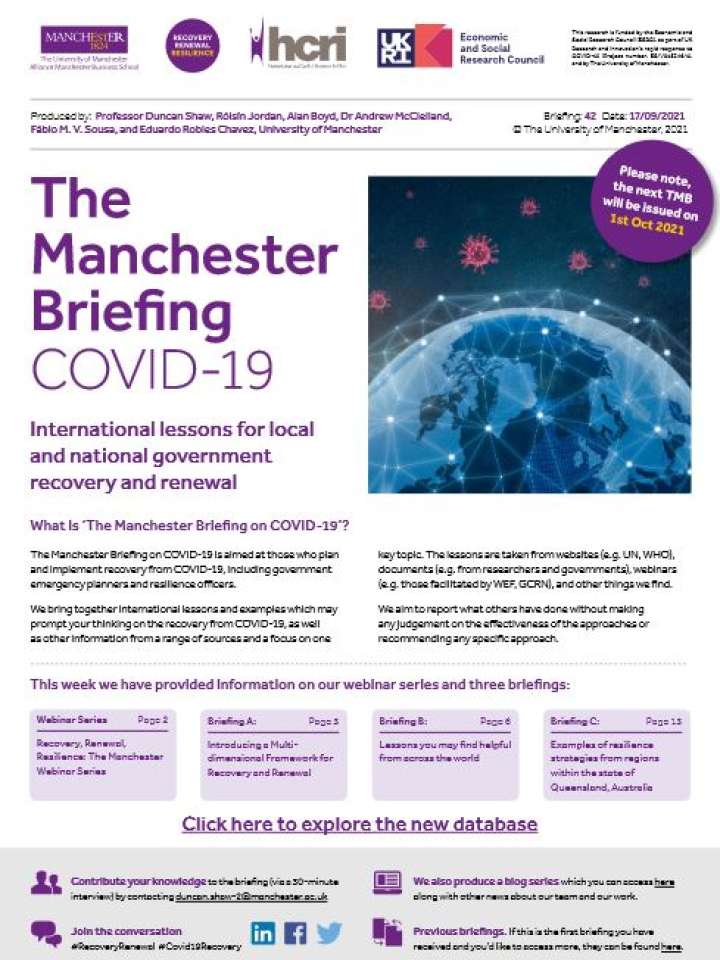
This month’s Manchester Briefing details the NCSR+, a collaboration involving most of UK[+] local governments (covering 96% of the UK[+] population) and 10 sector partners that are key to building resilience.
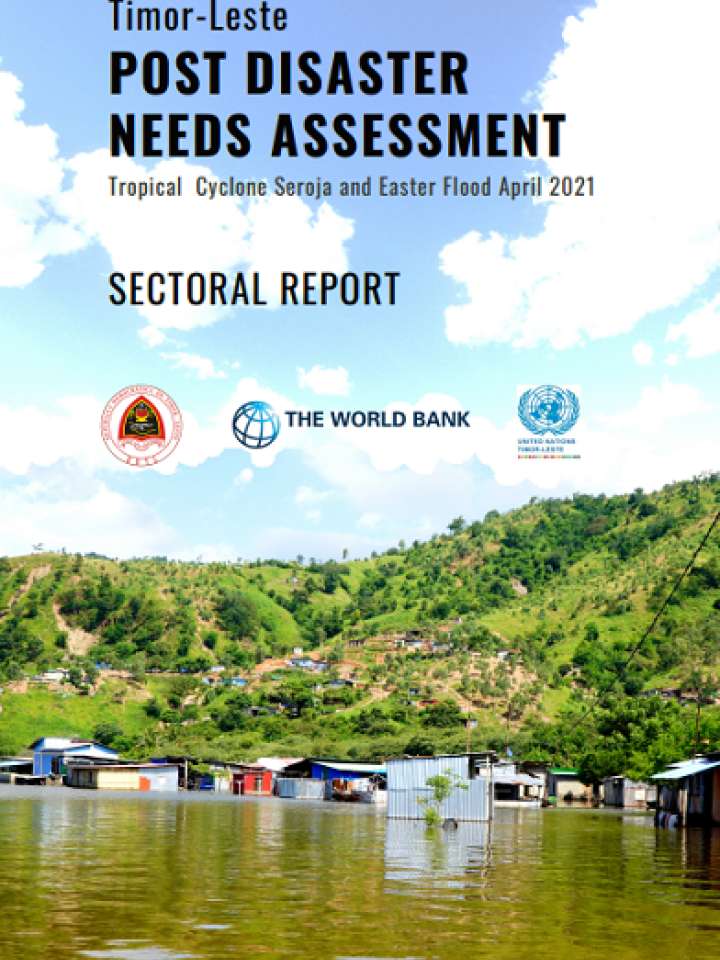
This document provides an assessment of the floods and landslides damage caused by the 2021 Cyclone Seroja and needs of the affected people in Timor-Leste to inform the country's long term post-floods recovery efforts across multiple sectors.
Global Facility for Disaster Reduction and Recovery, the (GFDRR)
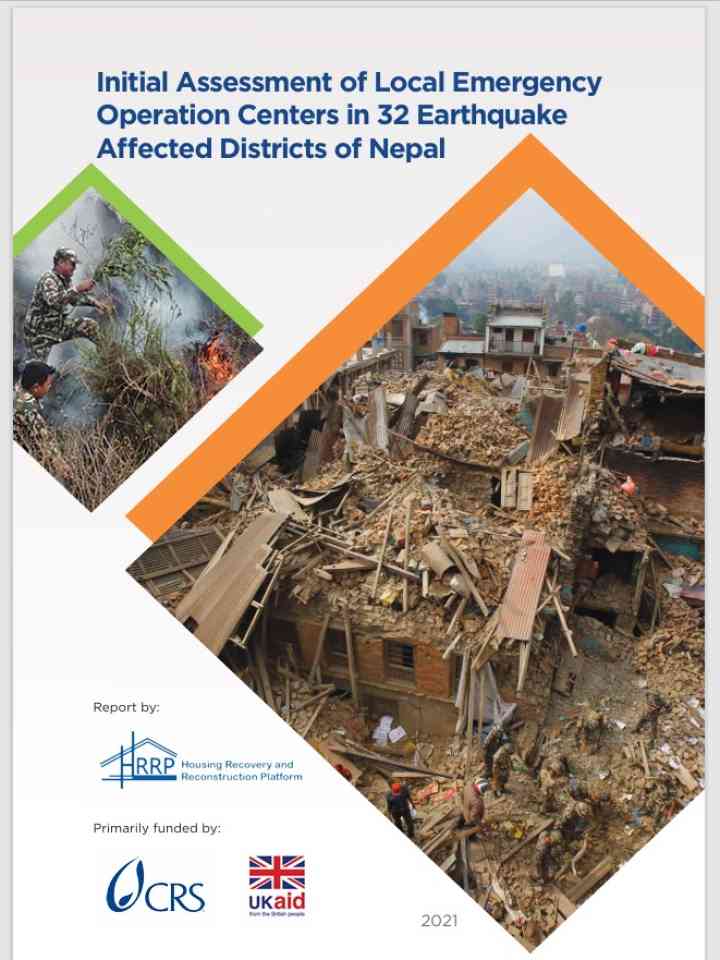
This report presents the findings of a Local Emergency Operation Centre (LEOC) Assessment conducted by the Housing Recovery and Reconstruction Platform in an earthquake-affected district.
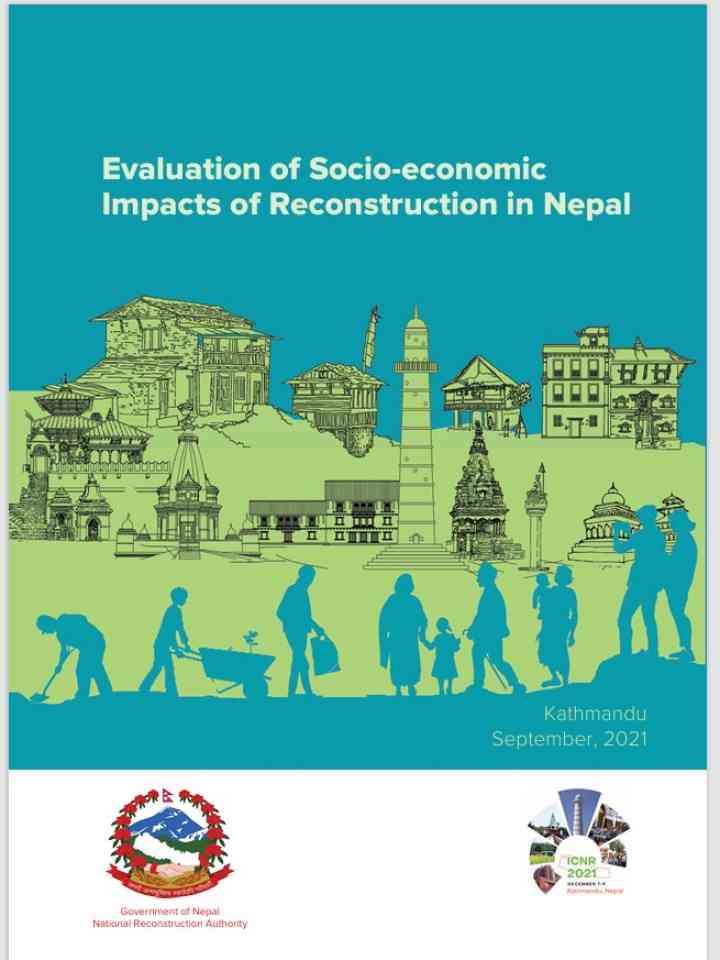
The objective of this study is to evaluate the socio-economic impact of post-earthquake reconstruction and recommend institutional frameworks to sustain and build on the gains of reconstruction after the closure of the National Reconstruction Authority.
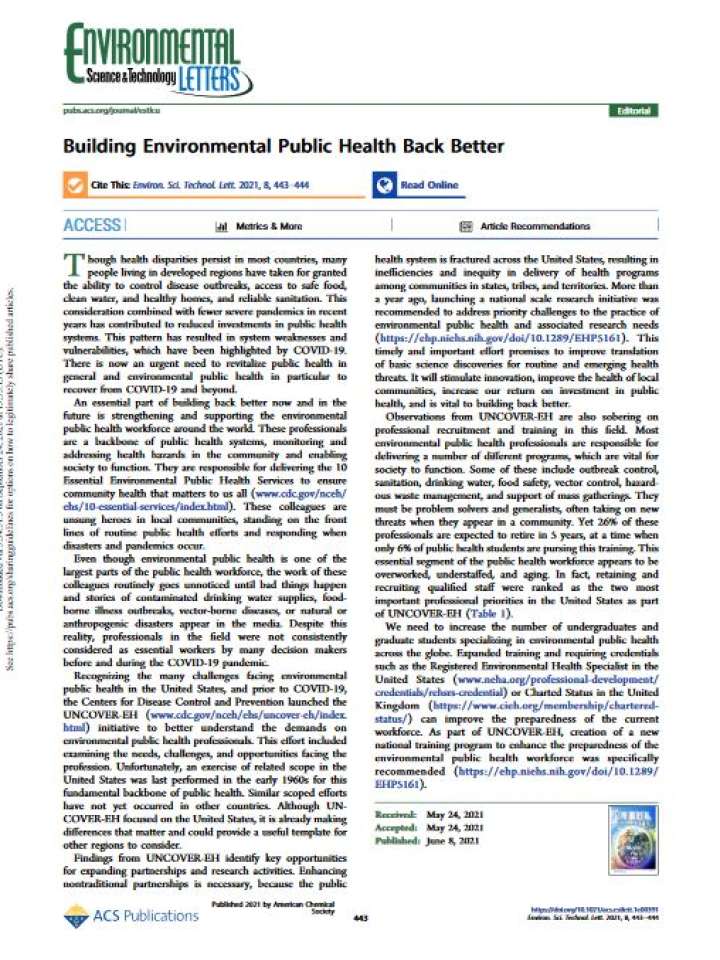
According to the authors there is now an urgent need to revitalize public health in general and environmental public health in particular to recover from COVID-19 and beyond.
This week's Manchester Briefing (Issue 42) details the University of Manchester's Recovery and Renewal Framework, where updates to the framework are explored, its development since April 2020, and how the framework might be applied in practice.
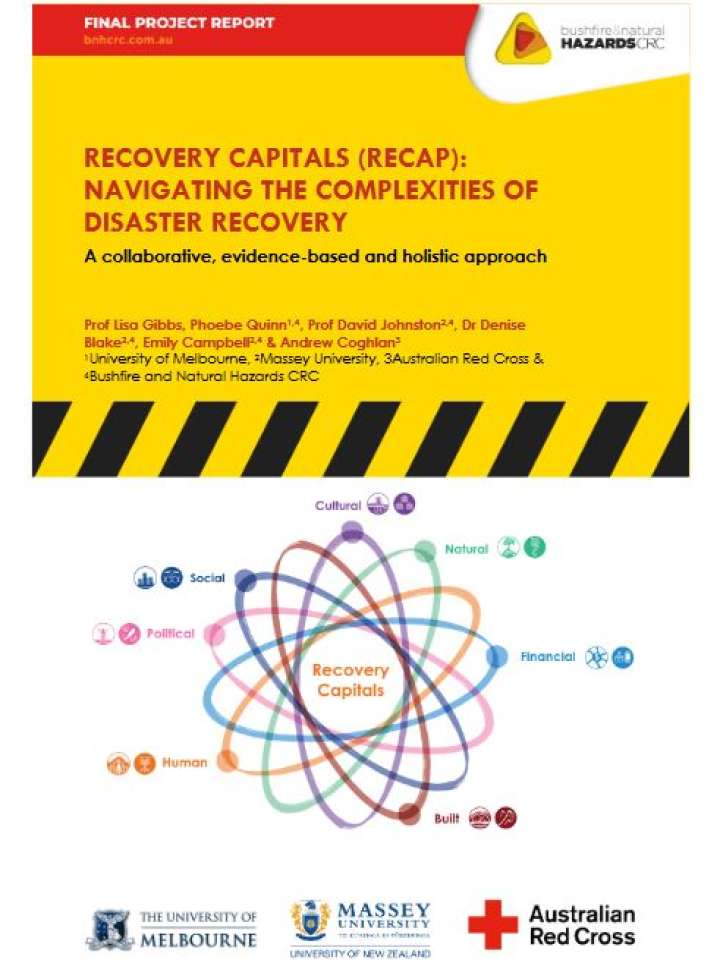
This is the final project report of the Recovery Capitals (ReCap) project. The project aimed to promote wellbeing after disasters by examining the disaster recovery evidence base and producing a set of resources to help guide recovery efforts.
Bushfire and Natural Hazards Cooperative Research Centre
On the theme of Social Capital and Social Connectedness for Resilience, the committee identified three topics as being particularly important for natural hazard mitigation and resilience: (1) inspiring communities to create and sustain social capital and
National Academies of Sciences, Engineering, and Medicine, The