Navigation failed to load. If you are on the UNDRR office network, your browser may be blocking access to external resources. Learn how to allow access.
This book presents a selection of examples and experiences of disaster reduction that responds to the need for identifying good practices and sharing experiences and information, identified by many - including Governments - during the preparatory process
United Nations Office for Disaster Risk Reduction (UNDRR)
This manual has two broad aims: first, to promote the proper and dignified management of dead bodies, and second, to maximize their identification. Following disasters, implementing simple measures early on can significantly improve the opportunity for
World Health Organization (WHO)
International Federation of Red Cross and Red Crescent Societies (IFRC)
UNDP has been supporting various initiatives of the central and state Governments to strengthen the disaster management capacities for nearly a decade. UNDP proposes to accelerate capacity building in disaster reduction and recovery activities at the
For as long as they have existed, cities have been destroyed--sacked, shaken, burnt, bombed, flooded, starved, irradiated, and pillaged--in almost every case they have risen again. Rarely in modern times has a city not been rebuilt following destruction
This issue brief discusses the importance of childcare for disaster recovery and provides policy recommendations on how to protect and restore community childcare infrastructure in disasters.
This case study presents how the Municipality of Patong converted the tragedy into an opportunity and stood up to the challenges posed by the Indian Ocean Tsunami event in clearing the destruction and re-launching itself in less than two years.
This paper documents the impact of the December 2004 Indian Ocean Tsunami on tourism in Sri Lanka and a detailed overview of the recovery strategies adopted in the aftermath of the disaster.
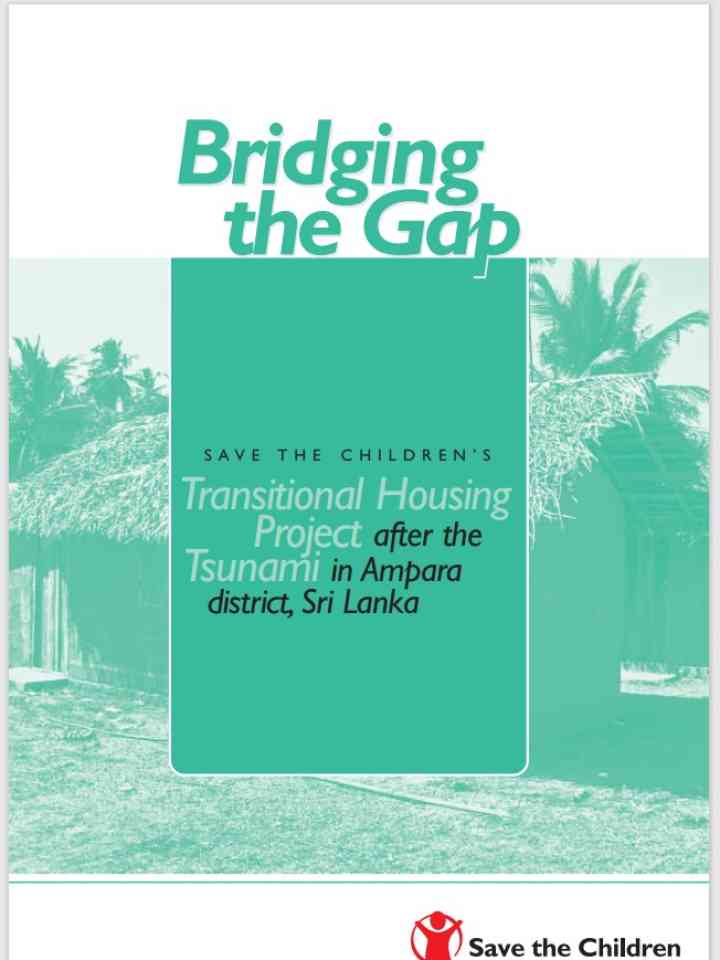
The publication documents the shelter construction process in Ampara district, Sri Lanka, following the 2004 tsunami and pays particular attention to the community consultations that were part of this reconstruction process.