This issue covers articles related to disaster risk reduction and the floods in Uttarakhand. It is intended to national authorities and international organizations such as World Bank, Asian Development
This framework explains the Disaster Risk Reduction for Food and Nutrition Security Framework Programme of the Food and Agriculture Organization of the United Nations (FAO) which has been undertaken with the goal of enhancing the resilience of livelihoods
Food and Agriculture Organization of the United Nations (FAO)
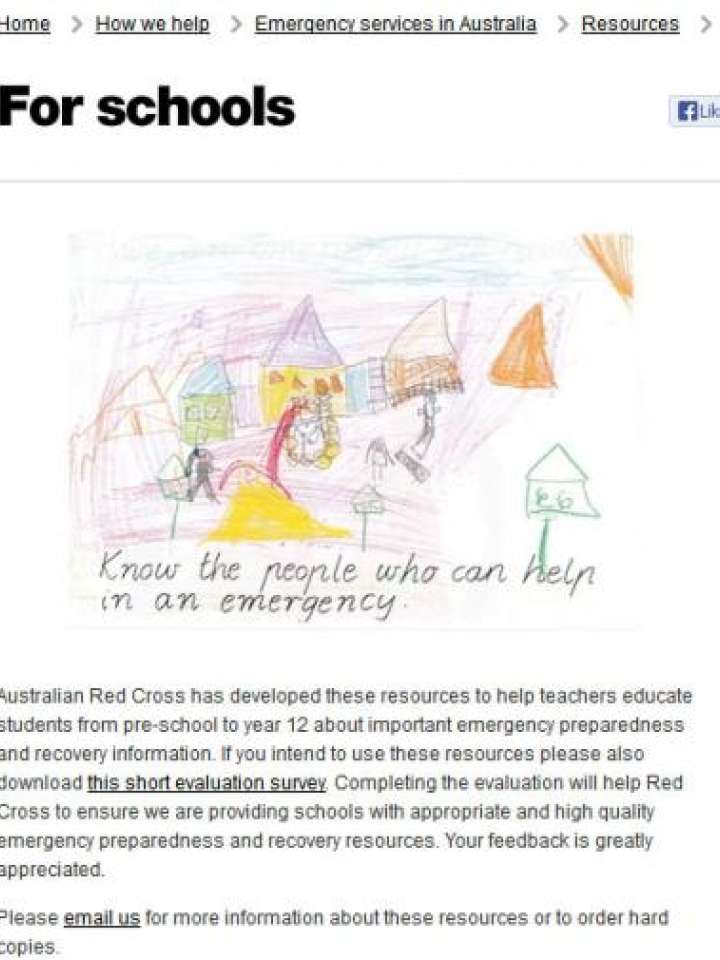
Australian Red Cross has developed this suite of lesson plans to help teachers educate students from pre-school to year 12 about important emergency preparedness and recovery information.
Endorsed by the Australian Psychologists Society and the Australia Child & Adolescent Trauma, Loss and Grief Network, the lesson plans were developed by teachers with advice from experienced emergency managers and a psychologist experienced in emergency preparedness and recovery.
The plans have been designed to assist students to prepare for emergencies, to reflect on situations and scenarios and to be aware of the feelings they may have after an emergency.
This document is a tool for national governments who wish to conduct simple, inexpensive table top and functional exercises to test systems and procedures contained within their national disaster management plans.
This guide addresses the absence of a risk reduction focus both in humanitarian aid and in the reconstruction processes and the related increase of the physical, social, economic, and environmental vulnerability of the population to new events.
This special issue was prepared entirely to present the United Nations International Strategy for Disaster Reduction (UNISDR) campaign on making cities resilient.
Centre for Disaster Resilience, University of Salford