This report examines the response to the Pakistan floods of 2010. It states that the frequency and severity of natural disasters are predicted to increase. Along with increases in population, especially in urban centres, the number of fatalities and the
This report, published two weeks after the Great East Japan (Tohoku-Kanto) earthquake and tsunami, provides a synthesis of certain existing data and a basic situation analysis of the situation. It considers the major challenge posed to the disaster risk reduction community by: (i) the earthquake; (ii) the tsunami; (ii) the ongoing nuclear emergency; and (iv) the fires, in terms of damage to (v) human life and (vi) infrastructure. It then focuses on the after event period, especially on the search and rescue operation, as well as on shelters. It also considers the economic impact and the work of volunteers.
Graduate School of Global Environmental Studies, Kyoto University 地球環境学堂・地球環境学舎・三才学林
This special report analyses the situation in Japan following the 8.9 earthquake which spawned one of the most powerful tsunamis on record. It states that Japan is among the best prepared countries in the world regarding earthquakes with quake-resistant buildings, drills for school children and households equipped with survival kits. It specifically addresses the attempt to avert a meltdown at a stricken nuclear reactor and the expected colossal economic damage.
This synthesis provides key lessons drawn from evaluations and completion reports of the Asian Development Bank (ADB)-supported emergency response and rehabilitation efforts in developing member countries affected by natural disasters, particularly floods
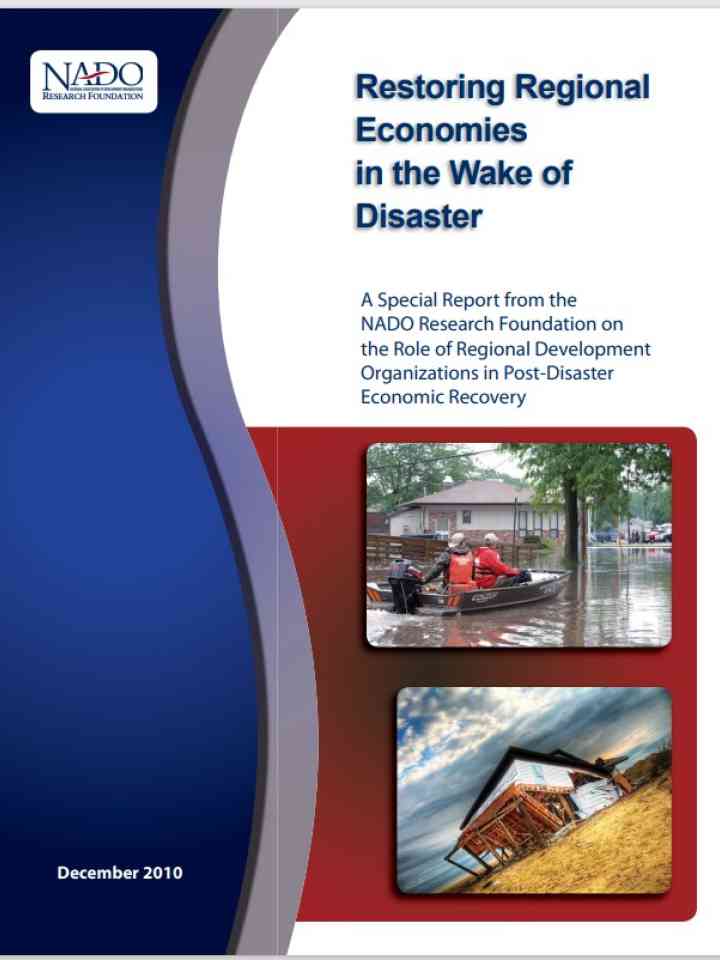
This report focuses on the role of regional development organizations, including those designated as EDA economic development districts (EDDs), in the long-term post-disaster economic recovery process.
National Association of Development Organizations, the
This publication is an initial step in documenting, collecting and sharing disaster recovery experiences and lessons, which also integrate disaster reduction initiatives aimed at reducing the womens' vulnerability.
United Nations Development Programme (UNDP)
United Nations Office for Disaster Risk Reduction (UNDRR)
This document assesses the reasons why Haiti is considered as a fragile state and how the 2010 earthquake further weakened the Haitian institutions, increasing risks of social unrest. It addresses Haiti's vulnerability to natural hazards such as tropical
European Commission’s Directorate-General for European Civil Protection and Humanitarian Aid Operations (DG ECHO)
This paper presents a simple framework to help policy makers devise financial protection strategies against 'natural' disasters. It starts with a short analysis of the impact of disasters on government budgets and fiscal balances. It presents various
This toolkit consists of seven independent guides and an accompanying set of tools for each guide. Each guide is written in a question and answer format that introduces a core subject related to the ILO’s response to a natural disaster or post-conflict
This document addresses the challenge of sustainable reconstruction for Haiti following the earthquake of 7.0 on the Richter scale in early January 2010. It targets Haiti's need to rebuild its entire economy in a sustainable
United Nations Department of Economic and Social Affairs (UN DESA)