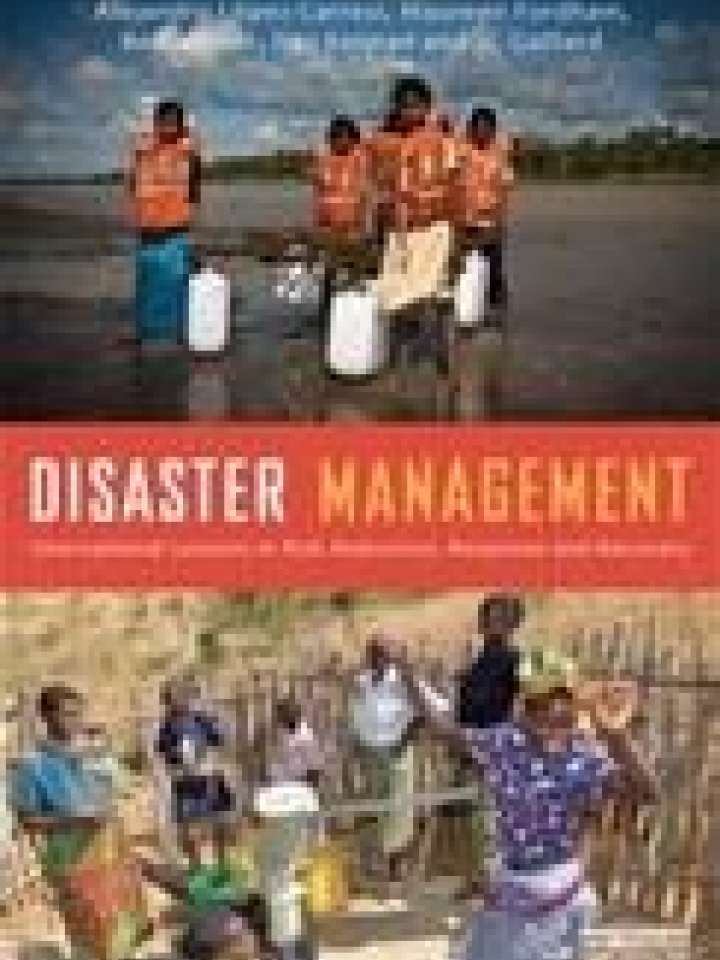
This book addresses the perennial gap between theory and practice, between academia and active professionals in the field of disaster management. It offers vital lessons to practitioners from scholarship on natural hazards, disaster risk management and
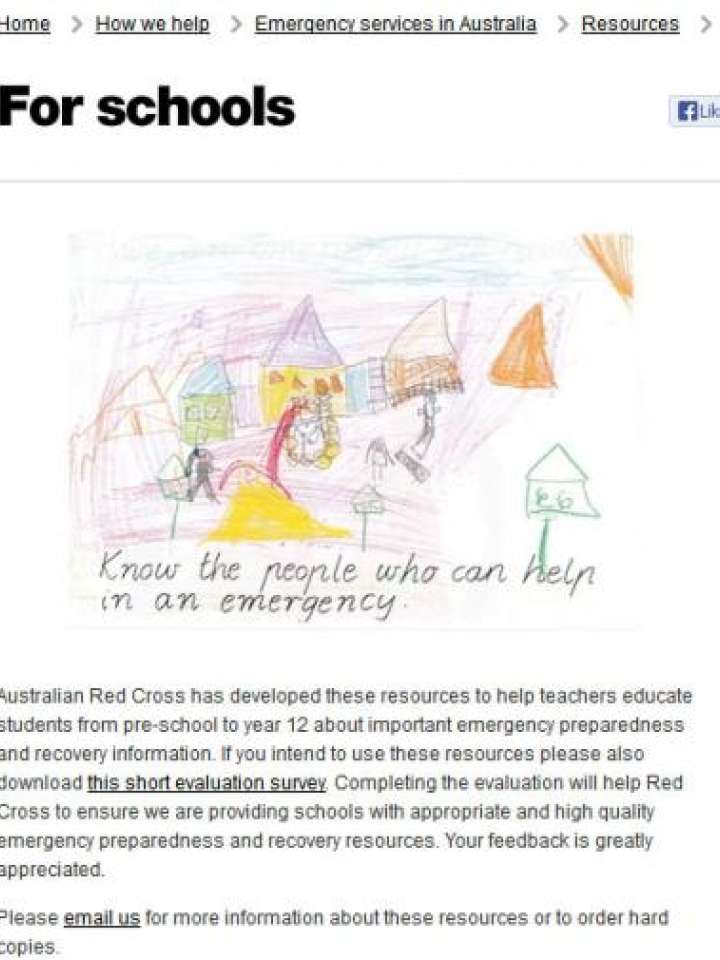
Australian Red Cross has developed this suite of lesson plans to help teachers educate students from pre-school to year 12 about important emergency preparedness and recovery information.
Endorsed by the Australian Psychologists Society and the Australia Child & Adolescent Trauma, Loss and Grief Network, the lesson plans were developed by teachers with advice from experienced emergency managers and a psychologist experienced in emergency preparedness and recovery.
The plans have been designed to assist students to prepare for emergencies, to reflect on situations and scenarios and to be aware of the feelings they may have after an emergency.
This report aims to respond to the question of how the five priorities for disaster risk reduction (DRR), identified by children from 21 hazard-prone countries in the Children’s Charter for DRR, can be achieved, exploring the enabling factors and
Plan International (PI)
United Nations Office for Disaster Risk Reduction (UNDRR)
Kesennuma City in Miyagi Prefecture was one of the coastal cities in the Northeast Tohoku Region which was heavily affected by the East Japan Earthquake and Tsunami (EJET) that took lives of over 1,200 people, affected 80.8% of the business and deprived
Graduate School of Global Environmental Studies, Kyoto University 地球環境学堂・地球環境学舎・三才学林
This knowledge note focuses on various aspects of disaster risk reduction (DRR) and environmental management, including studies on: (i) developing record of school experiences from the East Japan Earthquake and Tsunami (EJET); (ii) building school-based disaster resilient community, which includes a review of past DRR activities; (iii) interlinking DRR education with Education for Sustainable Development (ESD); (iv) strengthening community network in temporary housing facilities; and (v) the role of social capital in post-disaster recovery. It is part of a series, which is expected to continue with periodical publication for the next 3 to 5 years with close insights on community recovery in the Tohoku Region, Japan.
Graduate School of Global Environmental Studies, Kyoto University 地球環境学堂・地球環境学舎・三才学林
This newsletter reports on Earthquake Reconstruction and Rehabilitation Authority (ERRA)'s unique model in disaster reconstruction and rehabilitation. It also highlights the social impact of its strategies in the following sectors: education, environment
Earthquake Reconstruction and Rehabilitation Authority
This newsletter reports on Earthquake Reconstruction and Rehabilitation Authority (ERRA)'s completion of its reconstruction portfolio in earthquake affected areas of Pakistan in 2011-2012, as well as on the social impact of its strategies in the following
Earthquake Reconstruction and Rehabilitation Authority
This guide is an introductory resource for staff of development and humanitarian organizations working with people whose live and rights are threatened by disasters and climate change.The guide provides essential introductory information, principals of