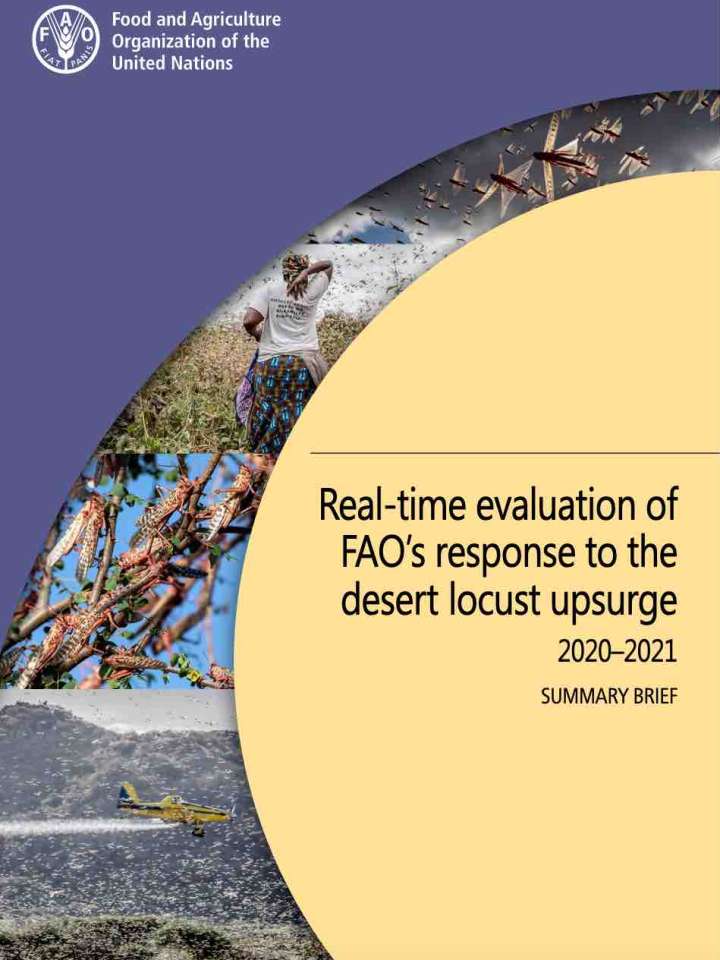
FAO's Office of Evaluation conducted a real time evaluation across three phases spread over one year, covering specific aspects of the response: coordination between June to October 2020, management at country level, and lessons learnt.
Food and Agriculture Organization of the United Nations (FAO)
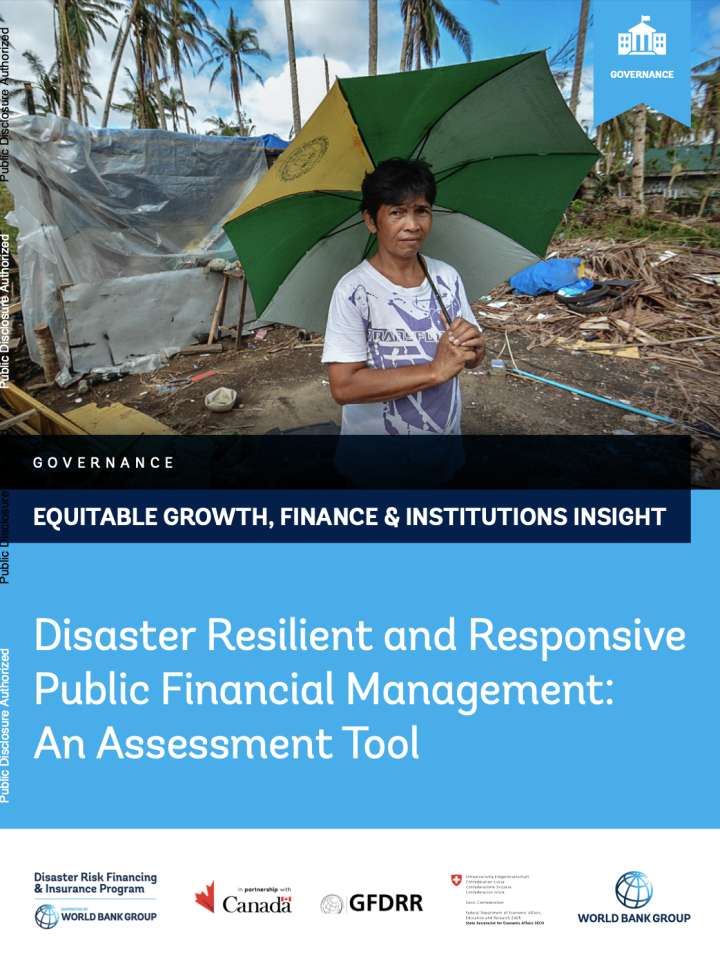
The Disaster Resilient and Responsive Public Financial Management (DRR-PFM) Assessment is designed to help countries strengthen the capability of their Public Financial Management (PFM) systems to prepare for, respond to, and recover from disasters.
World Bank, the
Government of Canada
Global Facility for Disaster Reduction and Recovery, the (GFDRR)
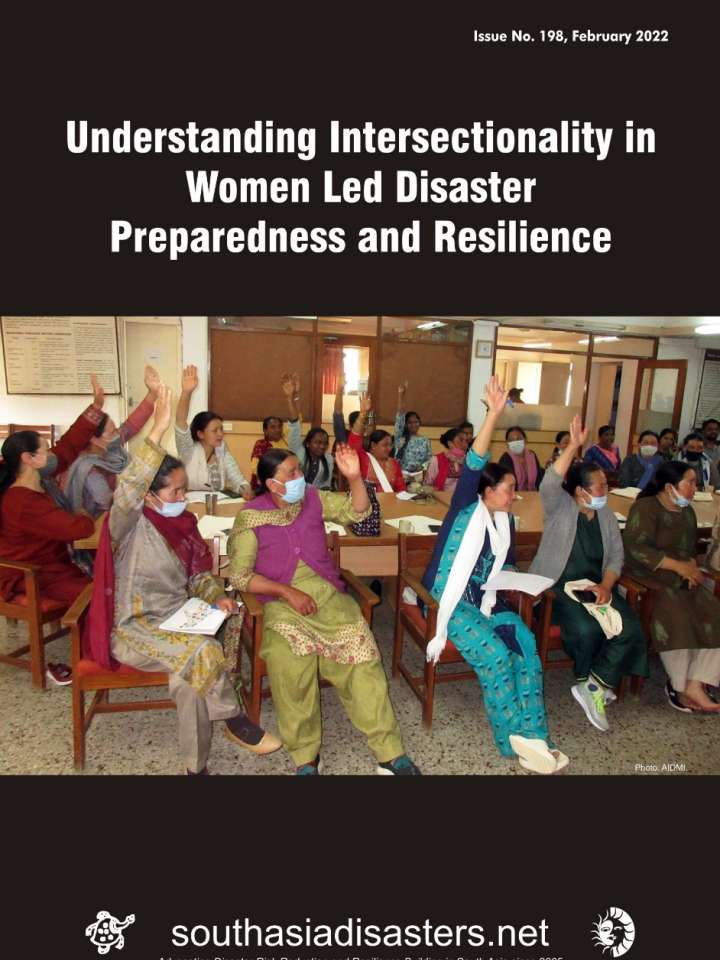
This issue highlights the interplay of risk, resilience and gender. It seeks to highlight the concept of ‘differentiated vulnerability’ to disasters and extreme events as experienced by women and girls as compared to boys and men.
This document is intended to guide local authorities and First Nations as they plan for postdisaster recovery. It is scalable and can be used from a small event (e.g. single apartment fire) to a large event (e.g. wildfire event).
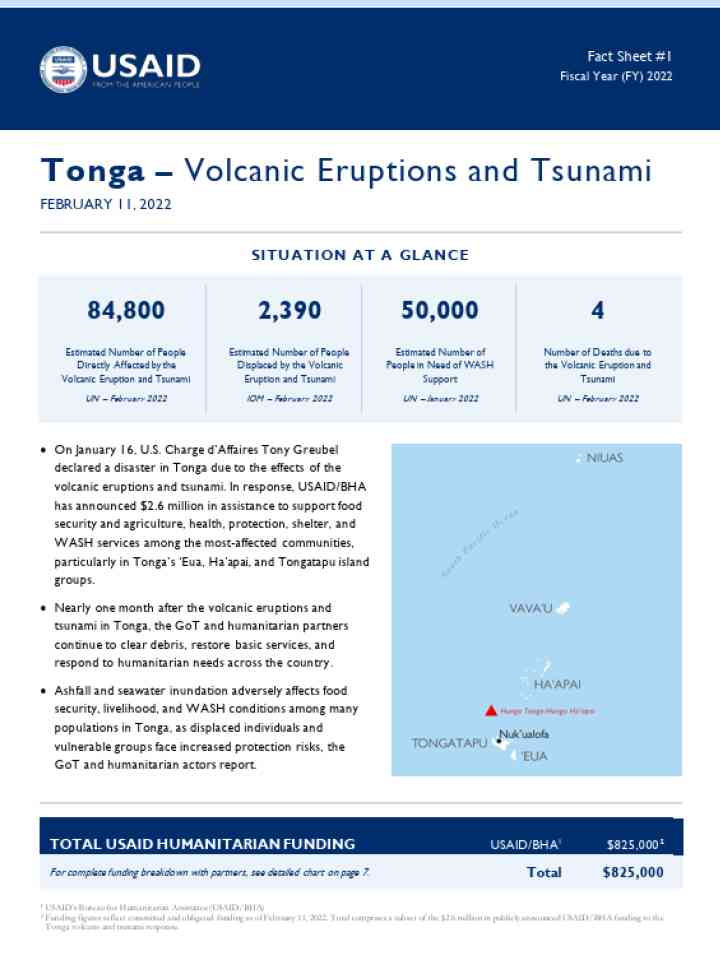
These fact sheets outline humanitarian impacts, priority needs, and response actions following the Hunga Tonga–Hunga Haʻapai volcanic eruptions and tsunami in January 2022.
United States Agency for International Development (USAID)
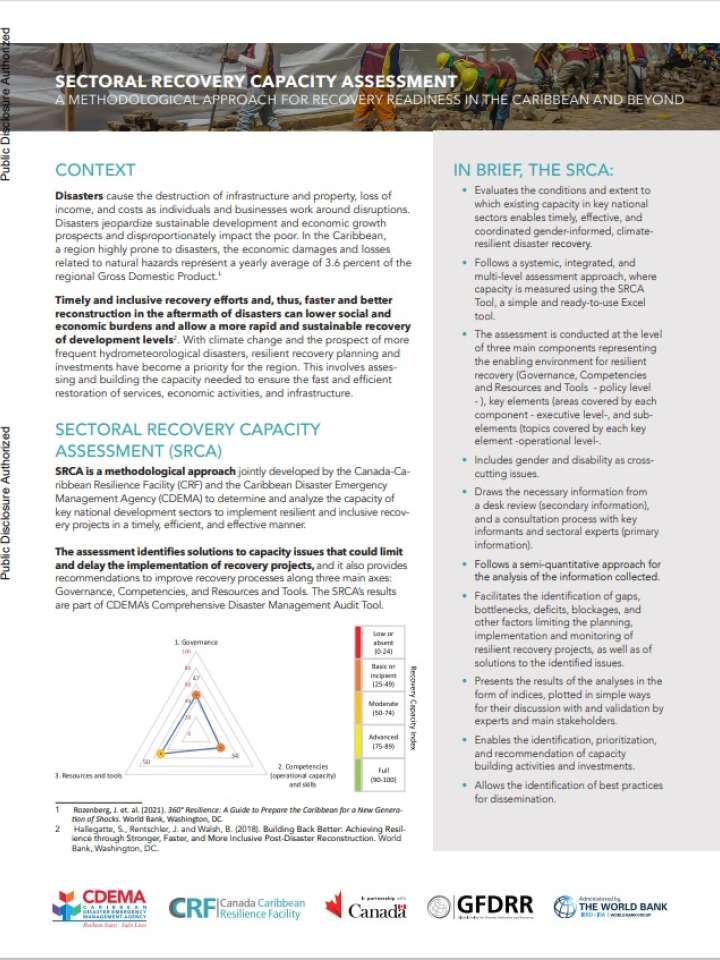
This document summarizes the Sectoral Recovery Capacity Assessment, a methodological approach to determine and analyze the capacity of key sectors to implement resilient and inclusive recovery projects in a timely, efficient, and effective manner.
World Bank, the
Caribbean Disaster Emergency Management Agency
Global Facility for Disaster Reduction and Recovery, the (GFDRR)
Caribbean Catastrophe Risk Insurance Facility, the
The State of Finance for Nature in the G20 report attempts to capture the complete amount and future need for G20 country spending on nature-based solutions assets and activities.
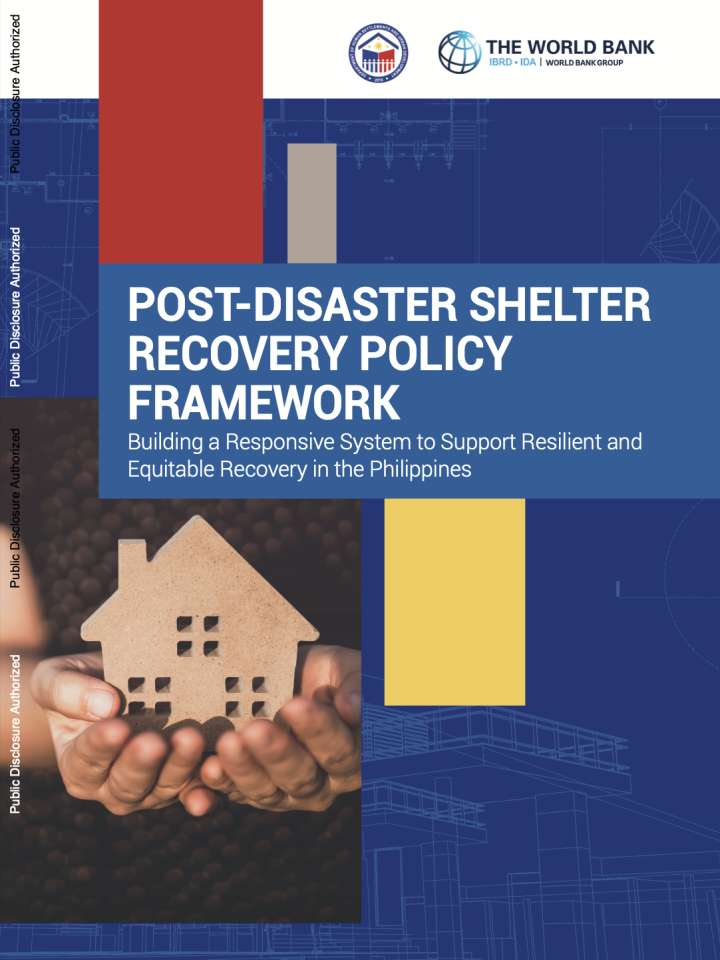
This paper assesses post-disaster shelter recovery policy frameworks in the Philippines by building a responsive system to support resilient and equitable recovery. Every year, shelter in the Philippines is being lost to climate-related events.
World Bank, the
Global Facility for Disaster Reduction and Recovery, the (GFDRR)