With the aim of continuing the momentum made by the ASEAN in over a decade on regional disaster management collaborations, the AADMER Work Programme 2021-2025 was developed based on the foundation laid out by the AADMER itself. It is guided by the vision set by the AADMER to “build a region of disaster-resilient nations, mutually assisting and complementing one another, sharing a common bond in minimising adverse effects of disasters in pursuit of safer communities and sustainable development”. For 2021-2025, the mission is to “enhance and support ASEAN’s disaster risk reduction and disaster management capabilities through inter-sectoral cooperation, capacity building, scalable innovation, resource mobilisation, new partnerships, and stronger coordination among ASEAN Member States”.
This guidebook is a planning tool to design, manage and assess recovery following a disaster. It describes institutional options, successful characteristics and management lessons based on real-world experience with disaster recovery operations.
The purpose of this plan is to provide guidance to officials in Sacramento County on how to organize and manage the short-and long-term recovery processes to assist the county in becoming more resilient to the impacts from future disasters.
This paper examines how Kerala financed recovery after the 2018 floods, outlining statutory provisions, fiscal challenges, and the mix of public, private, and external mechanisms used to support reconstruction.
The Framework establishes a purposeful approach to enhance the Snohomish County's (Washington, USA) ability to manage recovery from disasters. Its purpose is to foster a timely recovery and efficient transition to the new normal of post disaster life.
This second edition of Ready for the Dry Years reveals that the severity of two drought events during 2015-2016 and 2018-2020 exceeds anything recorded in the past two decades, since the major El Niño of 1997-1998.
Association of South East Asian Nations (ASEAN)
United Nations Economic and Social Commission for Asia and the Pacific (UN-ESCAP)
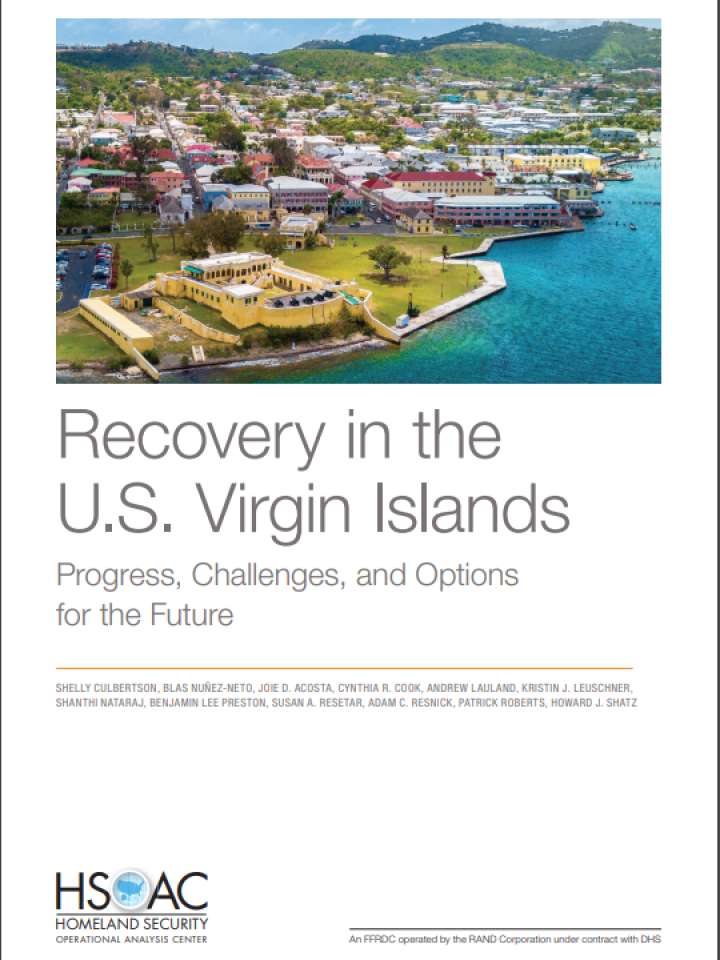
This report provides analysis to help the U.S. Virgin Islands accelerate its recovery from 2017’s Hurricanes Irma and Maria by identifying recovery goals, recovery accomplishments, and challenges. The authors focused on crosscutting capacities needed for