This disaster risk reduction situation report on the 25 April 2015 Nepal earthquake is divided into three parts: historical disaster impacts, risks and scenarios, and disaster risk reduction (DRR) implementation status. It provides an overview of Nepal's
United Nations Office for Disaster Risk Reduction (UNDRR)
The policy has been developed to guide disaster risk management mainstreaming in Malawi by devising policy strategies aimed at achieving the long term goal of reducing disaster losses in lives and in the social, economic and environmental assets of
The policy brief draws on lessons learned from the Fukushima earthquake and elaborates on solutions for displaced populations trapped in uncertainty. It provides recommendations regarding: (i) durable solutions which systematically need to be established through ongoing re-examinations of policies, laws and institutions; (ii) social and psychological consequences as a key topic just as (re-)construction of physical infrastructure and environmental remediation; and (iii) displaced people, for them to exercise agency and take ownership of the process.
United Nations University - Institute for the Advanced Study of Sustainability (UNU-IAS)
This publication critically examines urban policies and projects from the perspective of climate change adaptation and disaster risk reduction, urban resiliency, inclusive cities, and the impacts of the informal economy.
United States Agency for International Development (USAID)
Woodrow Wilson International Center for Scholars, the
This document outlines Japan's cooperation for disaster risk reduction (DRR) from 2015 to 2018, through a triple approach combining: (i) non-material assistance, such as human resource development and institutional development, (ii) material assistance
This bulletin addresses the progress on DRR of the ASEAN Member States. It is a review of the progress made under the Hyogo Framework and consider the way forward for DRR. This brief review is provided by By Centre for Non-Traditional Security (NTS) Studies S. Rajaratnam School of International Studies (RSIS), Singapore.
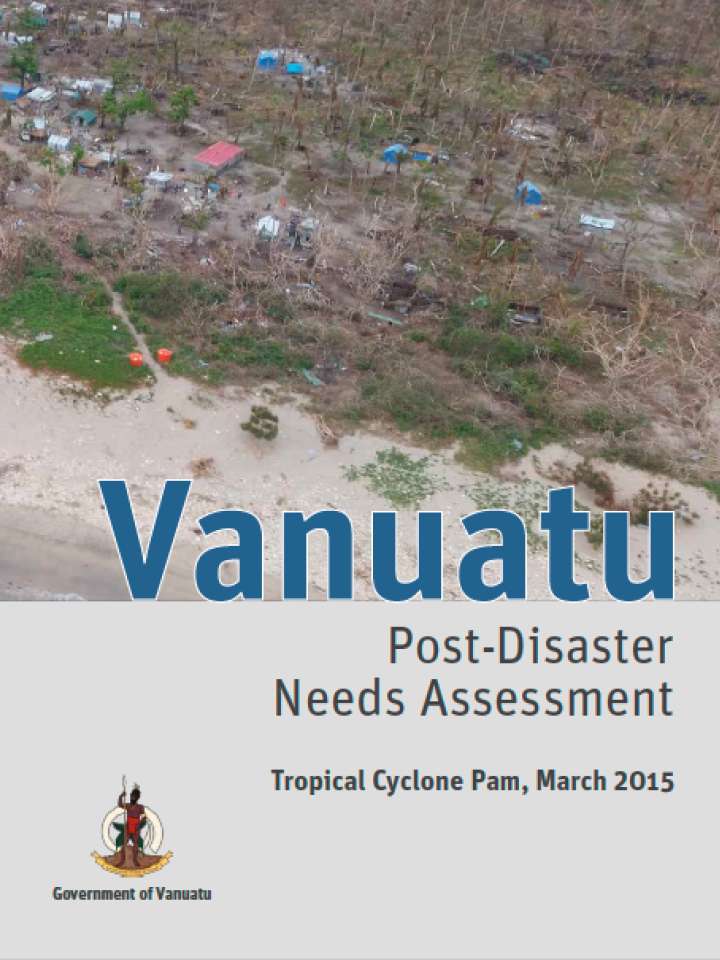
This PDNA covers the damage, loss, and needs across various sectors following Tropical Cyclone Pam. Key issues and challenges regarding disaster risk management in Vanuatu are identified in the report.
Vanuatu - government
Global Facility for Disaster Reduction and Recovery, the (GFDRR)
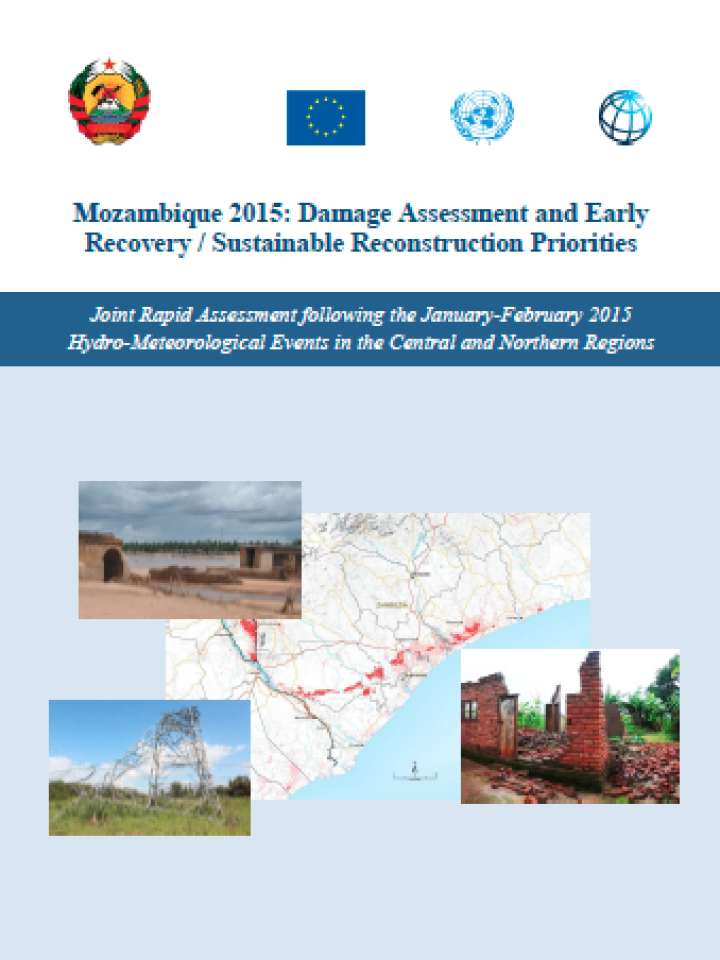
This assessment evaluates the impact of heavy rain and flooding on Mozambique’s population and infrastructure. It also provides advice on flood recovery and long-term disaster resilience in the affected areas.
Mozambique - government
Global Facility for Disaster Reduction and Recovery, the (GFDRR)