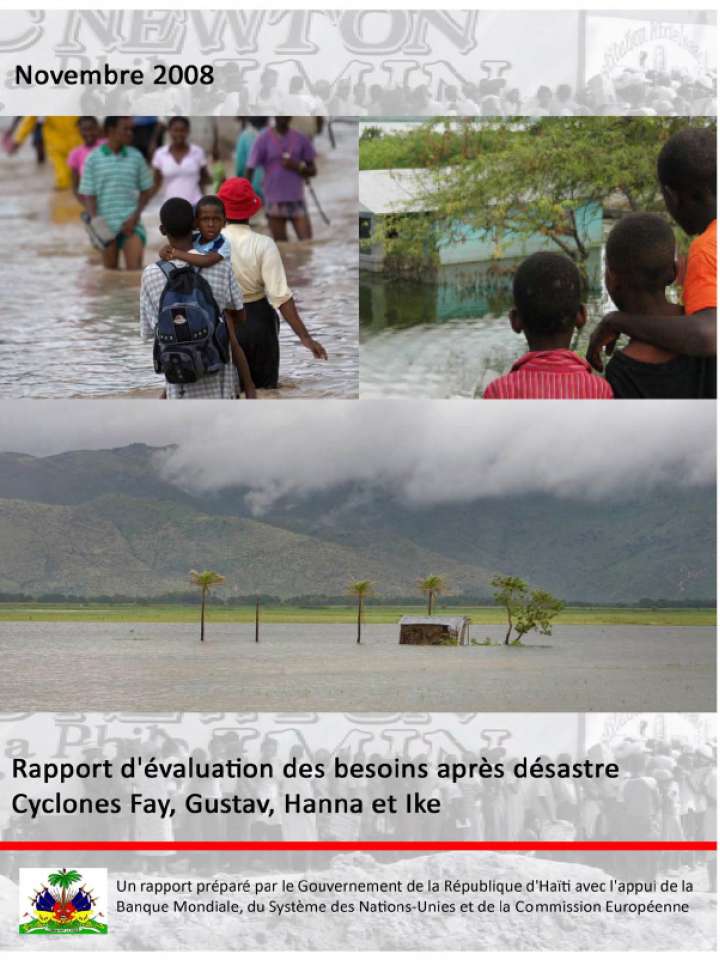
This Post Disaster Needs Assessment estimates the total damages and identifies immediate needs for rehabilitation and reconstruction in Haiti following the 2008 storms Gustav, Hanna, Ike and Fay.
Haiti - government
Global Facility for Disaster Reduction and Recovery, the (GFDRR)
This report presents an estimation of the main effects of the disaster: the value of physical assets totally or partially destroyed; losses in economic flows from the absence of those assets; and the impact on economic development and social conditions.
Yemen - government
World Bank, the
Global Facility for Disaster Reduction and Recovery, the (GFDRR)
United Nations Office for Disaster Risk Reduction (UNDRR)
International Federation of Red Cross and Red Crescent Societies (IFRC)
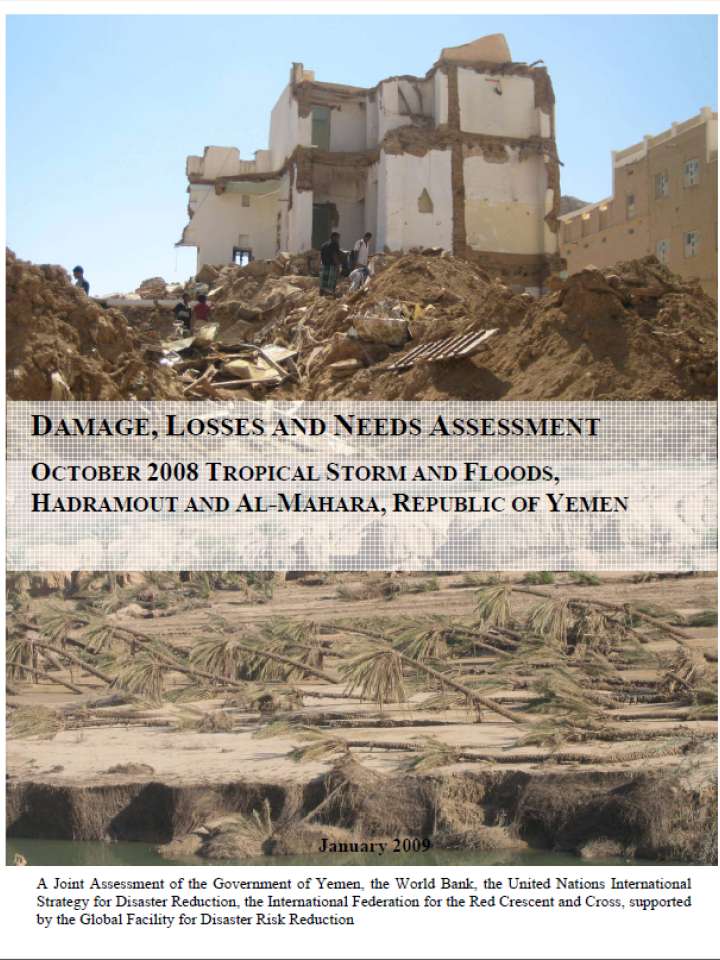
This report describes the human loss and assessment of damage to physical assets, the subsequent losses sustained across all economic activities, and the impact of the disaster on both the national economy and household-level activities and well-being.
Myanmar - government
Association of South East Asian Nations (ASEAN)
United Nations - Headquarters
Global Facility for Disaster Reduction and Recovery, the (GFDRR)
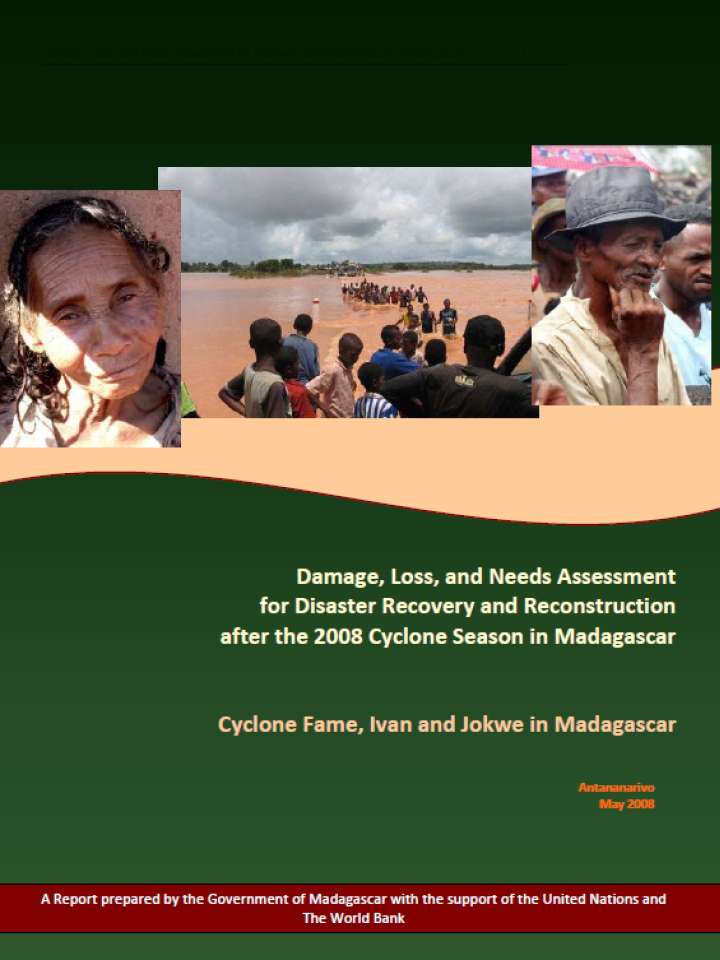
The Government of Madagascar undertook a comprehensive damage and loss and needs assessment to ascertain the extent of the damages caused by the three consecutive cyclones in 2008, and to define a comprehensive and feasible recovery plan.
Madagascar - government
Global Facility for Disaster Reduction and Recovery, the (GFDRR)
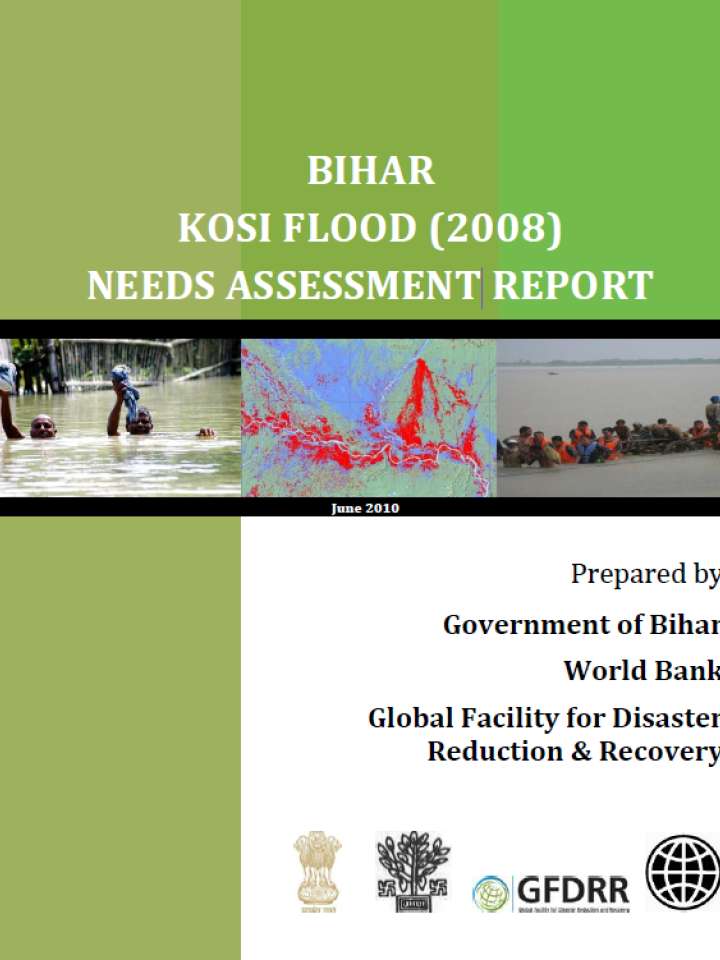
This Needs Assessment guides the design and investment prioritization of the proposed Kosi Flood Recovery project. It provides a damage overview in key sectors to identify priority interventions and progress made.
World Bank, the
Global Facility for Disaster Reduction and Recovery, the (GFDRR)
The aim of the assessment is to identify priority areas to support the Government of Bangladesh in cyclone recovery efforts as well as to design a disaster management strategy.
Bangladesh - government
World Bank, the
European Commission
International Labour Organization (ILO)
International Federation of Red Cross and Red Crescent Societies (IFRC)
Asian Development Bank (ADB)
United Nations Development Programme (UNDP)
Japan Bank For International Cooperation
Japan International Cooperation Agency
Islamic Development Bank
Food and Agriculture Organization of the United Nations (FAO)
World Food Programme (WFP)
World Health Organization (WHO)
Department for International Development
United States Agency for International Development (USAID)
In the year after the carnage, significant progress has been made in feeding and housing survivors and clearing debris from fish ponds and fields to allow farmers to resume work. Much remains to be done as emphasis shifts from relief to reconstruction and
Food and Agriculture Organization of the United Nations (FAO)
This guide presents a community-centered framework for recovery and reconstruction after disasters and conflicts, advocating for the involvement of affected populations in a seamless transition from emergency response to sustainable recovery efforts.
United Nations Human Settlements Programme (UN-HABITAT)
This paper documents the impact of the December 2004 Indian Ocean Tsunami on tourism in Sri Lanka and a detailed overview of the recovery strategies adopted in the aftermath of the disaster.