The PDNA report covers the damage, losses, and recovery needs following hurricanes Irma and Maria, which impacted Barbuda and Antigua in 2017. A recovery strategy and summary of identified priority actions for recovery is included in the report.
Antigua and Barbuda - government
World Bank, the
Global Facility for Disaster Reduction and Recovery, the (GFDRR)
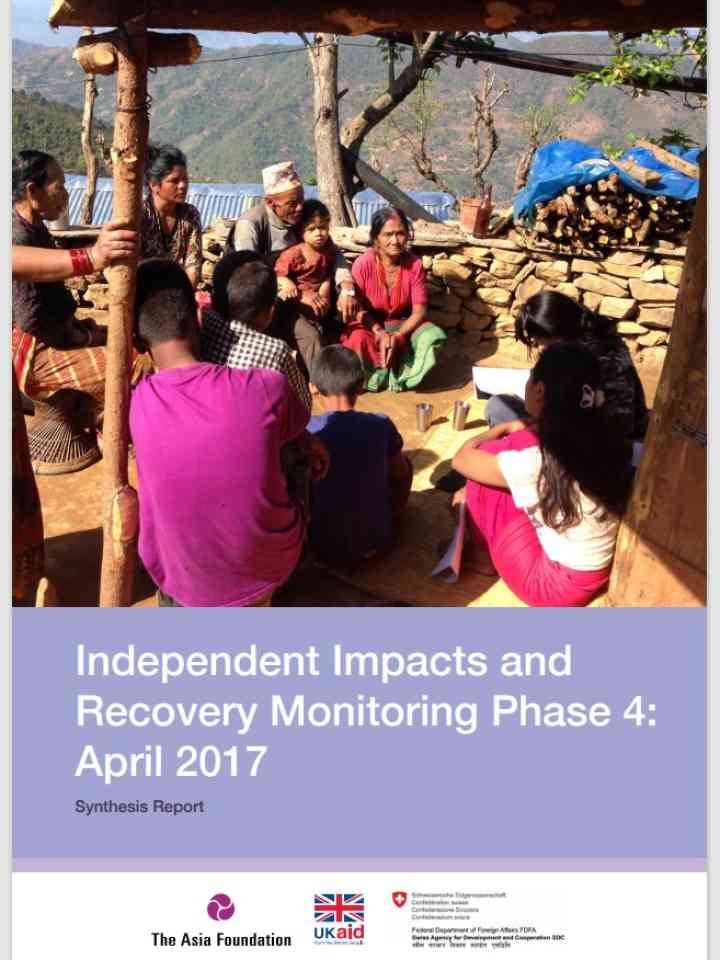
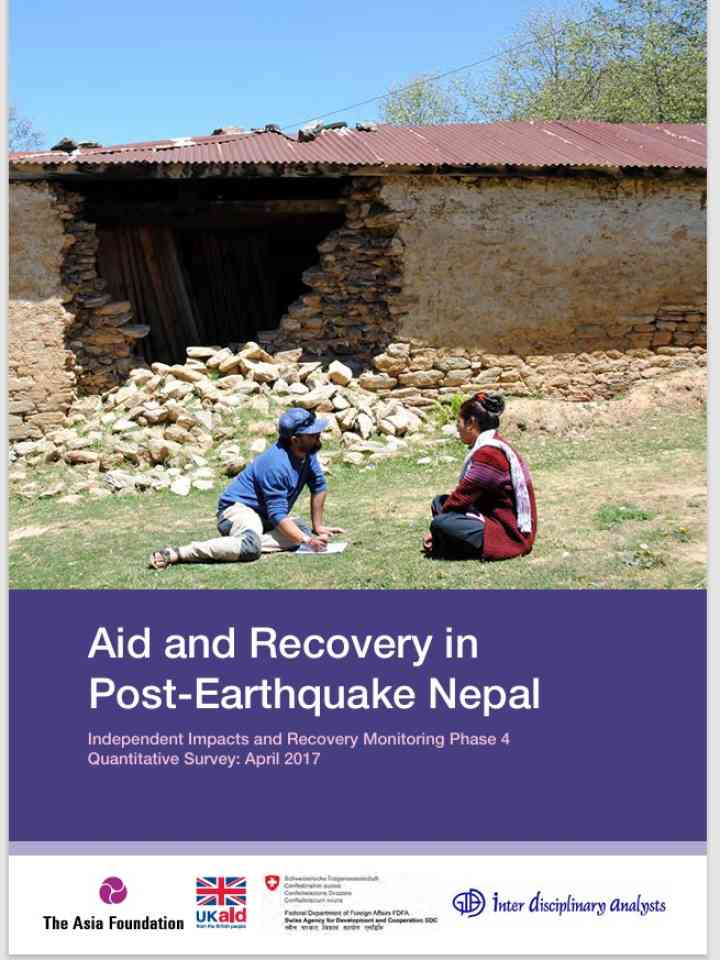
2 years after earthquakes hit Nepal in 2015, the IRM completed its 4th round of research to track how people are recovering, what aid has been provided and how effective it has been, and which groups are being left behind.
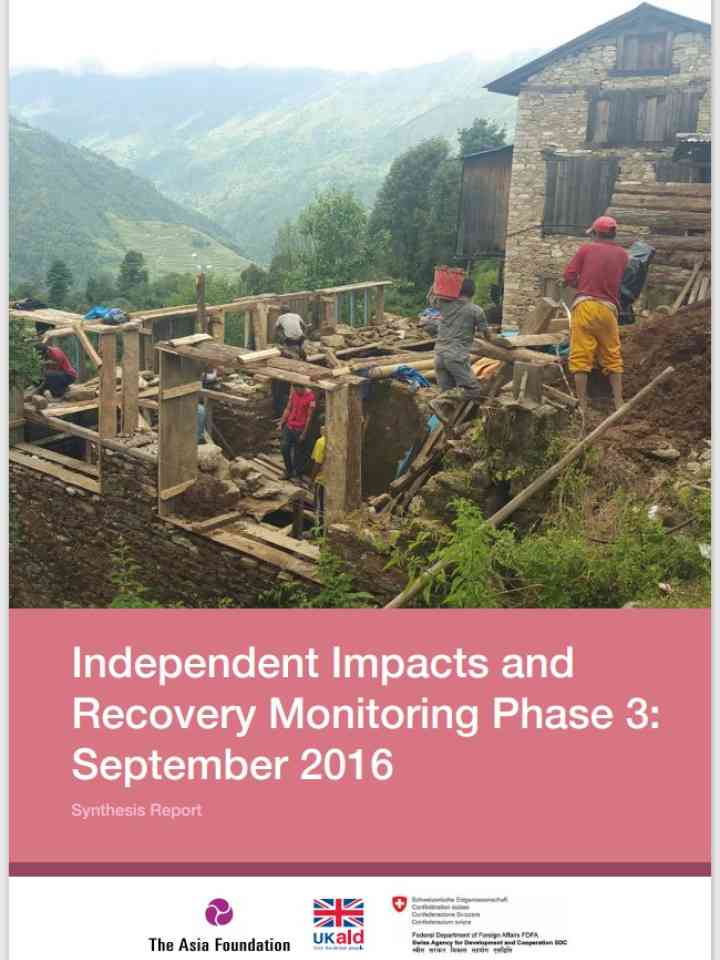
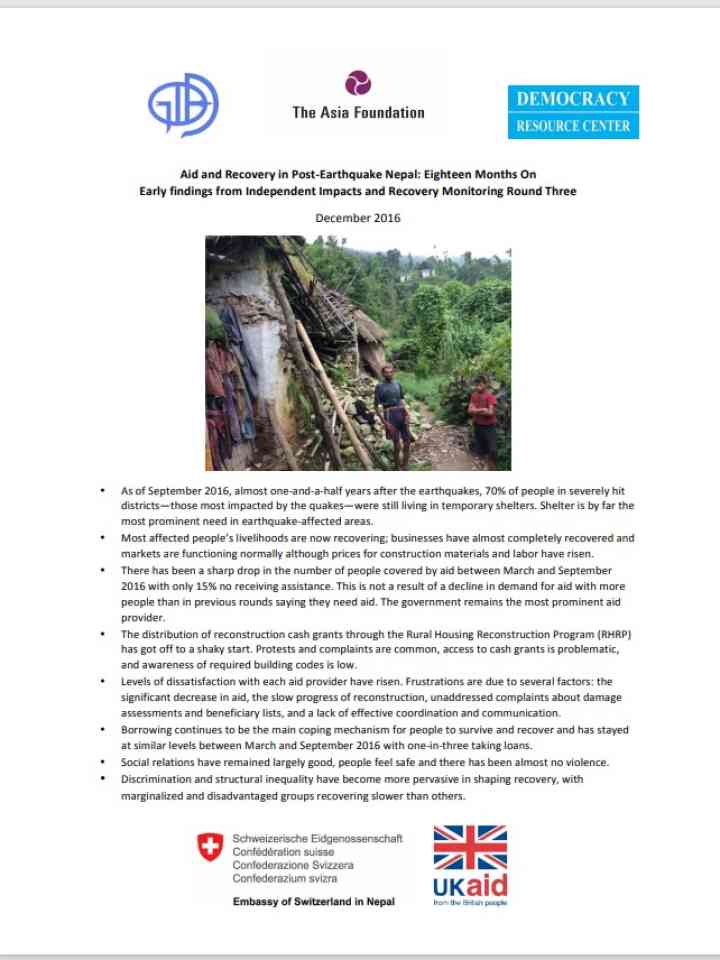
18 months from the earthquakes hit Nepal in 2015, the third wave of the IRM tracks the extent to which people have recovered, what coping strategies they are using and how effective they are, how aid is helping and which groups are being left behind.
This report provides findings from the fourth in a series of large-scale surveys, conducted in April 2017, two years on from the devastating earthquakes that hit Nepal.
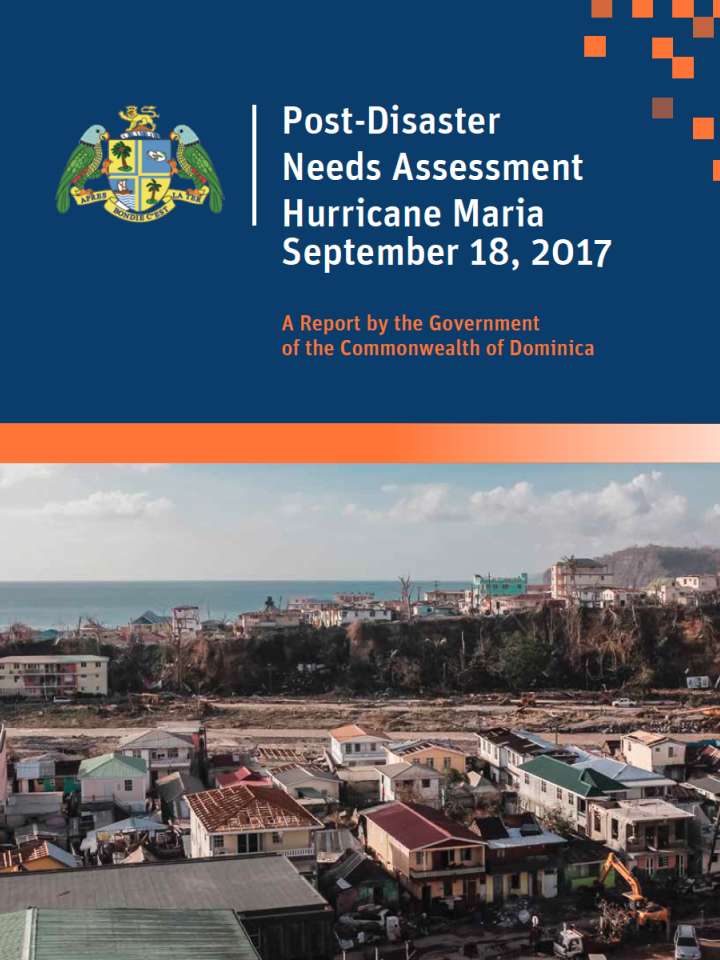
The PDNA report covers the damage, losses, and recovery needs across various sectors following Hurricane Maria in 2017. A recovery strategy and summary of identified priority actions for recovery is included in the report.
Dominica - government
Global Facility for Disaster Reduction and Recovery, the (GFDRR)
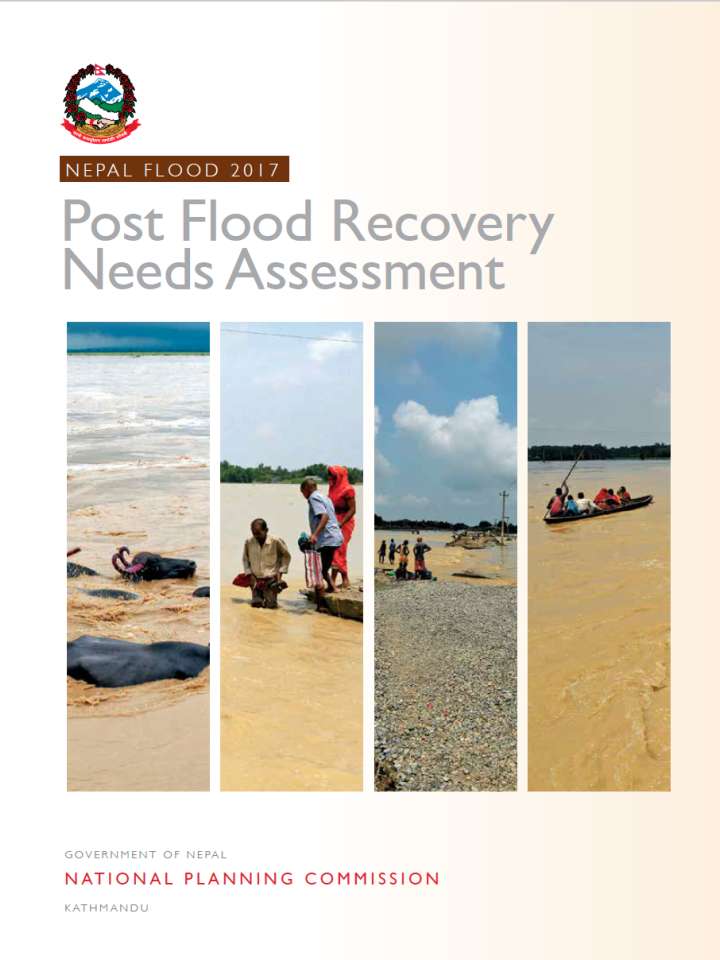
The Post Flood Recovery Needs Assessment offers an objective basis for recovery planning and measures for reducing future risks. It estimates the impact of the 2017 floods that affected the Terai region and to identify medium-term recovery needs.
Nepal - government
Global Facility for Disaster Reduction and Recovery, the (GFDRR)
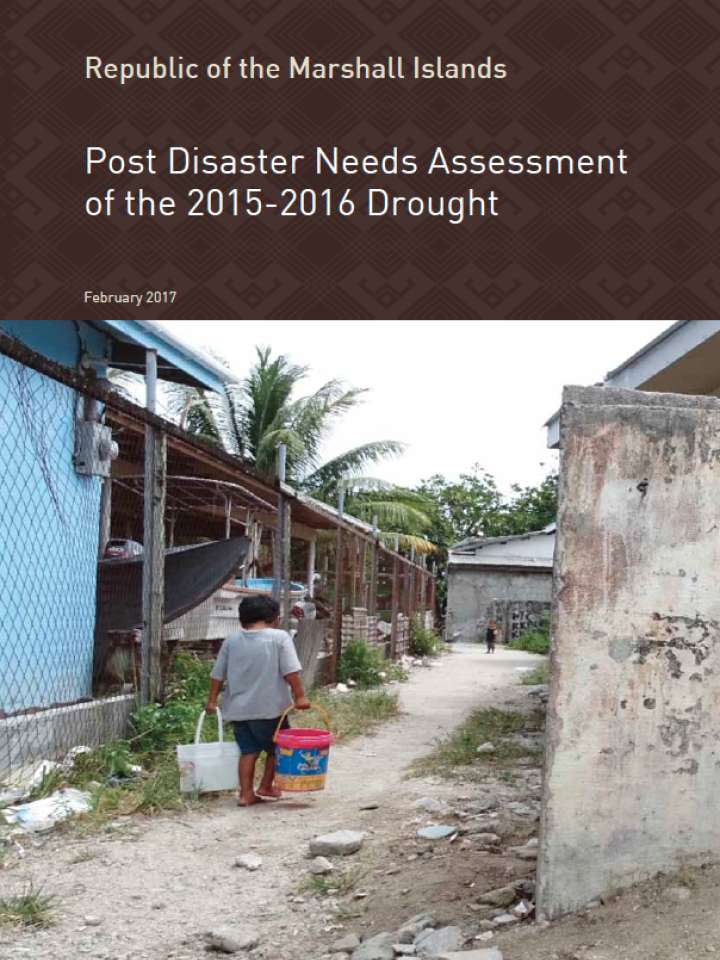
This report is a rapid socio-economic assessment of the sectors impacted by the 2015-2016 drought in the Republic of the Marshall Islands. This assessment is the first PDNA of a drought in the Pacific.
Marshall Islands - government
Global Facility for Disaster Reduction and Recovery, the (GFDRR)
This brief provides preliminary findings from the third round of Independent Impacts and Recovery Monitoring Nepal (IRM) project, which was conducted after one and half year of Nepal eatthquake.
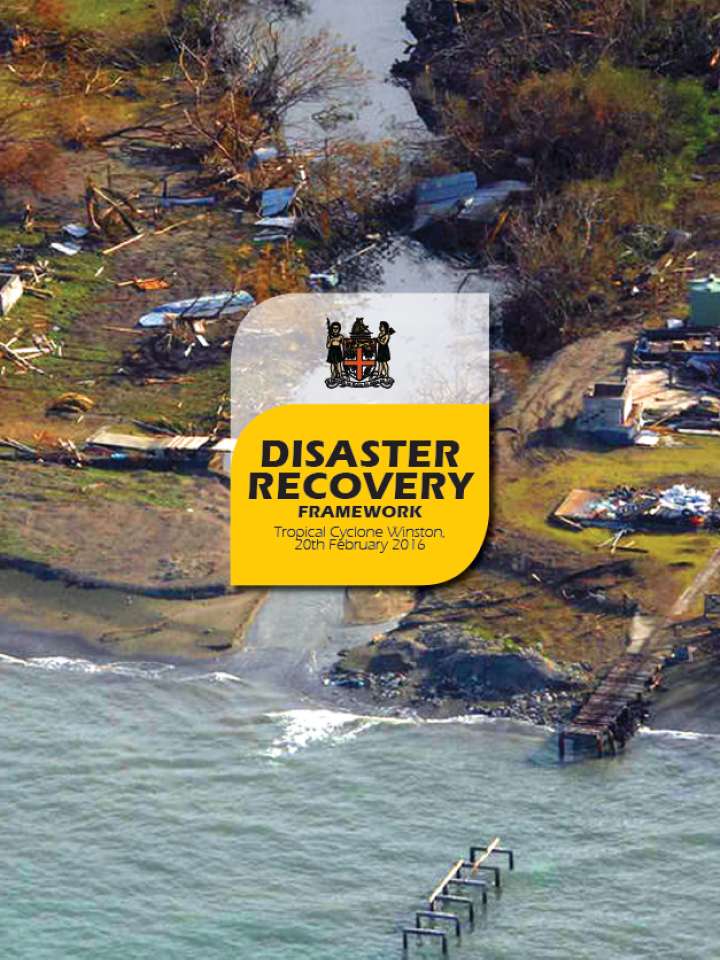
This DRF guides the planning and implementation of recovery programmes and projects, providing overall direction to the government, the private sector, development partners, civil society and communities.