Navigation failed to load. If you are on the UNDRR office network, your browser may be blocking access to external resources. Learn how to allow access.
These guidelines show the necessity of implementing good business continuity practices within Japanese enterprises and describe how to facilitate the implementation of Business Continuity Management and create and improve Business Continuity Plans
This document is the summary of the findings of Griffith University, which was commissioned by the Regional Australia Institute (RAI) to examine the experiences and learnings arising from the communities that have experienced the challenges of recovering from and adapting to the impact of disasters. Four case studies were undertaken to research communities recovering from disasters such as cyclones, floods and bushfires.
This document presents the policy recommendations of the Hurricane Sandy Rebuilding Task Force for helping the rebuilding of the region affected by the 2011 super-storm.
This issue presents articles related to ecosystem, climate change, recovery and gender, in relation to disaster management planning in India and beyond. The content includes: (i) ecosystem based flood relief to recovery in Uttarakhand; (ii) a view from Delhi - emerging challenges of disaster risk reduction for the Asian Development Bank; (iii) ecosystem based disaster risk reduction; (iv) climate risk and district disaster management plan of Puri district, Odisha; (v) climate-smart revolution; (vi) addressing natural hazards in planning; (vii) long-term recovery issues in disaster management planning - emerging global trends; (viii) Yogyakarta declaration on disaster risk reduction; (ix) disaster risk reduction in post disaster shelter reconstruction - case study in the Indian sunderbans delta; (xi) gender, risk, and community mobilization in Uganda; (xii) what does the IPCC SREX report mean for India?; (xiii) protecting communities from climate change; (xiv) IUCN in Asia, a note for exploration.
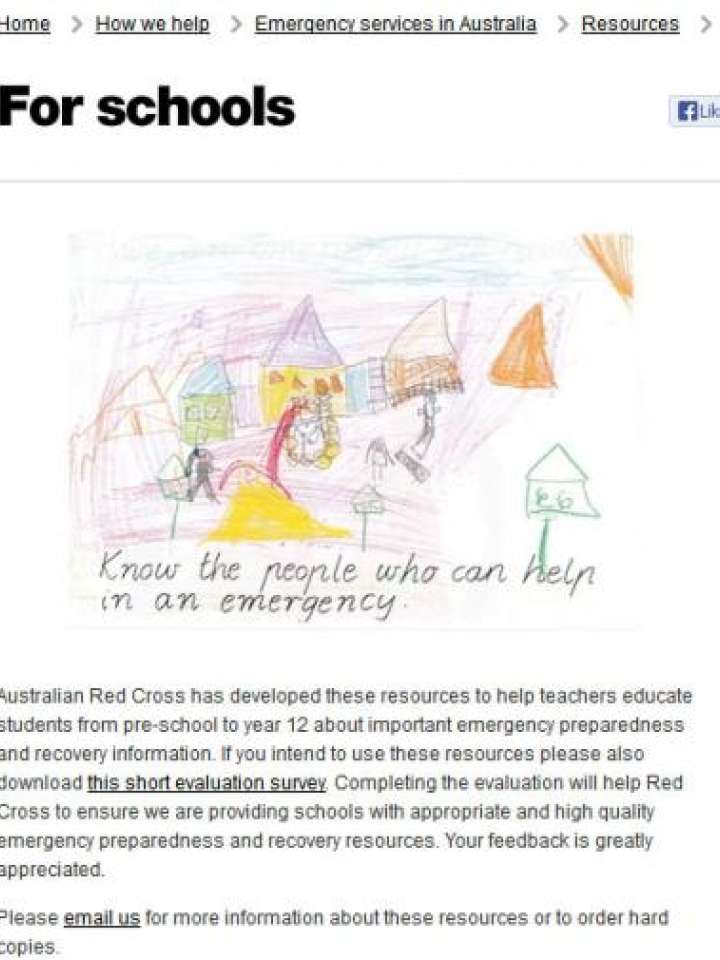
Australian Red Cross has developed this suite of lesson plans to help teachers educate students from pre-school to year 12 about important emergency preparedness and recovery information.
Endorsed by the Australian Psychologists Society and the Australia Child & Adolescent Trauma, Loss and Grief Network, the lesson plans were developed by teachers with advice from experienced emergency managers and a psychologist experienced in emergency preparedness and recovery.
The plans have been designed to assist students to prepare for emergencies, to reflect on situations and scenarios and to be aware of the feelings they may have after an emergency.
This discusses the vision for "New Tohoku," focusing on creating a resilient society that promotes child development, supports the elderly, and utilizes local resources effectively in the wake of the Great East Japan Earthquake and nuclear disaster.
This document outlines the reconstruction and livelihood stabilization project in post-earthquake Haiti. The document gives an overview of the three-year project, and lists the four main areas of support, such as improving disaster preparedness, reducing disaster risks.
Deutsche Gesellschaft für Internationale Zusammenarbeit (GIZ)
Federal Ministry for Economic Cooperation and Development
This document describes the recovery strategies and projects implemented in the wake of two natural hazards in Ecuador: the prolonged eruption of the Tungurahua volcano; and the intense rainy season of the first half of 2008.