Navigation failed to load. If you are on the UNDRR office network, your browser may be blocking access to external resources. Learn how to allow access.
This report evaluates local and federal plans for strengthening community resiliency post-Sandy and offers guidance on post-disaster rebuilding and building in anticipation of future disasters in a way that helps preserve the environment, boost economic prosperity, and foster a high quality of life. It contains a comprehensive, practical set of 23 recommendations focused on four areas: (i) land use and development; (ii) infrastructure, technology and capacity; (iii) finance, investment and insurance; and (iv) leadership and governance.
This paper challenges the world to remember the Philippines long after the TV cameras have gone. It provides a snapshot of the humanitarian response’s initial successes and struggles.
This action plan gives an overview of the situation at the national, international and bilateral levels, few days after the category 5 Typhoon Haiyan (locally known as Yolanda) made a direct hit on the Philippines, devastating areas in 36 provinces.
United Nations High Commissioner for Refugees (UNHCR)
A comprehensive plan that contains actionable recommendations both for rebuilding the communities impacted by Sandy and increasing the resilience of infrastructure and buildings citywide.
The aim of this research is to identify and evaluate good practice in Japanese recovery planning with emphasis on pre-disaster recovery planning and the potential application of those practices into the New Zealand planning and policy framework.
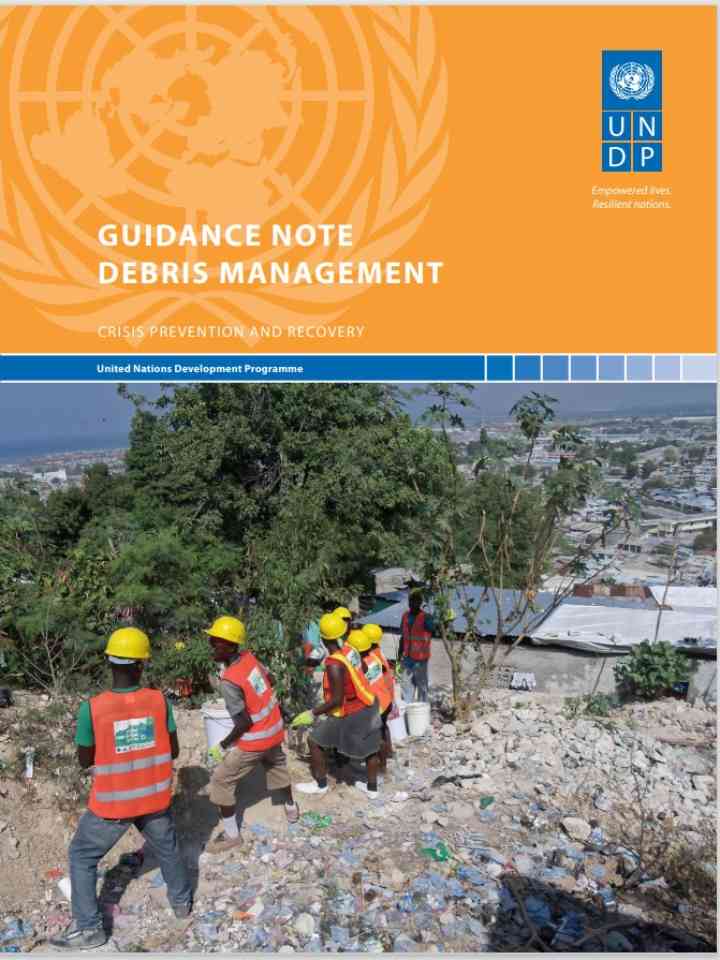
This guidance note provides practical advice on how to plan, design and implement a project that swiftly links governments and communities in the assessment, clearance, recycling and management of debris following a significant national catastrophe.
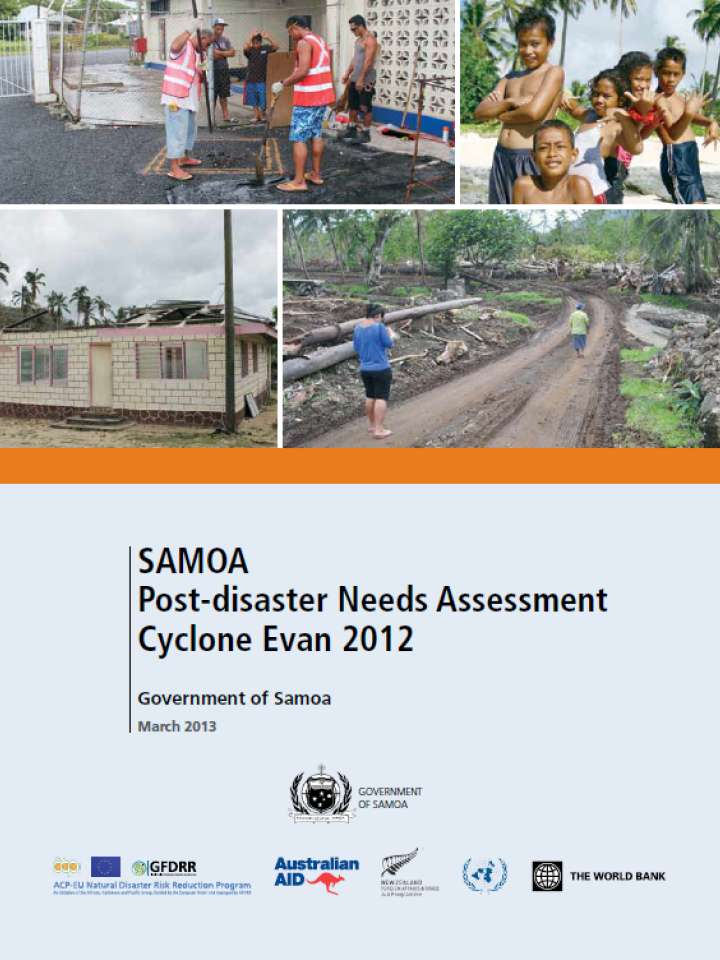
This post-disaster needs assessment report on Cyclone Evan was prepared in 2013 by the Government of Samoa in collaboration with international partners.
Samoa - government
Global Facility for Disaster Reduction and Recovery, the (GFDRR)
This handbook seeks to unpack the problems that many organizations are confronted with, while providing step-by-step guidance on how to design and implement housing reconstruction programmes in cities. It describes the specific dimensions of reconstruction and rehousing strategies, providing context-based options that have proven successful in recent disasters. It also incorporates risk-reduction measures within reconstruction methodology in order to prepare for any future disaster.
International Federation of Red Cross and Red Crescent Societies (IFRC)
Skat - Swiss Resource Centre and Consultancies for Development
This report extends the focus of the UNISDR-PwC initiative, looking specifically at the long-term opportunity for public-private sector collaboration in building or rebuilding risk-resilient infrastructure. It describes why building disaster-resilient infrastructure is critical for a region’s competitiveness, both nationally and globally. It also illustrates how the private sector can offer innovative solutions to help communities build or rebuild disaster-resilient infrastructure.