The Joint Communique sets out the agreements reached at the conclusion of the 5th Edition of the World Reconstruction Conference on 23-25 May 2022 in Bali, Indonesia.
World Bank, the
Global Facility for Disaster Reduction and Recovery, the (GFDRR)
United Nations Development Programme (UNDP)
United Nations Development Programme (UNDP)
United Nations Office for Disaster Risk Reduction (UNDRR)
This paper presents an automated way to extract the damaged buildings images after earthquakes from social media platforms such as Twitter and thus identify the particular user posts containing such images.
This paper proposes a scientific concept of digital twin-driven systematic construction of intelligent disaster prevention and mitigation for infrastructure (IDPMI), which intends to clarify the potential of digital twin (DT) in disaster management.
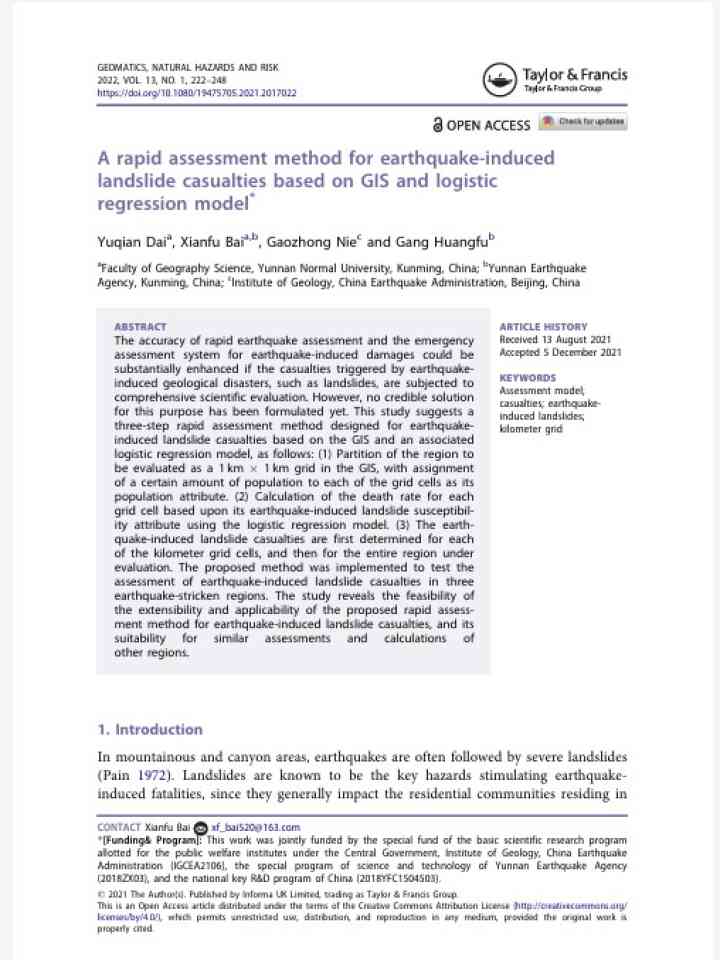
This study suggests a three-step rapid assessment method designed for earthquake-induced landslide casualties based on the GIS and an associated logistic regression model.
Geomatics, Natural Hazards and Risk (Taylor & Francis)
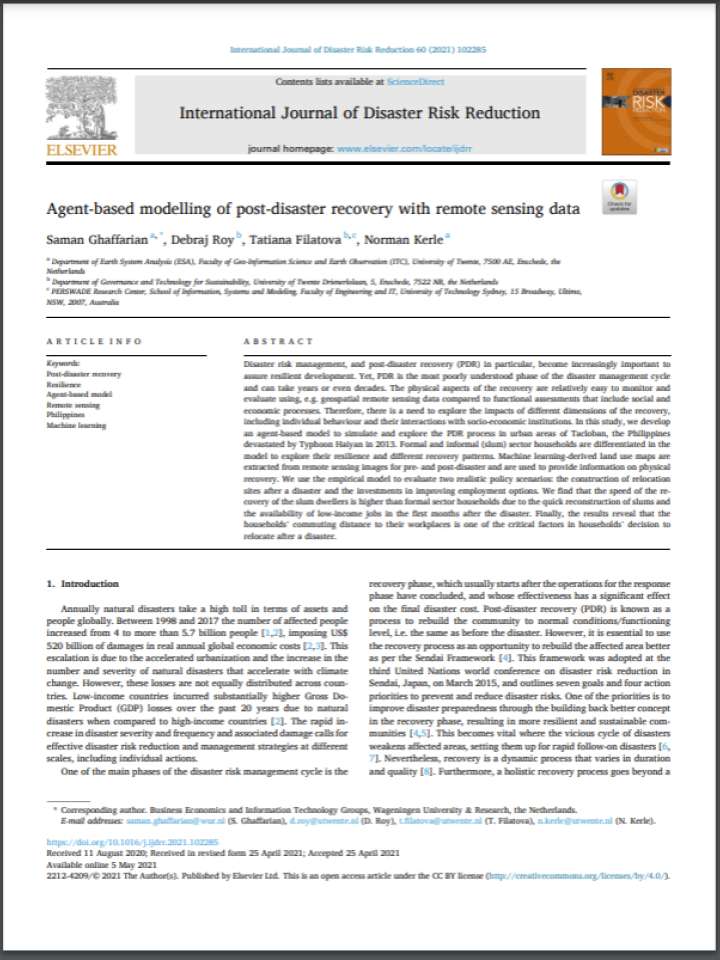
In this study, researchers developed an agent-based model to simulate and explore the post-disaster recovery (PDR) process in urban areas of Tacloban, the Philippines devastated by Typhoon Haiyan in 2013. Disaster risk management, and PDR in particular
International Journal of Disaster Risk Reduction (Elsevier)
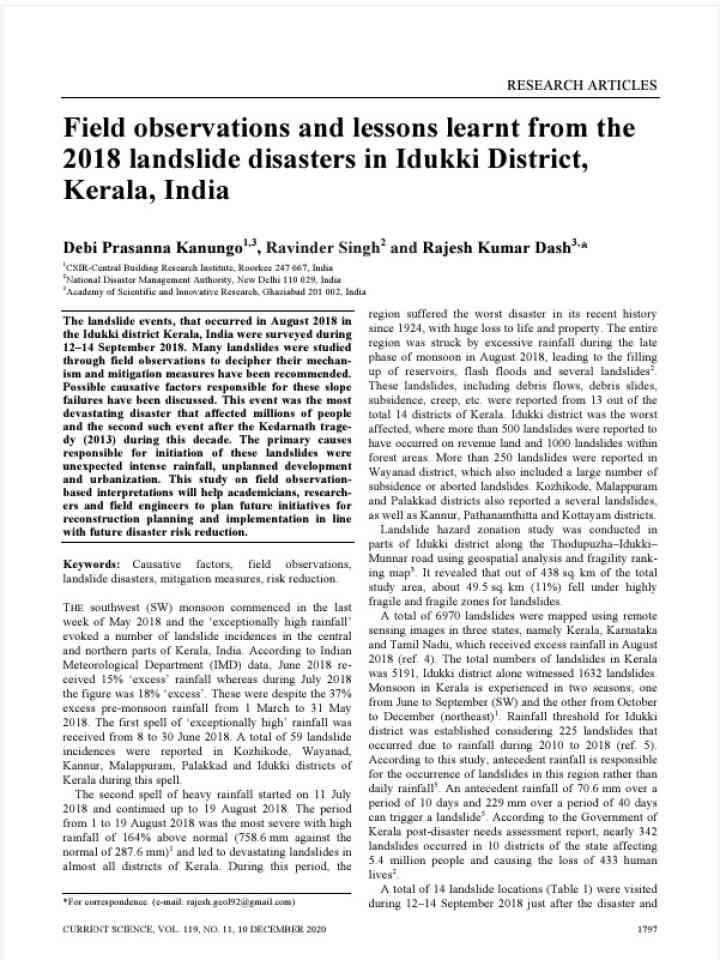
This study on field observation-based interpretations will help academicians, researchers and field engineers to plan future initiatives for reconstruction planning and implementation in line with future disaster risk reduction.
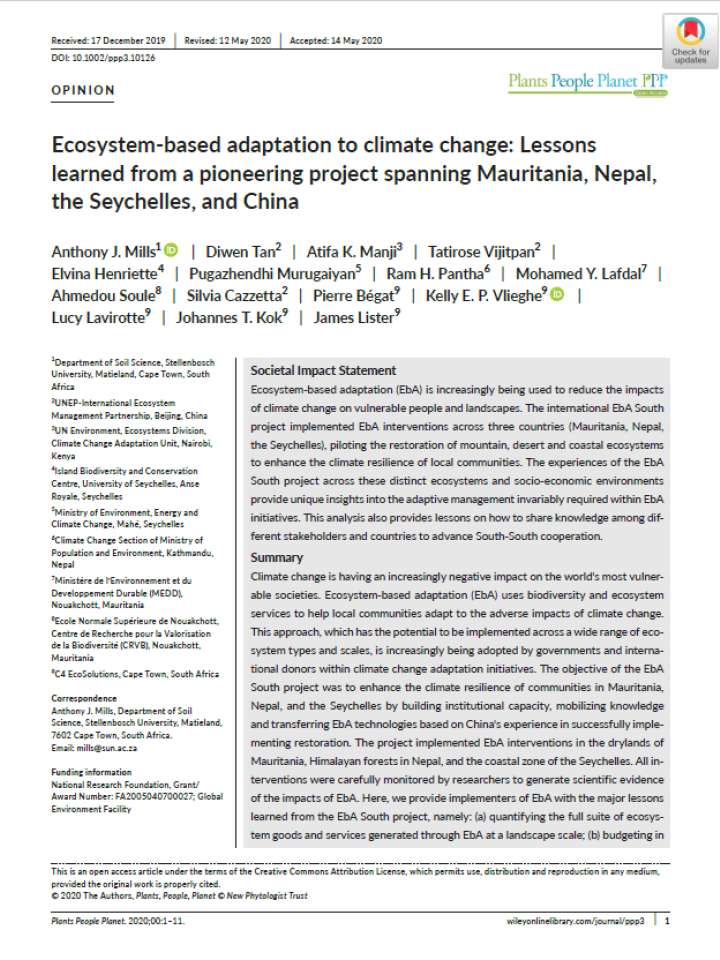
Ecosystem‐based adaptation (EbA) is increasingly being used to reduce the impacts of climate change on vulnerable people and landscapes. The international EbA South project implemented EbA interventions across three countries
This publication offers a set of guiding, action-oriented principles and practical cases to support recovering communities as they plan and implement recovery.