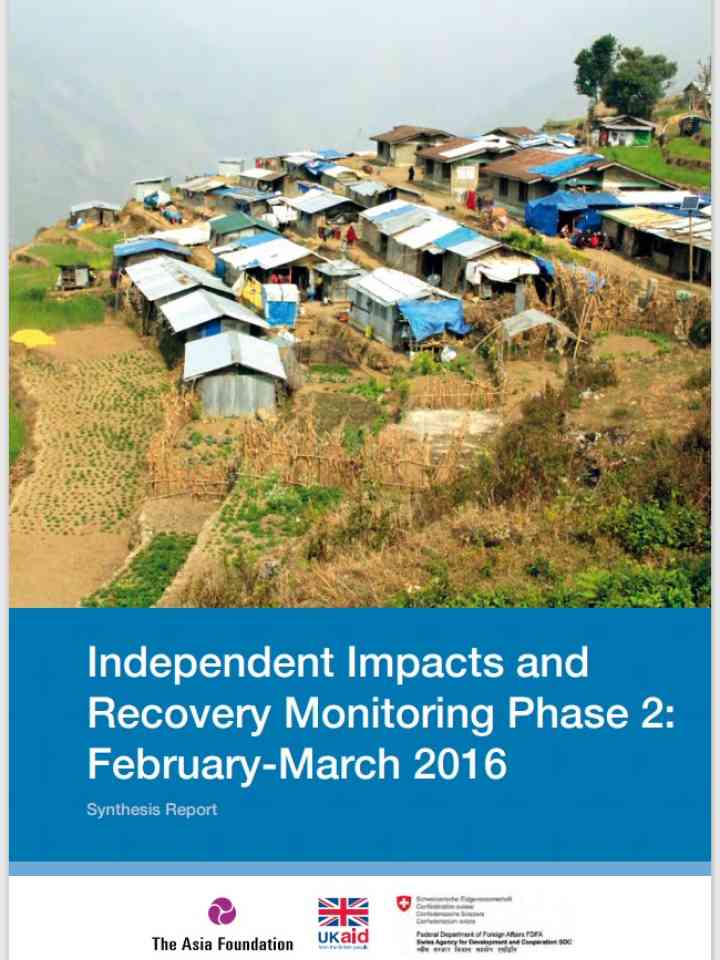
This report is the second in a series examining the recovery efforts in Nepal following the 2015 earthquakes. It examines the impacts of delays and unrest, with many still living in temporary shelters and facing challenges in rebuilding livelihoods.
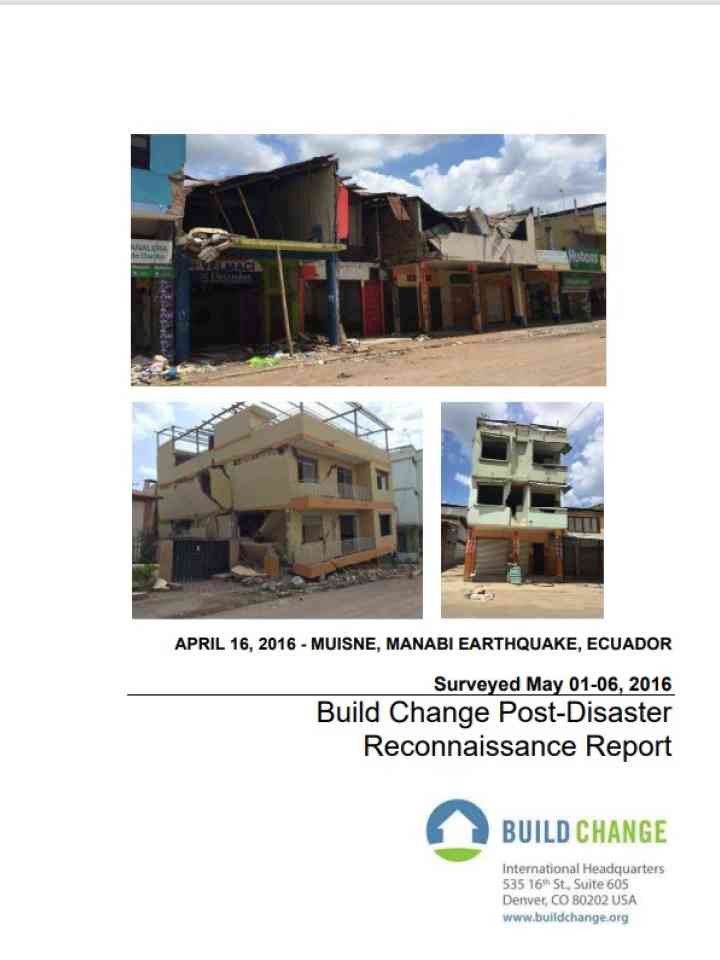
This is a reconnaissance report on the M7.8 earthquake occurred in 2016 in which the hypocenter was located near Pedernales, Ecuador (Manabí), 20 km deep.
This topic guide is a review of the state of play in post-disaster reconstruction. It builds on extensive research, literature and experience to date, most recently considering outputs from the 2015 Sendai Conference on Disaster Risk Reduction (DRR). It considers the status quo and puts forward alternative positions for facilitating effective reconstruction through a more seamless and re-planned approach.
This framework document encapsulates the vision and strategic objectives that guide recovery in post-earthquake Nepal. It also includes the policy and institutional frameworks for recovery and reconstruction and outlines implementation arrangements, projected financial requirements and immediate next steps necessary for recovery.
In the aftermath of Typhoon Haiyan in 2013, a majority of the designated evacuation centers (mostly in the form of school buildings or public gymnasiums) were severely damaged. In the drive to build back better and safer, the Philippine Disaster
United Nations Office for Disaster Risk Reduction (UNDRR)
This publication describes recent national disaster mechanism experiences in the housing sector that best reflects the situation in Malaysia and that are in line with international practice. The objective of the papers is to know how to better support
The main objective of the study is to analyze the impact of the disaster in the urban sector and thereby help to the development of an urban housing recovery and reconstruction policy.
In the context of housing reconstruction in the Philippines in the aftermath of tropical storm Washi, this research explores how to effectively manage resettlement projects.
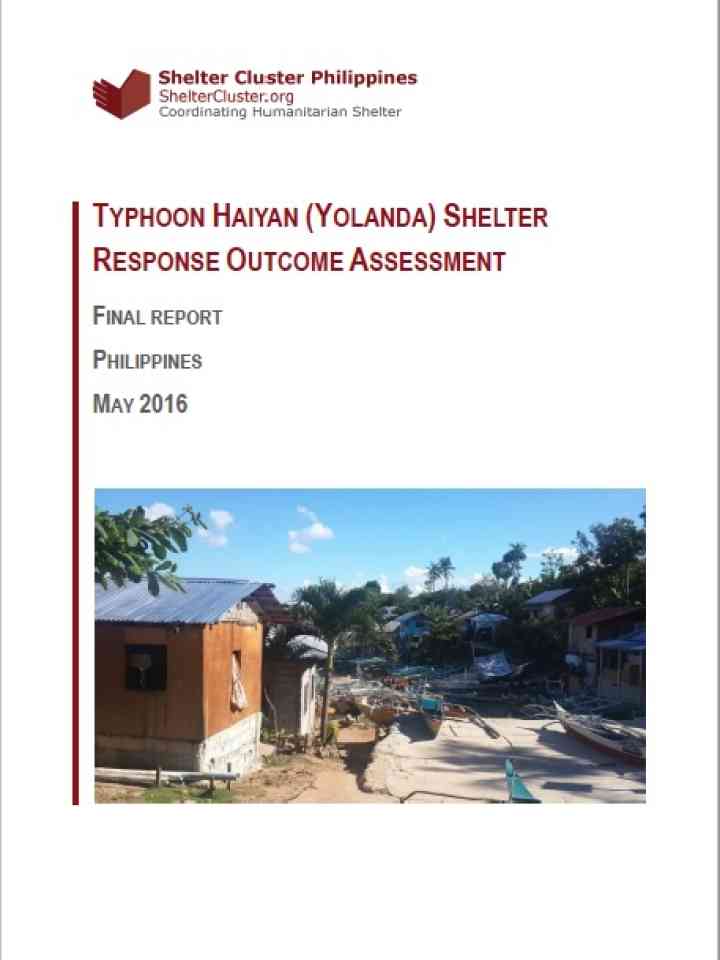
Planned and implemented with the Global Shelter Cluster and operational shelter in the Philippines, this report examines some of the characteristics influencing shelter recovery after Typhoon Haiyan.
This pedagogic document, prepared by the French Association for Earthquake Engineering, aims at applying these simple but efficient earthquake resistant principles to traditional houses in Nepalese high valley villages using available materials in these
Association Française du Génie Parasismique (AFPS)