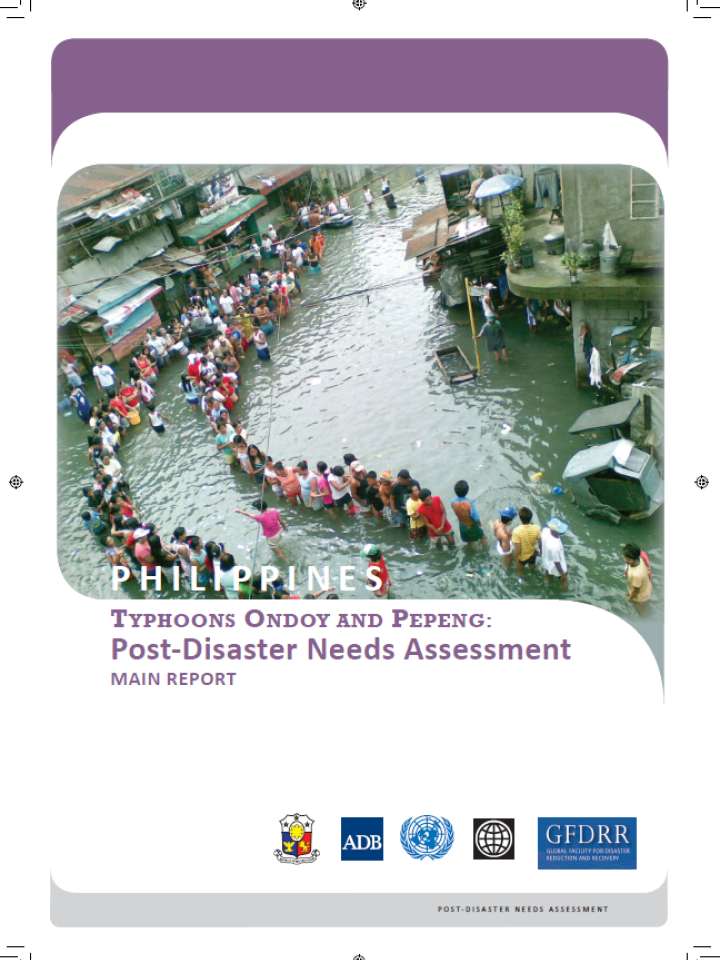
This Post-Disaster Needs Assessment analysis covers damages, losses, and economic and social impacts from Ondoy and Pepeng, providing a basis for determining recovery and reconstruction needs.
Philippines - government
Asian Development Bank (ADB)
United Nations - Headquarters
Global Facility for Disaster Reduction and Recovery, the (GFDRR)
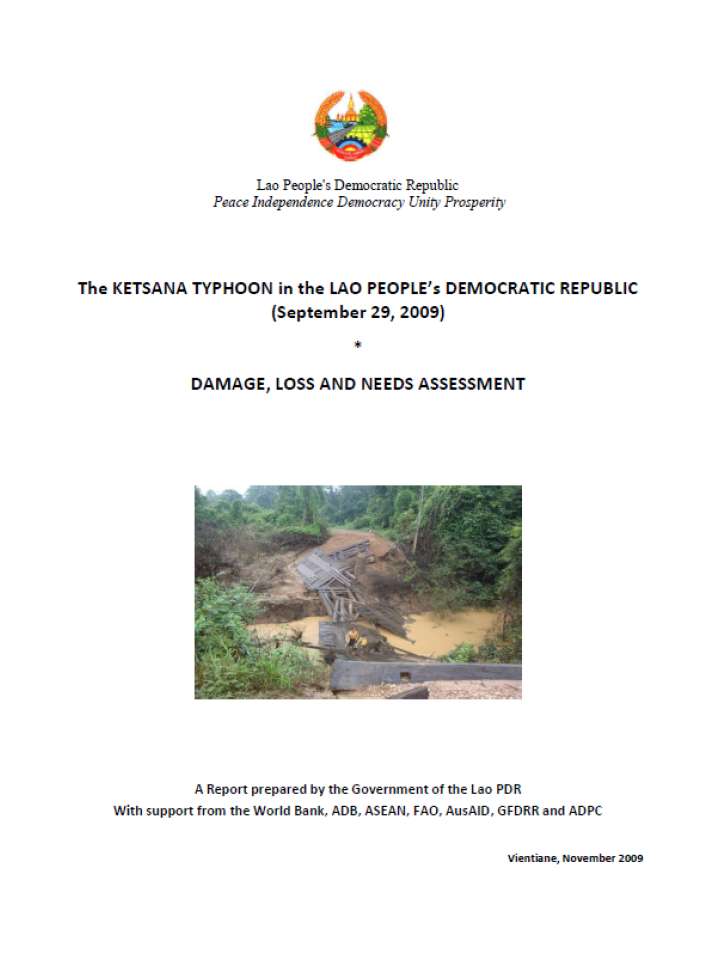
This PDNA addresses the damages and losses from the impacts of Typhoon Ketsana, and identifies resource needs in the medium and longer term to address the urgent requirements for recovery and restoration of the livelihoods of the affected population
Lao People's Democratic Republic - government
World Bank, the
Asian Development Bank (ADB)
Global Facility for Disaster Reduction and Recovery, the (GFDRR)
The Post-Disaster Needs Assessment (PDNA) evaluates the damages and losses from the impacts of Typhoon Ketsana, and addresses needs for recovery, resilient reconstruction and sustainable restoration of livelihoods of the affected population.
Cambodia - government
World Bank, the
United Nations - Headquarters
United Nations Development Programme (UNDP)
Asian Development Bank (ADB)
Global Facility for Disaster Reduction and Recovery, the (GFDRR)
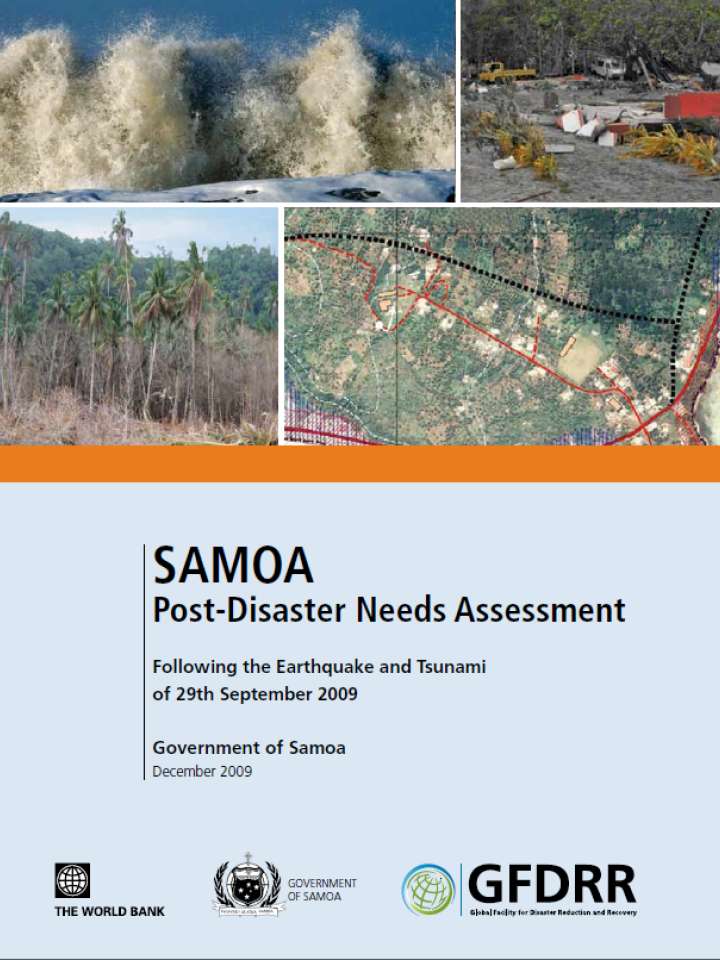
This Post-Disaster Needs Assessment (PDNA) draws upon the findings of various assessments carried out in the immediate aftermath of the disasters and presents estimates for loss and damage as a result of the 2009 earthquake and tsunami in Samoa.
Samoa - government
World Bank, the
Global Facility for Disaster Reduction and Recovery, the (GFDRR)
This Joint Rapid Assessment presents preliminary cost estimates for loss and damage from the 2009 Earthquake in Bhutan. It estimates recovery costs and identifies priorities for early recovery, reconstruction and disaster risk reduction.
Bhutan - government
Global Facility for Disaster Reduction and Recovery, the (GFDRR)
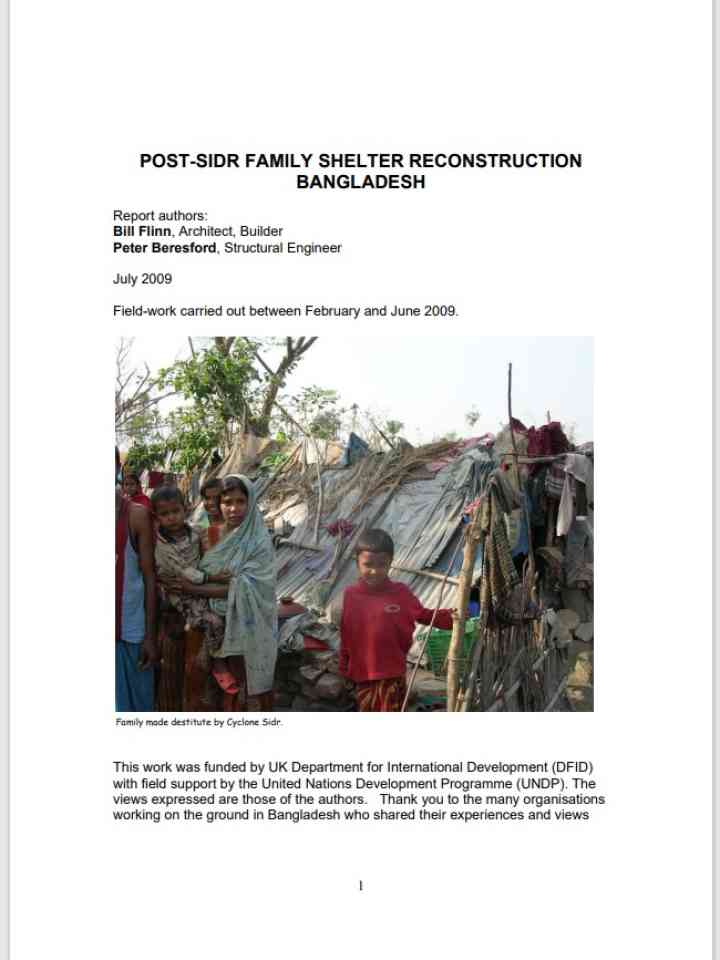
This report provides insights into the reconstruction efforts following Cyclone Sidr, focusing on the development of durable and safe core family shelters.
This document assesses the Red Cross Red Crescent's work in supporting communities to rebuild their own lives after the Indian Ocean tsunami and to cope with future threats – 'natural' disasters, the effects of climate change, outbreaks of disease
International Federation of Red Cross and Red Crescent Societies (IFRC)
This guide is intended to demonstrate the value of using built environment professionals more widely in disaster risk reduction and response. It shows how their skills and expertise can be applied at all stages of disaster management. It highlights that
This handbook was made to provide simple information to home owners, designers and builders, and building monitors to teach principles of good design and good construction in a natural hazard prone area. Thoroughly studied, they will also guide on whether
Deutsche Gesellschaft für Internationale Zusammenarbeit (GIZ)
United Nations Development Programme (UNDP)
European Commission
European Commission’s Directorate-General for European Civil Protection and Humanitarian Aid Operations (DG ECHO)
United Nations Office for Disaster Risk Reduction - Regional Office for Asia and Pacific