This book addresses the growing demand for reconstruction at scale following devastating impact of disasters on the world's population on the increase, influenced by climate change, urbanization, and persistent high levels of poverty, among other factors
This document gives options for rebuilding the community, meeting the evident needs of the most vulnerable people and filling key gaps in Haiti’s reconstruction regarding shelter and relief, water and sanitation, health and recovery. It states that risk
International Federation of Red Cross and Red Crescent Societies (IFRC)
This publication has been created with the intention of capturing key characteristics of the response and lessons learned, in a widely available format. It is intended to provide a valuable reference in future disaster responses.
The content is based on the DEC Assurance Mission (Arup, 2007) as well as the authors observations and experiences on previous assignments in Aceh during the post-tsunami response. This is supported by further research and consultation, additional information provided by DEC Member Agencies and other documentation of the response. The views expressed are those of the authors.
This handbook was developed to assist policy makers and project managers engaged principally in large-scale post-disaster reconstruction programs make decisions about how to reconstruct housing and communities.
World Bank, the
Global Facility for Disaster Reduction and Recovery, the (GFDRR)
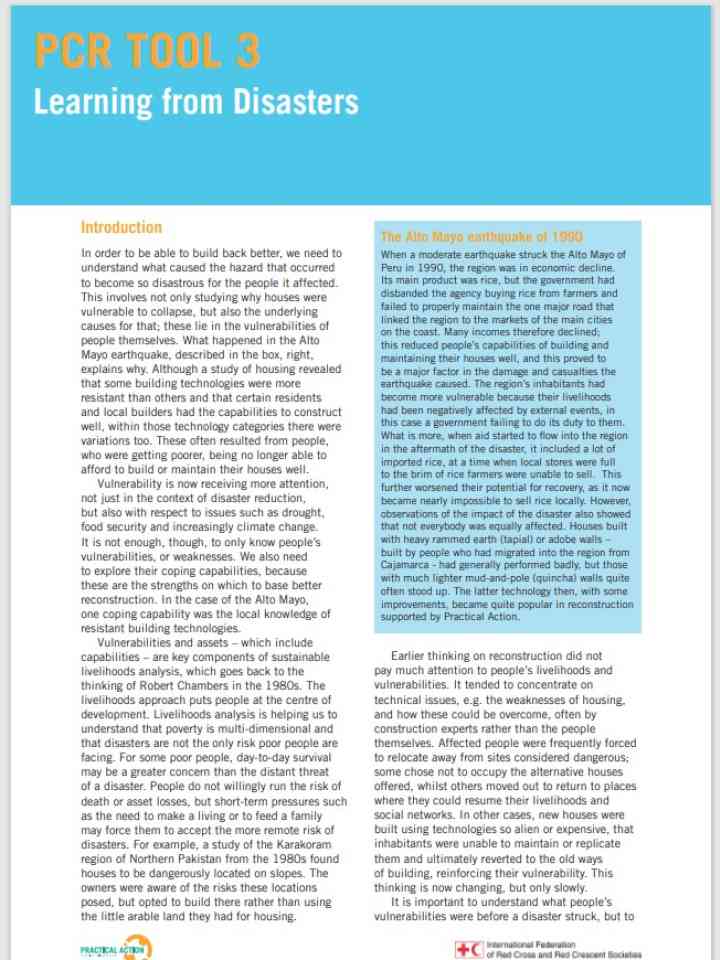
The document emphasizes the significance of understanding vulnerabilities, local knowledge, and sustainable livelihoods to build resilient communities in the aftermath of disasters.
In this publication the Government of Tamil Nadu gives details regarding rehabilitation and the reconstruction programmes undertaken to revive coastal communities affected by the Tsunami in 2004.
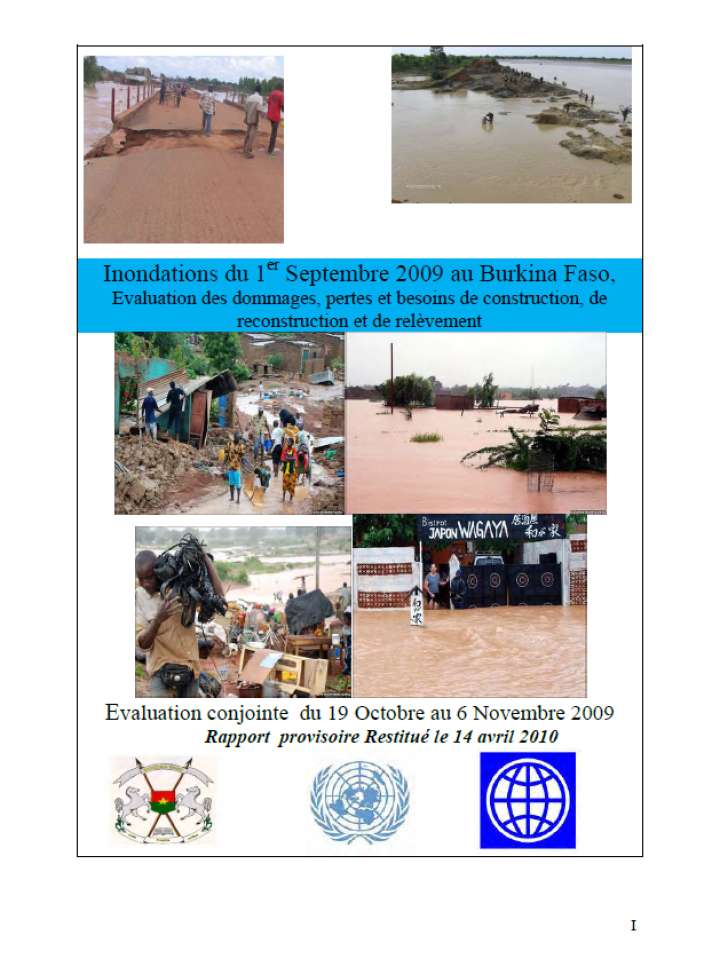
This post-disaster needs assessment provides estimates of the damages and losses, and the costs for reconstruction and recovery following the 2009 floods in Burkina Faso.
Burkina Faso - government
World Bank, the
United Nations - Headquarters
Global Facility for Disaster Reduction and Recovery, the (GFDRR)
United Nations Development Programme (UNDP)
Economic Commission for Latin America and the Caribbean (ECLAC/CEPAL)
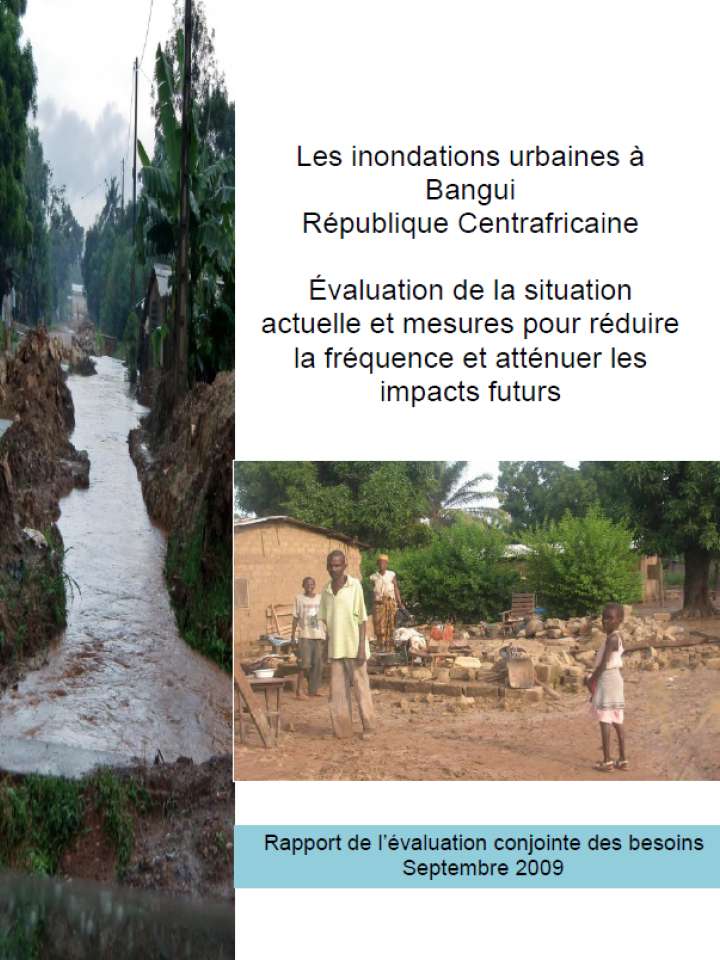
This joint needs assessment report provides estimates of the impacts and costs of reconstruction and recovery in Central African Republic following the 2009 floods in Bangui.
Central African Republic - government
World Bank, the
Global Facility for Disaster Reduction and Recovery, the (GFDRR)
United Nations Development Programme (UNDP)
United Nations Children's Fund (UNICEF)
European Union
United Nations Office for the Coordination of Humanitarian Affairs
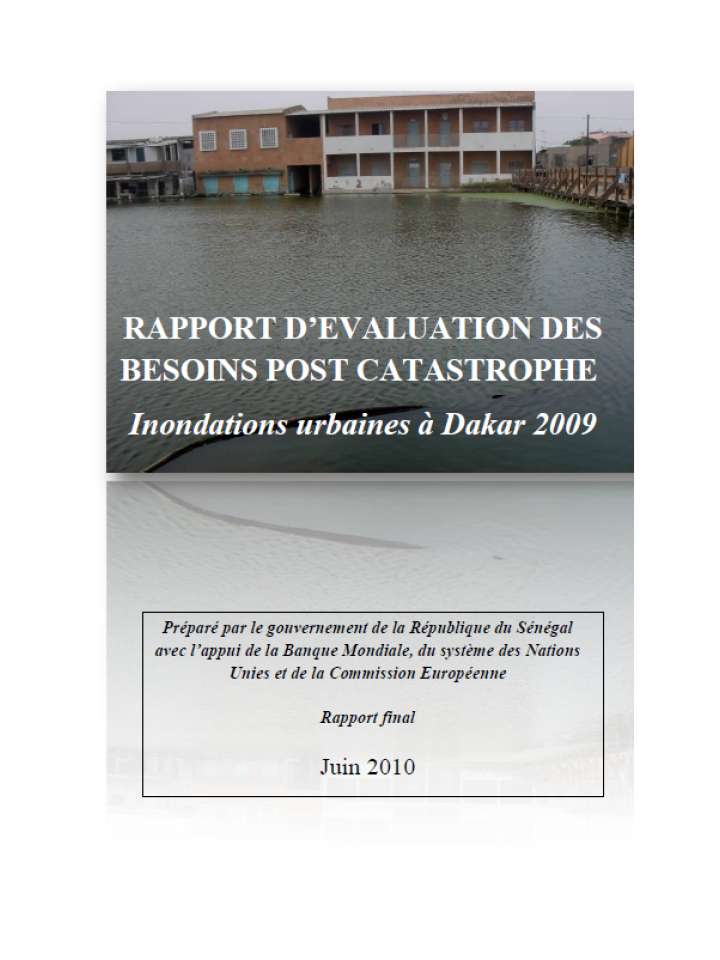
This post-disaster needs assessment estimates the costs of recovery and reconstruction resulting from the impacts of the August 2009 floods in Dakar, Sengal.
Senegal - government
Global Facility for Disaster Reduction and Recovery, the (GFDRR)
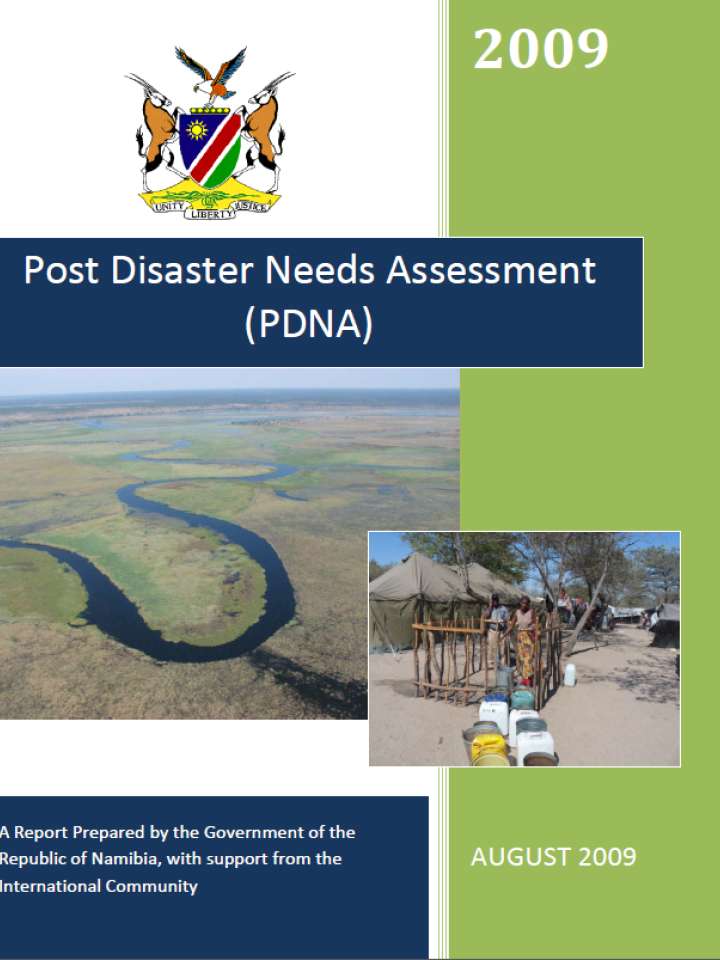
This Post Disaster Needs Assessment (PDNA) assesses damage and losses incurred as a result of 2009 floods, and provides an assessment of recovery and reconstruction options that could provide resilience to future events such as droughts and floods.
Namibia - government
World Bank, the
Global Facility for Disaster Reduction and Recovery, the (GFDRR)