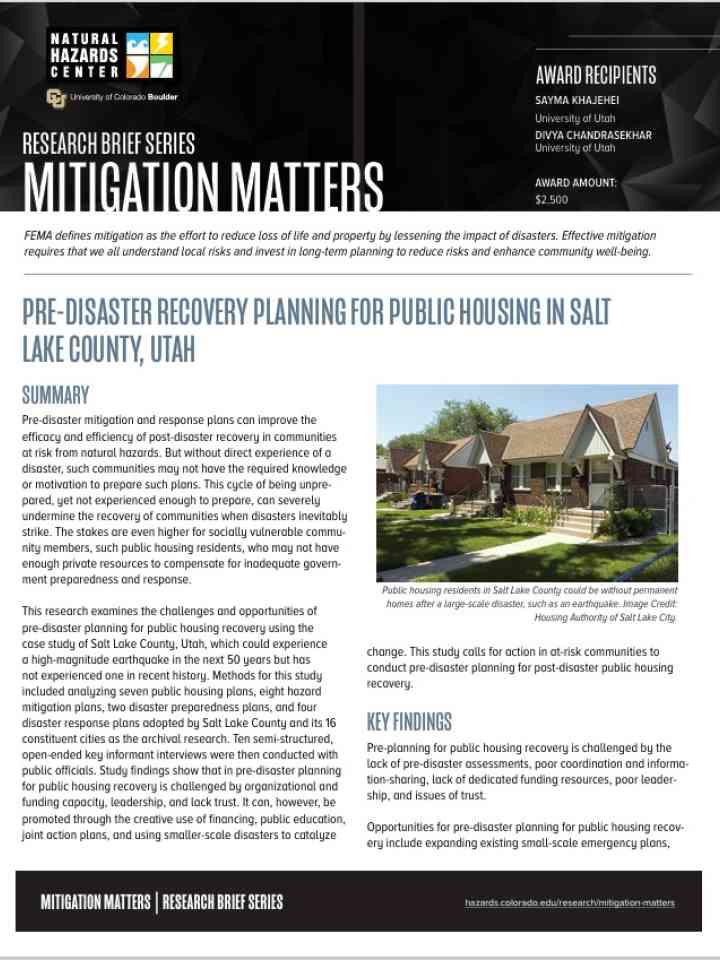
Using Salt Lake County, UT, as a case study, this research examines pre-disaster policies focused on providing post-disaster housing for public housing residents.
In this paper, the authors assess tangible and intangible disaster recovery dynamics following the 2015 Nepal earthquakes and aftershocks in order to understand household adaptive capacity and transformation. They randomly selected 400 households in four communities across two highly impacted districts for surveys and interviews at 9 months and 1.5 years afterwards and returned at 2.5 years to share and discuss results.
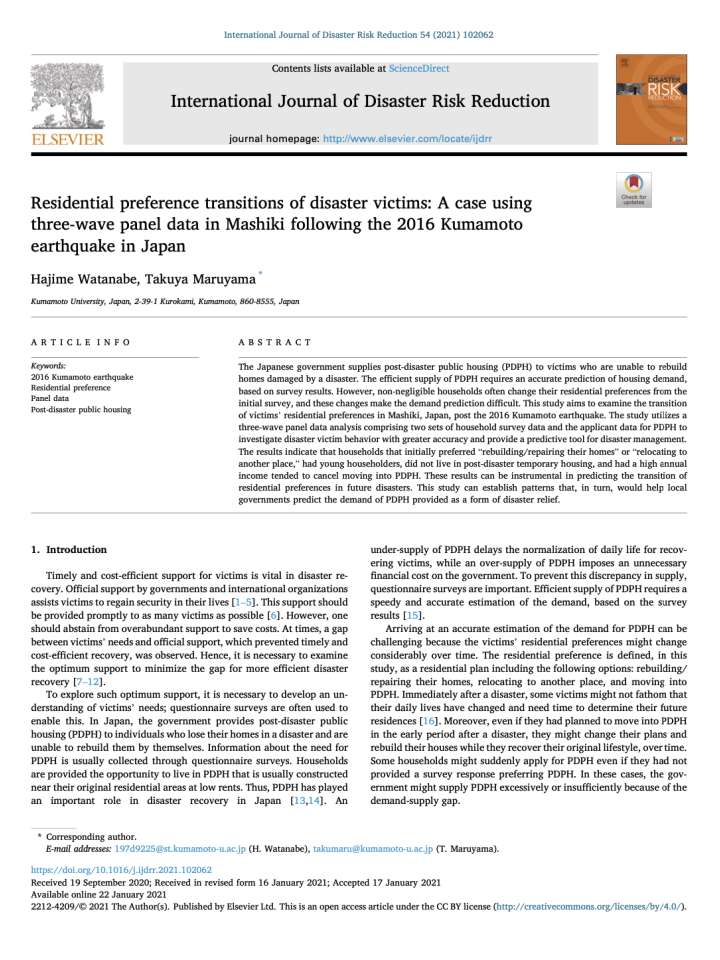
This paper proposes a methodology based on a multi-layer Monte Carlo simulation to model a two-stage recovery process for residential buildings: functional downtime due to delay and functional downtime due to repair. The delay portion of the model was
International Journal of Disaster Risk Reduction (Elsevier)
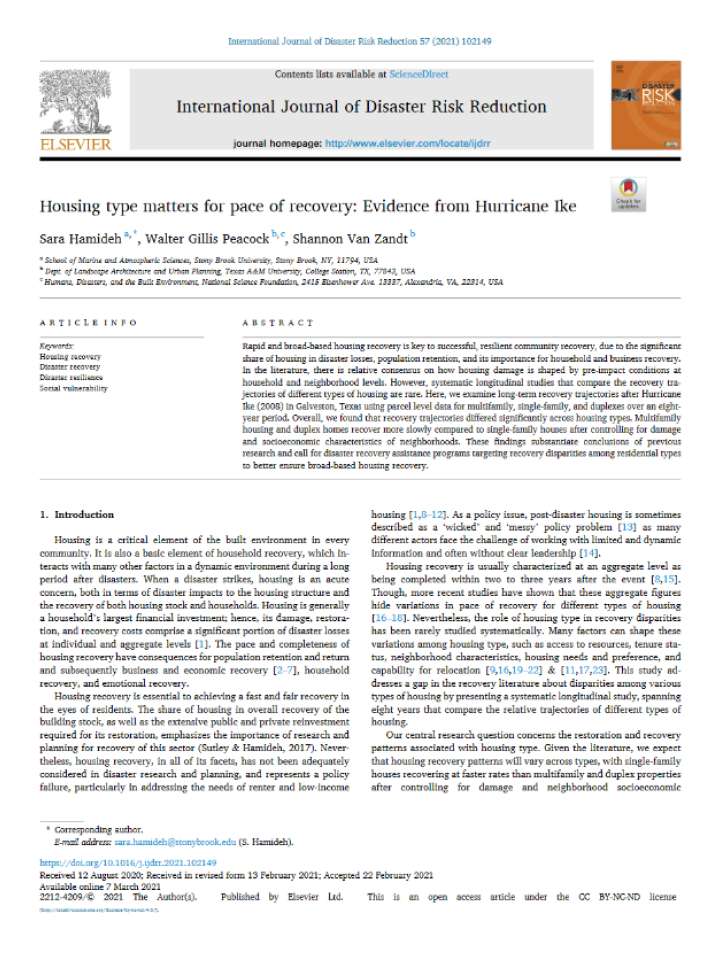
This research examines the long-term recovery trajectories after Hurricane Ike (2008) in Galveston, Texas using parcel-level data for multifamily, single-family, and duplexes over an eight-year period. In the literature, there is relative consensus on how
International Journal of Disaster Risk Reduction (Elsevier)
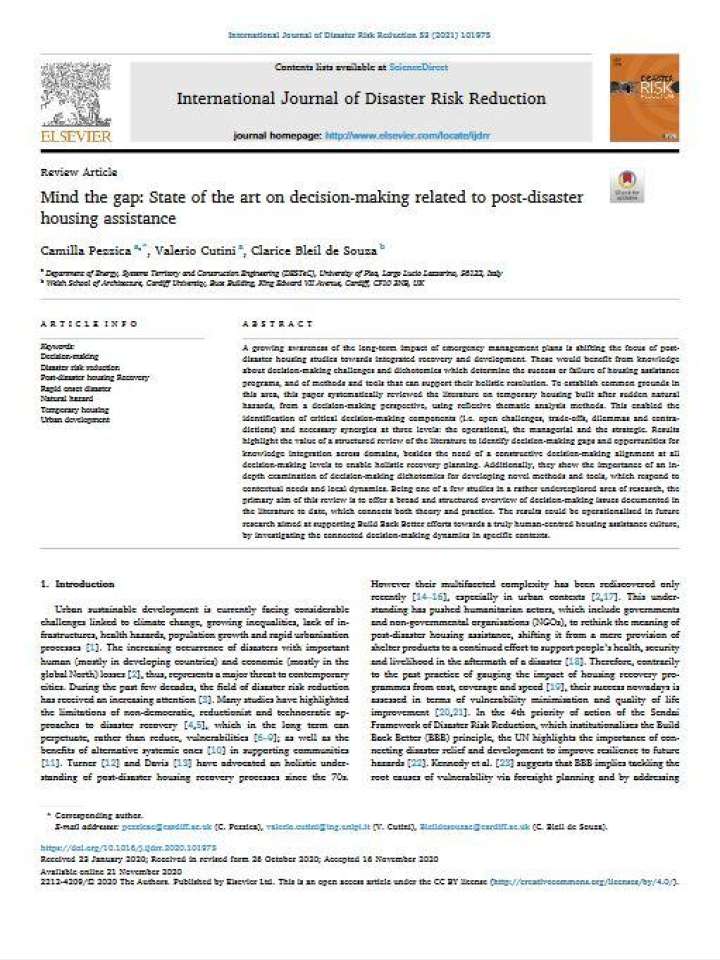
This paper systematically reviewed the literature on temporary housing built after sudden natural hazards, from a decision-making perspective, using reflexive thematic analysis methods. This enabled the identification of critical decision-making
International Journal of Disaster Risk Reduction (Elsevier)
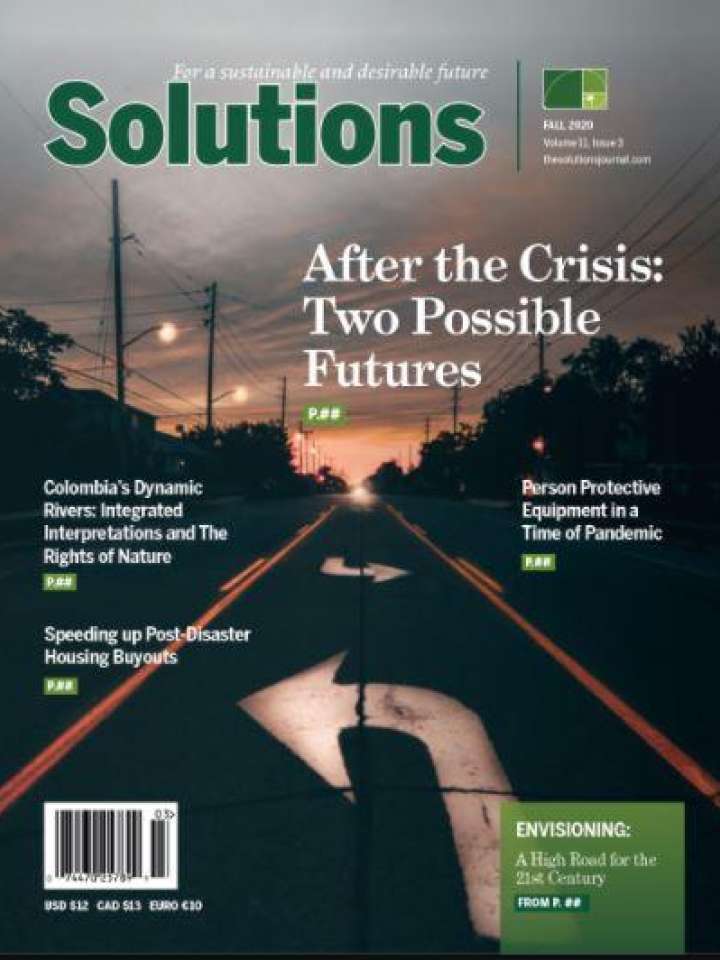
Floodplain buyouts are a flood mitigation strategy of acquiring frequently flooded properties and returning them to open space. A primary source of federal funding for post-flood buyouts is the Hazard Mitigation Grant Program (HMGP) administered by the
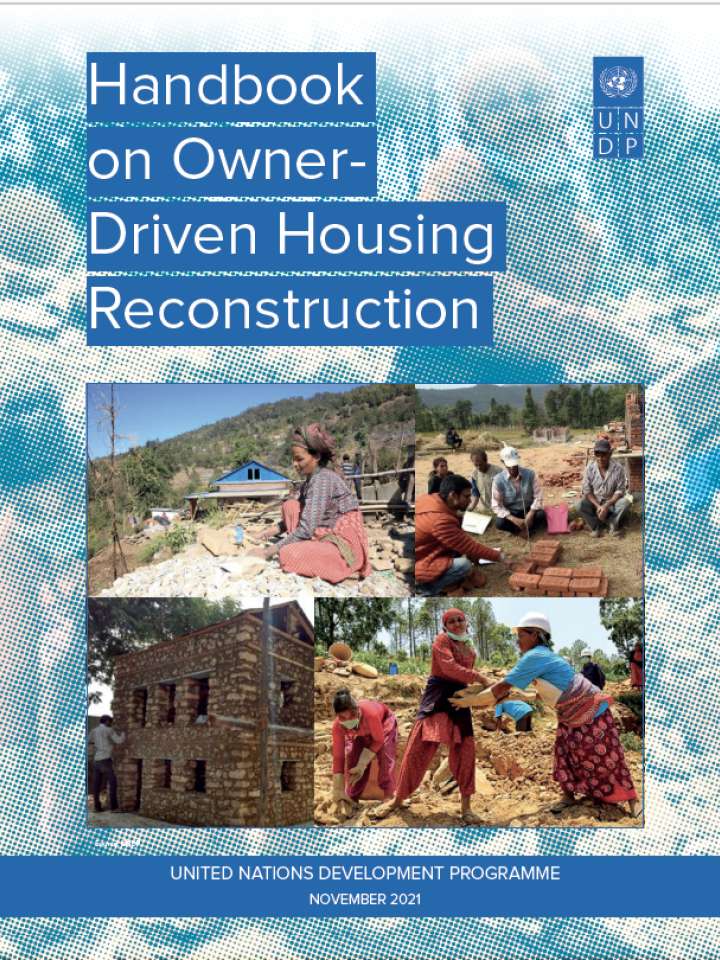
This Handbook serves to guide post-disaster housing reconstruction using an owner-driven housing reconstruction (ODHR) approach. It details the various processes, tasks and interventions involved in designing and managing ODHR programmes.