In response to the Gorkha Earthquake which struck Nepal on 25 April 2015, this report documents the status of temporary shelters across the 14 districts most affected by the earthquake. It also explores the reconstruction issues and challenges that affect families that are in temporary shelter, as well as assessing their needs in terms of further temporary shelter support.
This research collects and documents the experiences of women in reconstruction at community level, district level, and national level after the 2015 Gorkha earthquake in Nepal.
Catholic Relief Services’ 2015 study, Extending Impact: Factors influencing households to adopt hazard‑resistant construction practices in post‑disaster settings (EI), explored the factors that contribute to people’s independent decisions to use hazard
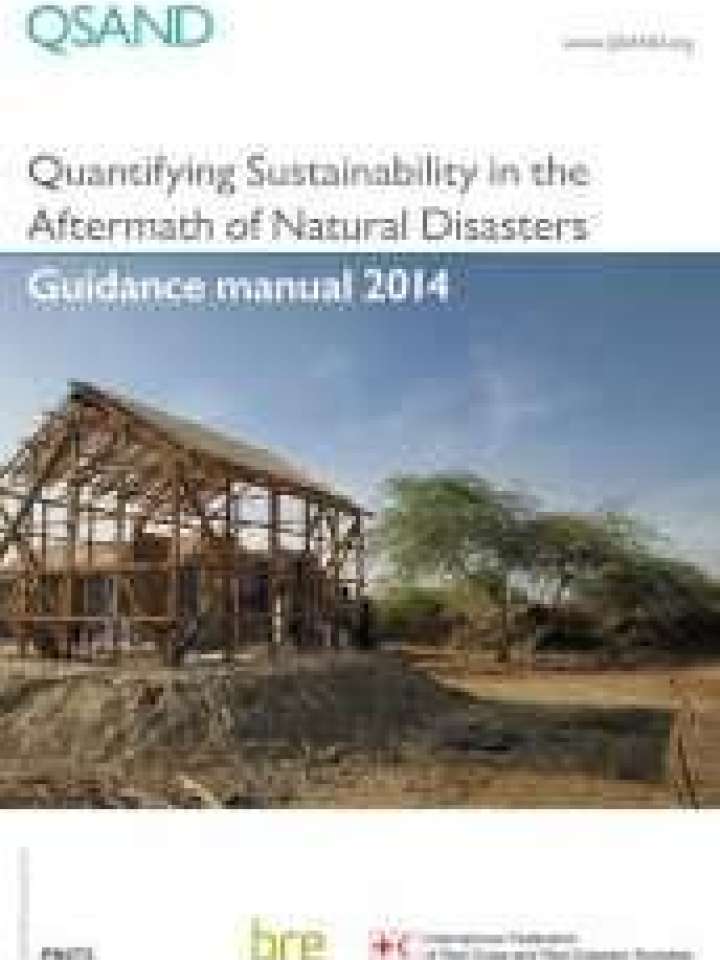
This document for the QSAND tool describes sustainability performance criteria against which recovery and reconstruction projects can be self-assessed and scored so as to inform decisions made in the aftermath of a disaster. QSAND was developed by BRE
International Federation of Red Cross and Red Crescent Societies (IFRC)
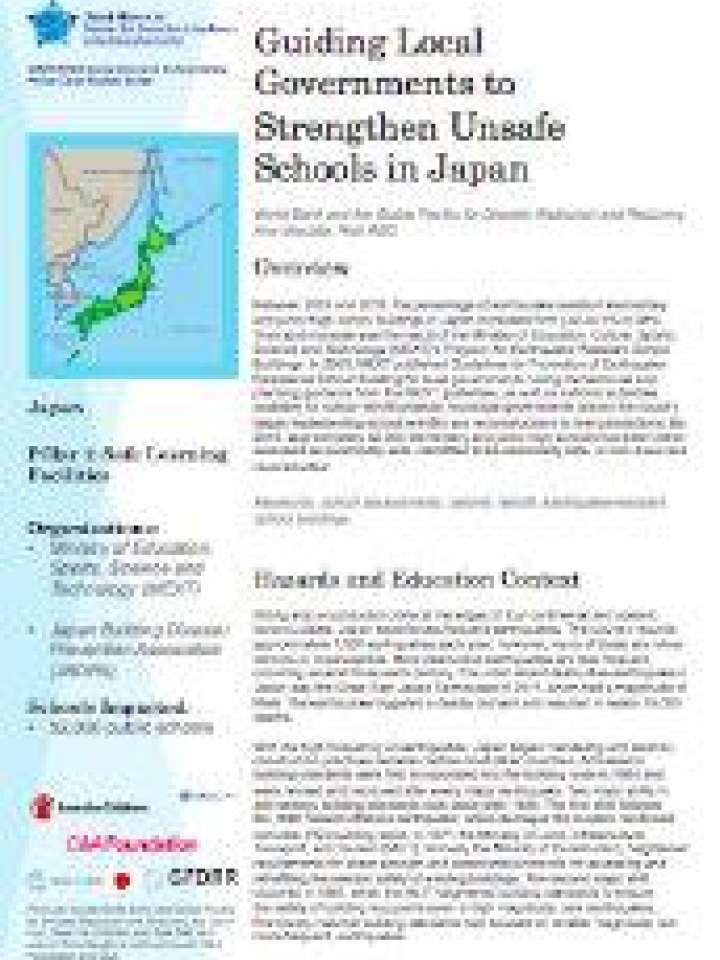
This case study explores how Japan developed guidelines for local governments to plan and implement assessment and retrofitting projects, and established a national subsidy programme for school assessments and retrofits.
World Bank, the
Global Facility for Disaster Reduction and Recovery, the (GFDRR)
Global Alliance for Disaster Risk Reduction and Resilience in the Education Sector (GADRRRES)
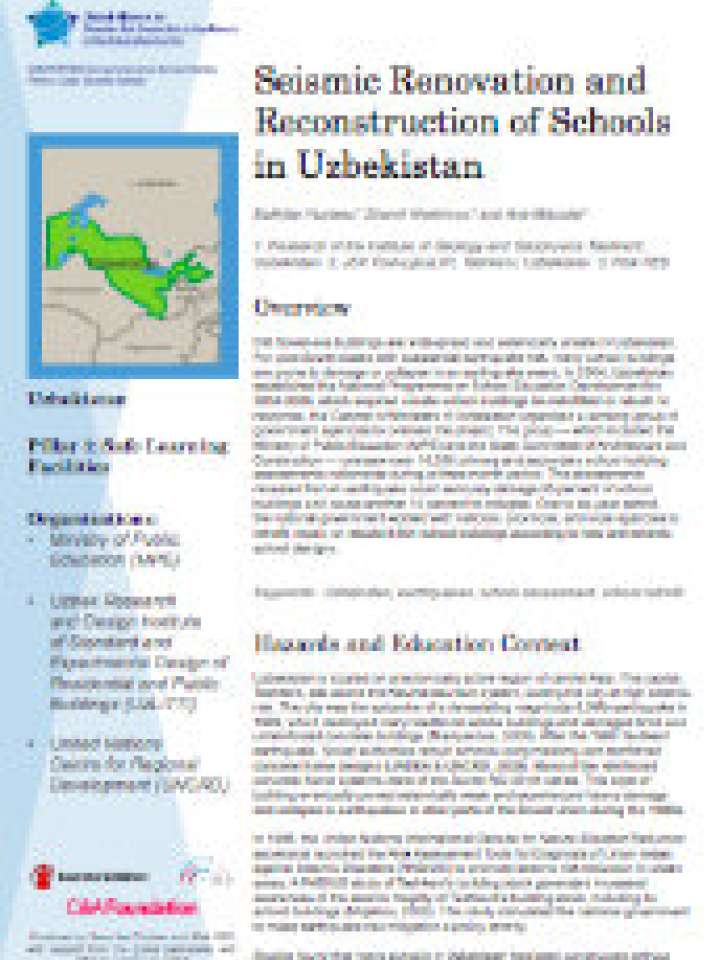
This document details Uzbekistan's efforts to retrofit or rebuild over 8,500 seismically unsafe school buildings. The initiative aimed to enhance earthquake resilience in schools with assessments, structural interventions, and interagency cooperation.
Global Alliance for Disaster Risk Reduction and Resilience in the Education Sector (GADRRRES)
This paper demonstrates the result of data analytics undertaken on the massive building damage survey data collected by the Government of Nepal after the 2015 Gorkha earthquakes. The data of more than 1 million buildings contained geo-coded information of
This report describes Japan’s incremental approach to developing, implementing, and facilitating compliance with building regulation over many decades.
World Bank, the
Global Facility for Disaster Reduction and Recovery, the (GFDRR)