PreventionWeb
Navigation loading…

内閣府 Cabinet Office (Japan)

Japan
Governments

Mission

To fulfill its mission effectively, the Cabinet Office has created two special organizations: four Councils on key policy fields (Council on Economic and Fiscal Policy, Council for Science and Technology Policy, Central Disaster Management Council, and Council for Gender Equality), and Ministers of State for Special Missions.

 
Disaster Reduction Goal

The Cabinet Office works to make Japan more resilient against natural disasters; it addresses all phases of disasters, including prevention, mitigation and preparedness, emergency response, and recovery and reconstruction. The Central Disaster Management Council, plays a critical role in planning for earthquakes, flooding, and other large-scale natural disasters. The Office also promotes international cooperation in line with the Hyogo Framework for Action adopted by the UN World Conference on Disaster Reduction in 2005.
Show more
Latest additions
Items: 120
平成26年版 防災白書
Documents and publications
Publications
2014年8月1日
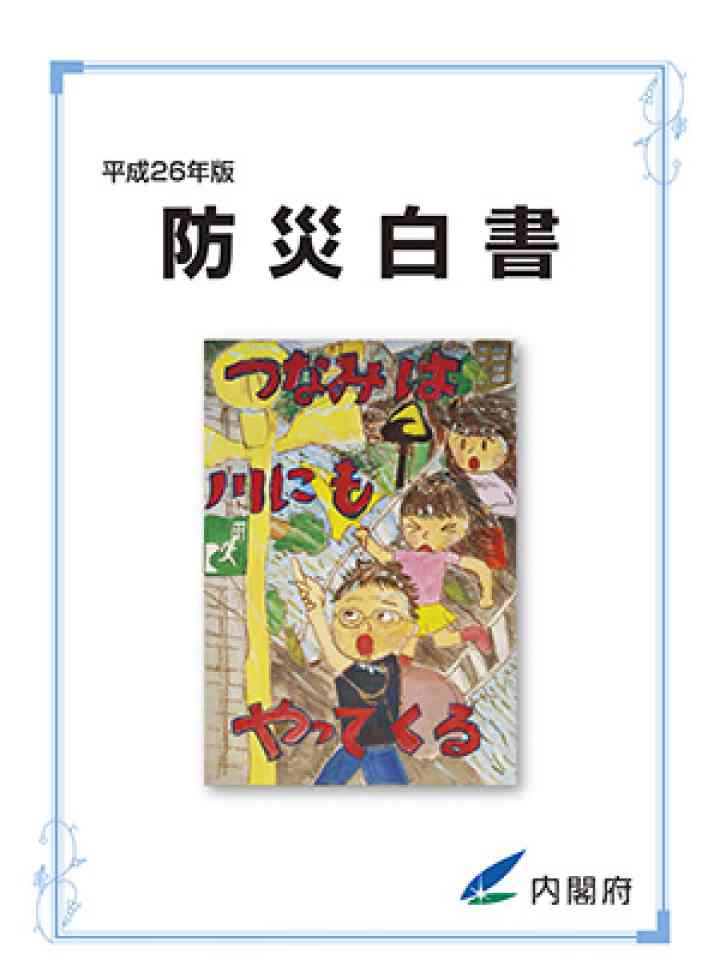
平成26年版 防災白書

防災白書は、災害対策基本法に基づき、毎年、通常国会に報告される法定白書で、防災に関する措置の概況と計画についてまとめたものです。平成26年版防災白書の「特集」では、「共助による地域防災力の強化~地区防災計画制度の施行を受けて~」をテーマに、自助・共助・公助に関するデータのうち、特に共助に焦点をあてて、地域防災力強化の方向性について検証を行いました。

内閣府 Cabinet Office (Japan)
防災白書は、災害対策基本法に基づき、毎年、通常国会に報告される法定白書で、防災に関する措置の概況と計画についてまとめたものです。平成26年版防災白書の「特集」では、「共助による地域防災力の強化~地区防災計画制度の施行を受けて~」をテーマに、自助・共助・公助に関するデータのうち、特に共助に焦点をあてて、地域防災力強化の方向性について検証を行いました。
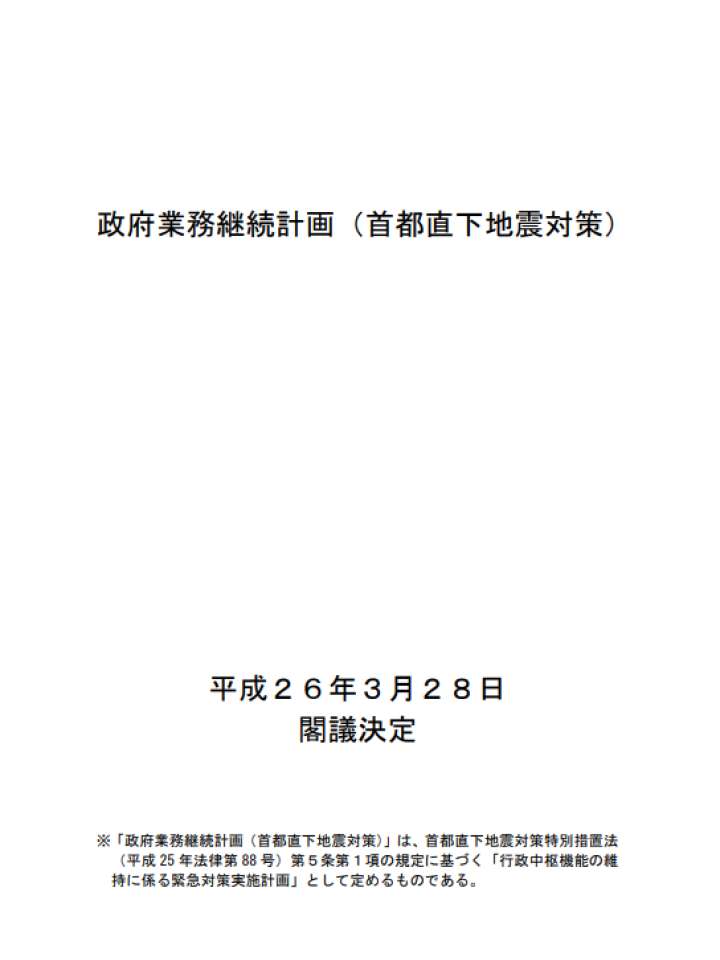
政府業務継続計画(首都直下地震対策)
Documents and publications
Policy type
National policies and plans
2014年3月28日
政府業務継続計画(首都直下地震対策)

本計画は、首都直下地震対策特別措置法(平成 25 年法律第 88 号)第5条第1項の規定に基づき、首都直下地震が発生し、当該地震が東京圏における政治、行政、経済等の中枢機能に甚大な影響を及ぼすおそれがある場合(以下「首都直下地震発生時」という。)において、政府として業務を円滑に継続するための対応方針及び当該業務を継続するために必要な執行体制、執務環境等を定めることにより、関係機関、民間事業者等の取組と相まって、首都中枢機能の維持を図り、国民生活及び国民経済に及ぼす影響を最小化することを目的とする。

内閣府 Cabinet Office (Japan)
本計画は、首都直下地震対策特別措置法(平成 25 年法律第 88 号)第5条第1項の規定に基づき、首都直下地震が発生し、当該地震が東京圏における政治、行政、経済等の中枢機能に甚大な影響を及ぼすおそれがある場合(以下「首都直下地震発生時」という。)において、政府として業務を円滑に継続するための対応方針及び当該業務を継続するために必要な執行体制、執務環境等を定めることにより、関係機関、民間事業者等の取組と相まって、首都中枢機能の維持を図り、国民生活及び国民経済に及ぼす影響を最小化することを目的とする。
Meetings and conferences
Kobe
21 January 2014
In person
International Recovery Forum 2014: The Role of Private Sector in Disaster Recovery
Business Continuity Guidelines
Documents and publications
Publications
Tools and guidelines
30 August 2013
Business Continuity Guidelines ―Strategies and Responses for Surviving Critical Incidents― Third Edition

These guidelines show the necessity of implementing good business continuity practices within Japanese enterprises and describe how to facilitate the implementation of Business Continuity Management and create and improve Business Continuity Plans

内閣府 Cabinet Office (Japan)
These guidelines show the necessity of implementing good business continuity practices within Japanese enterprises and describe how to facilitate the implementation of Business Continuity Management and create and improve Business Continuity Plans
平成25年版 防災白書
Documents and publications
Publications
2013年8月1日
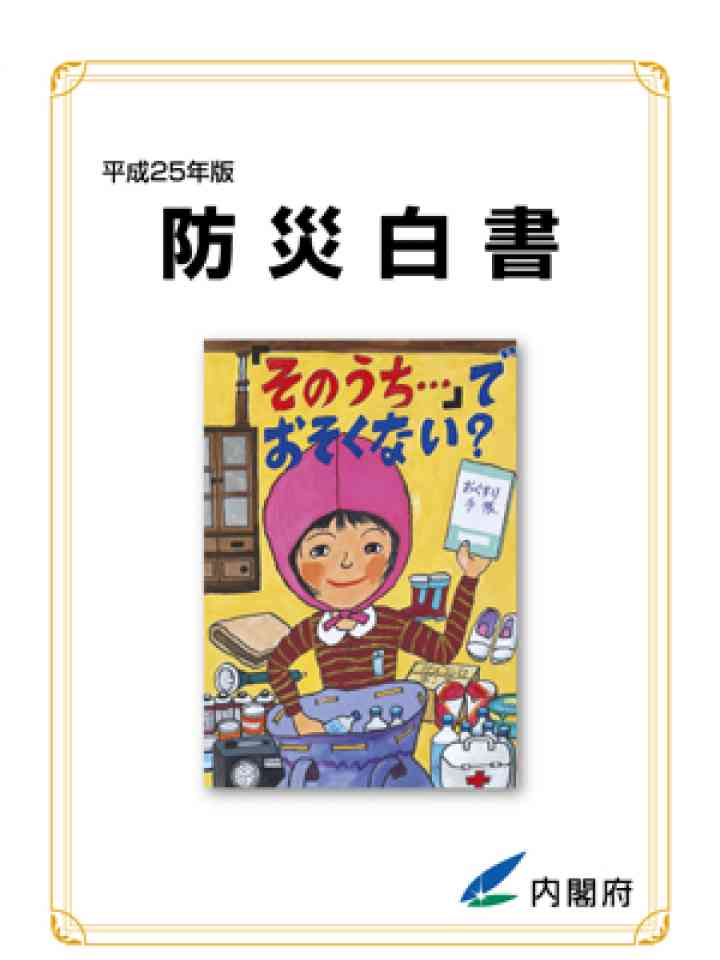
平成25年版 防災白書

防災白書は、災害対策基本法に基づき、毎年、通常国会に報告される法定白書で、防災に関する措置の概況と計画についてまとめたものです。平成25年版防災白書では、東日本大震災の被災地の復旧・復興に向けた取組、平成 24 年以降に発生した主な災害、東日本 大震災の教訓を踏まえた主な取組(防災対策推進検討会議最終報告、災害対策法制の見直し、防災基本計画の見 直し等)、発生が危惧される災害種別ごとの取組状況(南海トラフの巨大地震、首都直下地震等)等について記 述しており、日本の災害対策を網羅的に記載しています。

内閣府 Cabinet Office (Japan)
防災白書は、災害対策基本法に基づき、毎年、通常国会に報告される法定白書で、防災に関する措置の概況と計画についてまとめたものです。平成25年版防災白書では、東日本大震災の被災地の復旧・復興に向けた取組、平成 24 年以降に発生した主な災害、東日本 大震災の教訓を踏まえた主な取組(防災対策推進検討会議最終報告、災害対策法制の見直し、防災基本計画の見 直し等)、発生が危惧される災害種別ごとの取組状況(南海トラフの巨大地震、首都直下地震等)等について記 述しており、日本の災害対策を網羅的に記載しています。
Documents and publications
DRF - Disaster Recovery Frameworks
22 March 2013
Committee for policy planning on disaster management: toward the reconstruction for sound and unwavering Japan

This final report provides the direction of Japan’s disaster management for the future based on the lessons learned from the Great East Japan Earthquake to fulfill the promises in the future.

内閣府 Cabinet Office (Japan)
This final report provides the direction of Japan’s disaster management for the future based on the lessons learned from the Great East Japan Earthquake to fulfill the promises in the future.
Meetings and conferences
Kobe, Hyogo
21 January 2013 - 22 January 2013
In person
International Recovery Forum 2013: Resilient Recovery in Cities and Municipalities: Lessons on Integrating DRR into Recovery and Development Planning-Tohoku and Global Experiences and the Post 2015 Framework for DRR
Meetings and conferences
Kobe, Hyogo
21 January 2013
In person
4th expert group meeting on the Great East Japan Earthquake
The Fourth Expert Group Meeting aims to share experiences and lessons on reducing impacts of future disasters, through discussions amongst experts and researchers from Japan and elsewhere, with reports from universities and organizations engaged in the
The Fourth Expert Group Meeting aims to share experiences and lessons on reducing impacts of future disasters, through discussions amongst experts and researchers from Japan and elsewhere, with reports from universities and organizations engaged i

Pagination

  • Previous page ‹ Previous
  • «
  • Page 7
  • Page 8
  • Page 9
  • Page 10
  • Page 11
  • Current page 12
  • Page 13
  • Page 14
  • Page 15
  • Next page Next ›

More content for this organization may be available on PreventionWeb or on the site search.

Voluntary Commitments

The organization has no registered commitments.

The Sendai Framework Voluntary Commitments (SFVC) online platform allows stakeholders to inform the public about their work on DRR. The SFVC online platform is a useful toolto know who is doing what and where for the implementation of the Sendai Framework, which could foster potential collaboration among stakeholders. All stakeholders (private sector, civil society organizations, academia, media, local governments, etc.) working on DRR can submit their commitments and report on their progress and deliverables.

Contact information

http://www.cao.go.jp
+81 3 3503 9394
Fax:
+81 352532111

Is this page useful?

Yes No
Report an issue on this page

Thank you. If you have 2 minutes, we would benefit from additional feedback (link opens in a new window).

The International Recovery Platform (IRP) is a global partnership working to strengthen knowledge, and share experiences and lessons on building back better in recovery, rehabilitation, and reconstruction.

Latest IRP videos and photos: YouTube Flickr Contact IRP

Loading