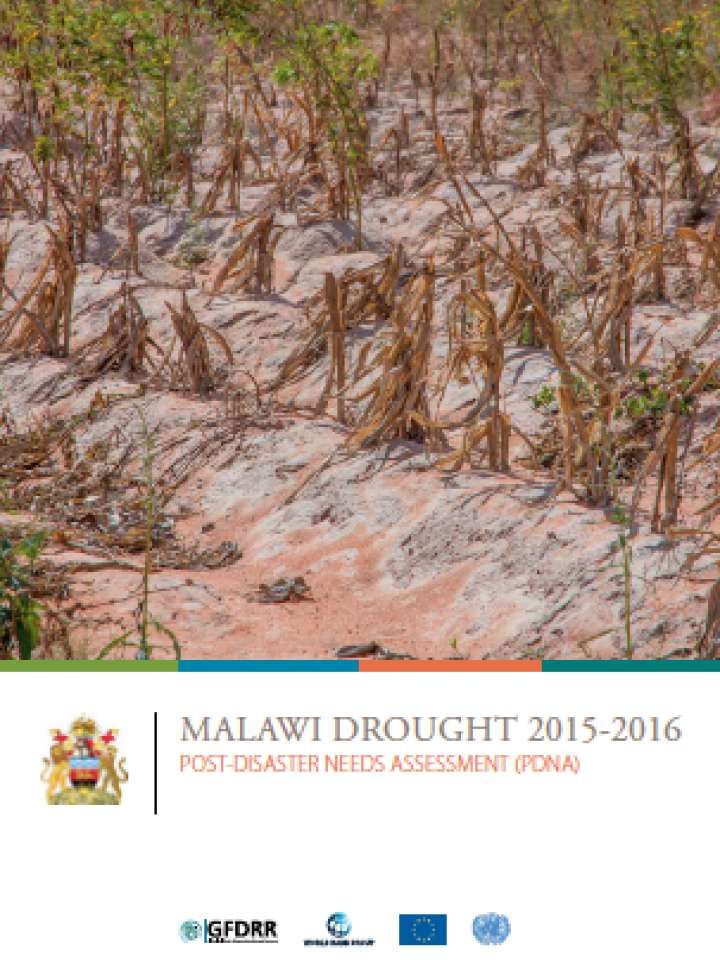
This PDNA provides an analysis of the physical, socioeconomic, and human impacts of the 2015-2016 drought in Malawi. It analyzes the challenges and lessons from the ongoing drought response and provides recommendations for improved drought resilience.
Malawi - government
Global Facility for Disaster Reduction and Recovery, the (GFDRR)
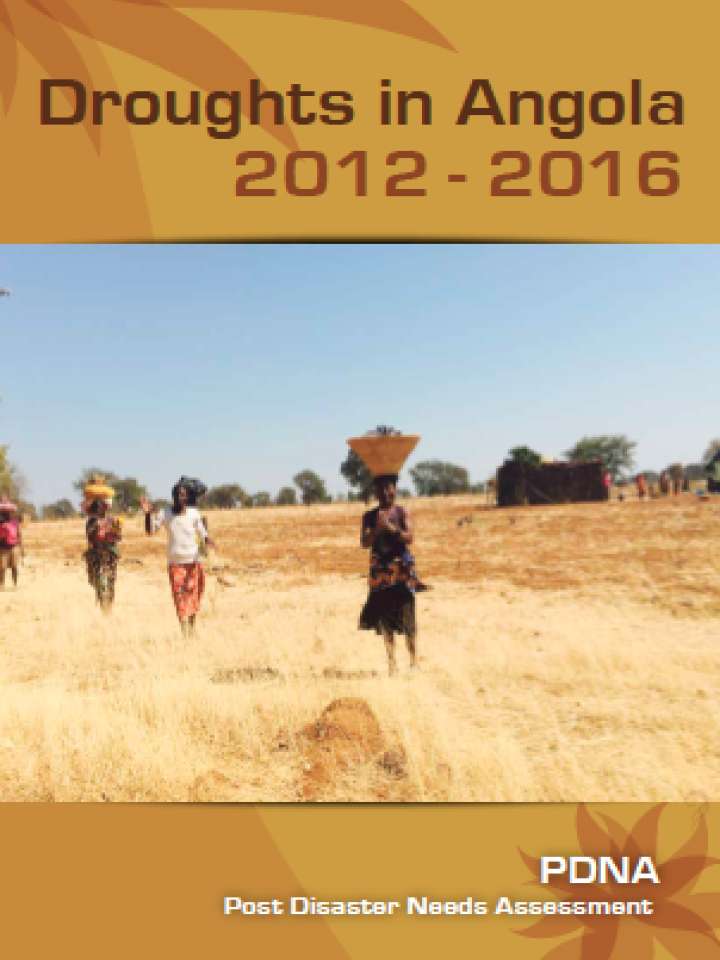
This PDNA examines the impact of the prolonged drought from 2012 to 2016 in Angola on the three southern provinces Cunene, Namibe and Huíla. It provides a recovery strategy and key interventions for each of the three provinces.
Angola - government
Global Facility for Disaster Reduction and Recovery, the (GFDRR)
This post-earthquake assessment on food security, livelihoods and early recovery was conducted in September and October 2015 both as a monitoring exercise and to further inform broader early recovery efforts identified as priorities in the Post-Disaster Needs Assessment, including food security, livelihoods, agriculture, service access and protection.
In this methodology manual, the Post-Event Review Capability (PERC) process is explained for individuals and organizations looking to conduct a systematic and holistic evaluation of a disaster. This manual is aimed to disaster risk practitioners and
International Institute for Applied Systems Analysis
Institute for Social and Environmental Transition - International (ISET)
Two years after the typhoon ravaged coastal and farmland communities, the people who survived the storm -the farmers and fishers- are well on the road to recovery. This book is a tribute to their resilience and FAO's work together to build back better their agricultural livelihoods after suffering such devastating losses.
Food and Agriculture Organization of the United Nations (FAO)
The objective of this law is to regulate disaster management in the Kingdom of Cambodia. The law has the following goals: (i) Prevention, adaptation and mitigation in the pre-disaster period, due to natural or human-made causes; (ii) Emergency response
This report presents a summary of the main natural disasters that struck different parts of Khyber Pakhtunkhwa province in Pakistan, affecting a large number of people and causing substantial damage to public and private infrastructure. The Mini-Cyclone
This plan was prepared in the aftermath of the Oct 26, 2015 earthquake which caused human losses and extensive damages to public infrastructure, houses and other buildings in various areas of the Khyber Pakhtunkhwa province in Pakistan.
The document contains a detailed damage assessment and lists priority interventions in areas of rehabilitation of physical infrastructure, housing, reactivation of local economy, and disaster risk reduction and environment recovery strategies. The plan also proposes management mechanisms for recovery and reconstruction.