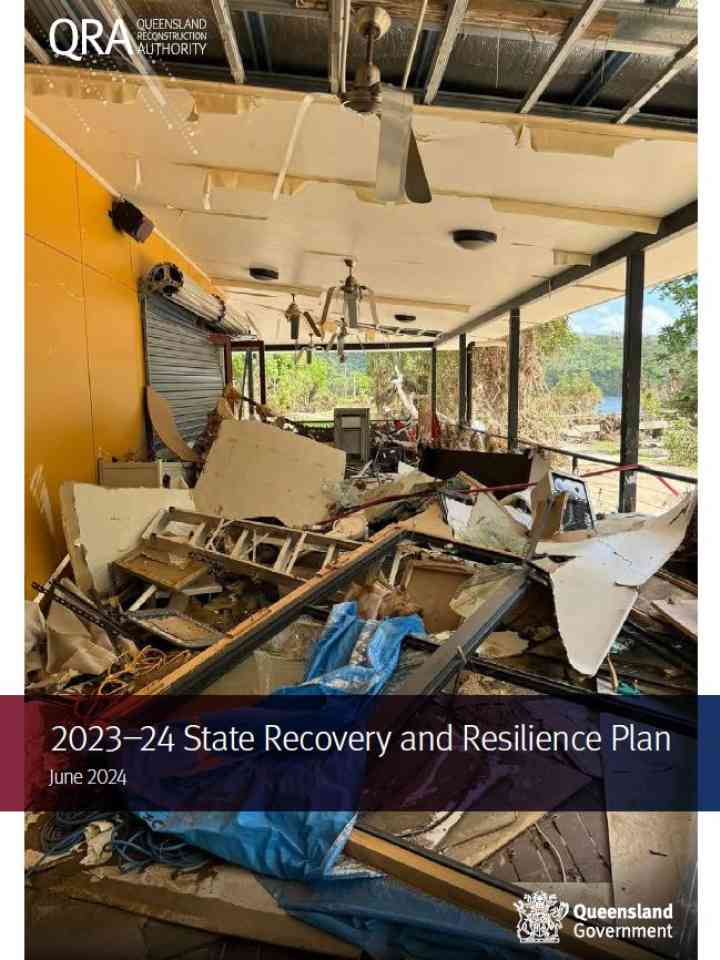
The Queensland (Australia) 2023-24 State Recovery and Resilience Plan (the Plan) covers 13 disaster events and captures the diversity, breadth and extent of disasters for the entire season.
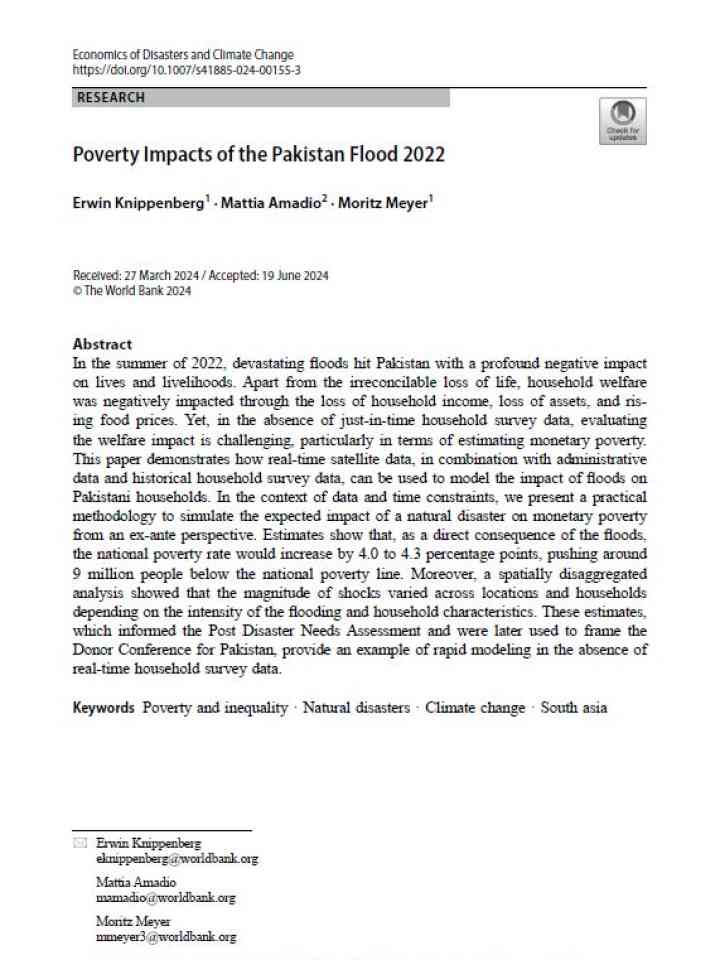
This paper demonstrates how real-time satellite data, in combination with administrative data and historical household survey data, can be used to model the impact of 2022 floods on Pakistani households.
Economics of Disasters and Climate Change (Springer)
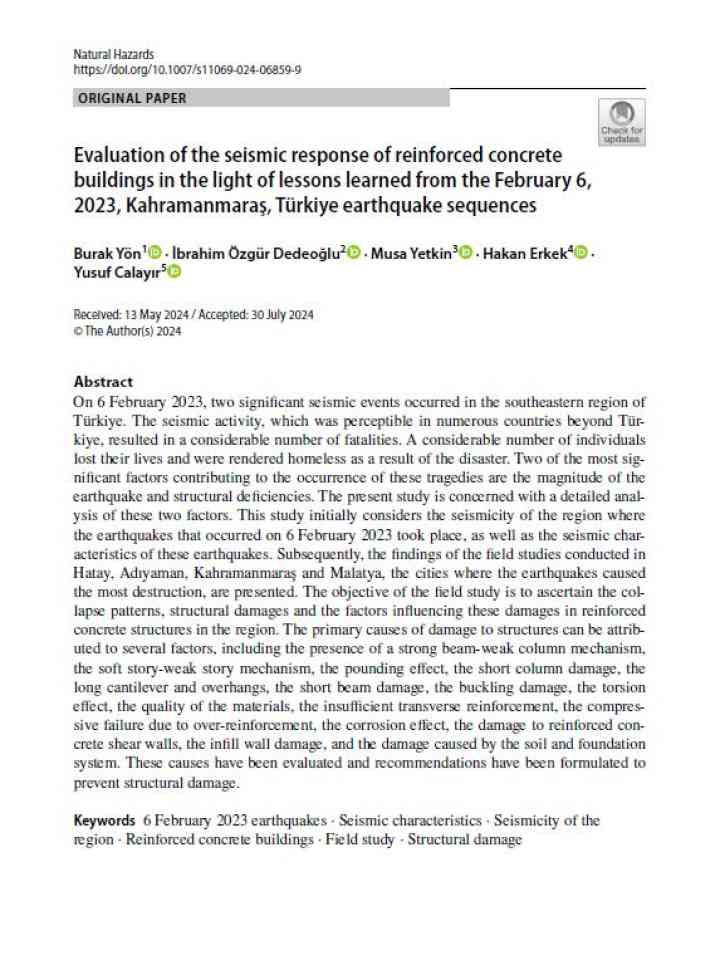
This study initially considers the seismicity of the Türkiye region where the earthquakes that occurred on 6 February 2023 took place, as well as the seismic characteristics of these earthquakes.
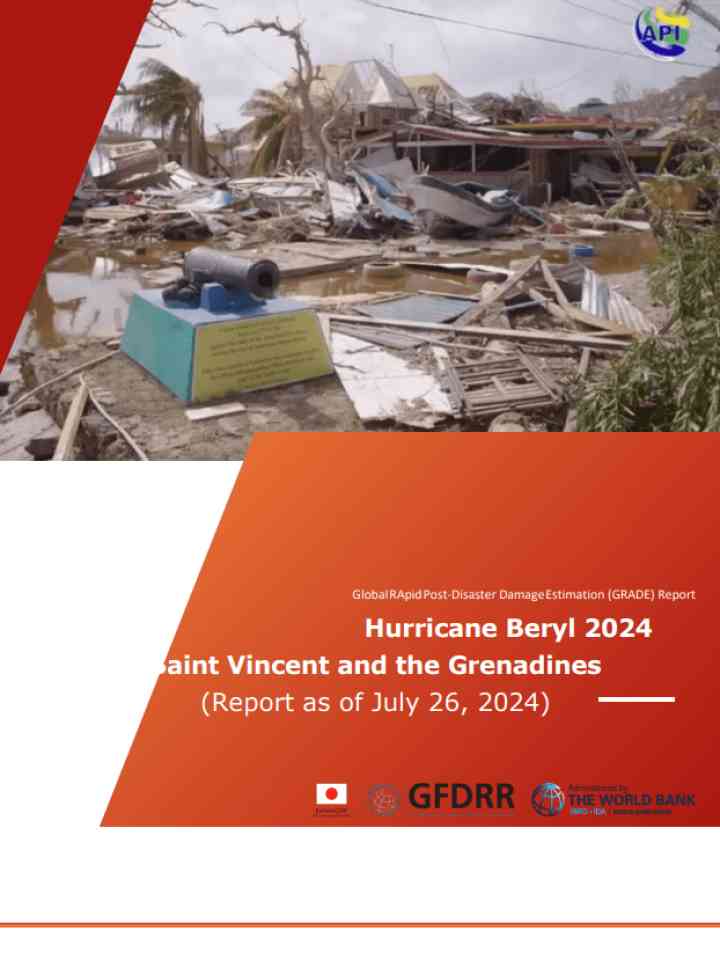
This Global Rapid Post-Disaster Damage Estimation (GRADE) report provides a synopsis of the estimated direct economic damage in Saint Vincent and the Grenadines (SVG) due to the passage Hurricane Beryl.
World Bank, the
Global Facility for Disaster Reduction and Recovery, the (GFDRR)
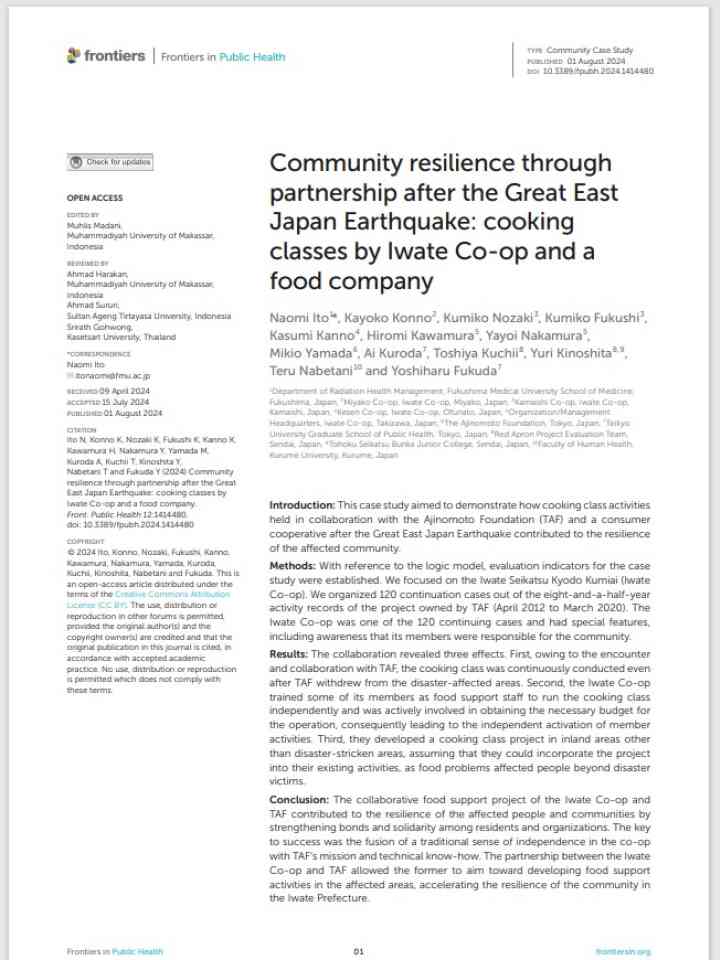
This case study aimed to demonstrate how cooking class activities held in collaboration with the Ajinomoto Foundation (TAF) and a consumer cooperative after the Great East Japan Earthquake contributed to the resilience of the affected community.
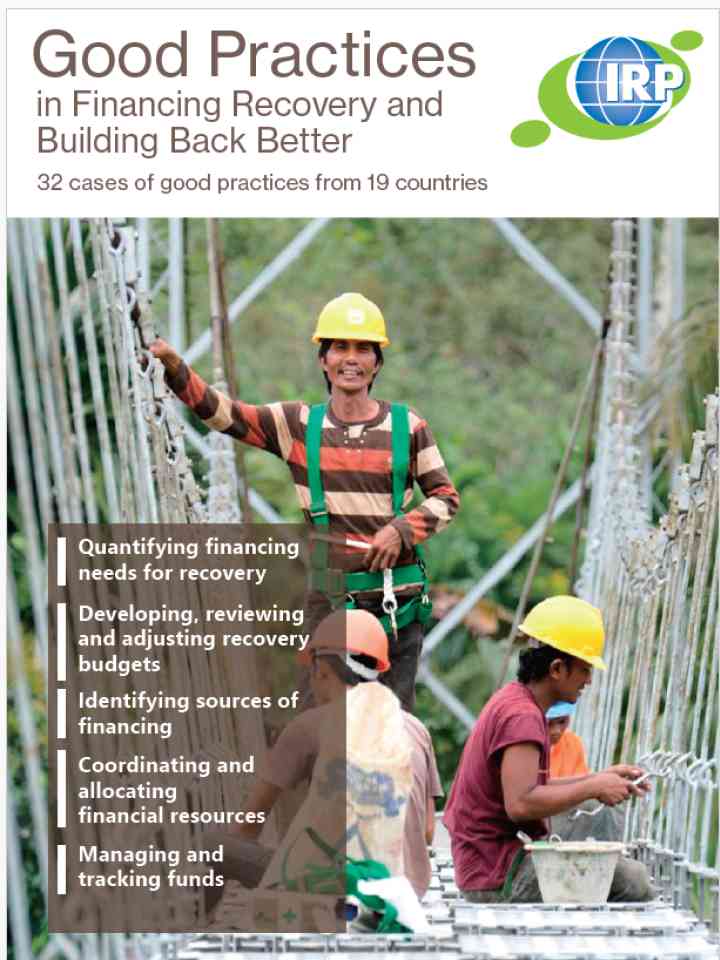
This recovery brief provides recovery practitioners with lessons and good practices on financing post-disaster recovery, recovery preparedness and building back better.
This is a JRC Emergency Report on the impact of Hurricane Beryl. Hurricane Beryl set a precedent for what is predicted to be an extremely active hurricane season for the entire Atlantic basin.
The dataset provides comprehensive information on the inundation and run-up heights from the tsunami triggered by the 2024 Noto Peninsula earthquake in Japan, compiled from extensive post-event surveys.
This research statistically analyzes how the Japanese public perceives the issues around the recovery process and what memories and records they would like to learn from regarding the GEJE.