This publication outlines Sri Lanka's new approach to dealing with natural hazards in the context of disaster risk management. Issues addressed: (i) the need for education in disaster risk management and Sri Lanka's policy of teaching disaster safety in schools; (ii) the 'Disaster Risk Management & Psycho-social Care' project; (iii) results from the project, including educational facilities being better prepared for emergencies; and (iv) factors for success, including motivating political decision-makers, coordinating inter- and intra-ministerial cooperation, and utilising existing structures and processes to integrate disaster safety integration.
Deutsche Gesellschaft für Internationale Zusammenarbeit (GIZ)
This concept paper links basic education and disaster risk management. In particular, the paper is aimed at personnel in international cooperation engaged in promoting basic education,
emergency/transitional aid, disaster preventive reconstruction and
Deutsche Gesellschaft für Internationale Zusammenarbeit (GIZ)
The specific objectives for this study are: to assess the extent and nature of crisis experience in small firms; to identify planning and preparedness mechanisms and to assess how small firms have adapted; to assess the impact of Canterbury earthquakes on small firms’ operations inside and outside the ‘impact zone’; to assess the awareness of potential threats to business continuity planning for future events.
New Zealand Centre for Research into Small and Medium-Sized Enterprises
This document, designed to complement a series of training courses of one week duration on risk assessment and disaster management planning for chemical disasters in India, aims to update the knowledge and skills of the participants on multi-dimensional
This document presents the key lessons learned from a team of experts reassembled to evaluate Japan’s long-term efforts to recover from the Great Eastern Japan Earthquake and to prepare for future catastrophes. Based on extensive literature and interviews with Japanese officials and experts, it identifies four critical areas that affect response to a catastrophe: (i) recovery and resiliency of critical infrastructure, (ii) environmental remediation, (iii) compensation and disaster assistance, and (iv) population resiliency. In each area, it makes key observations, determines findings, and develops recommendations for learning from Japan’s experience.
This paper, a review of an Internews humanitarian-information radio program launched in Haiti after the January 2010 earthquake that devastated the country.
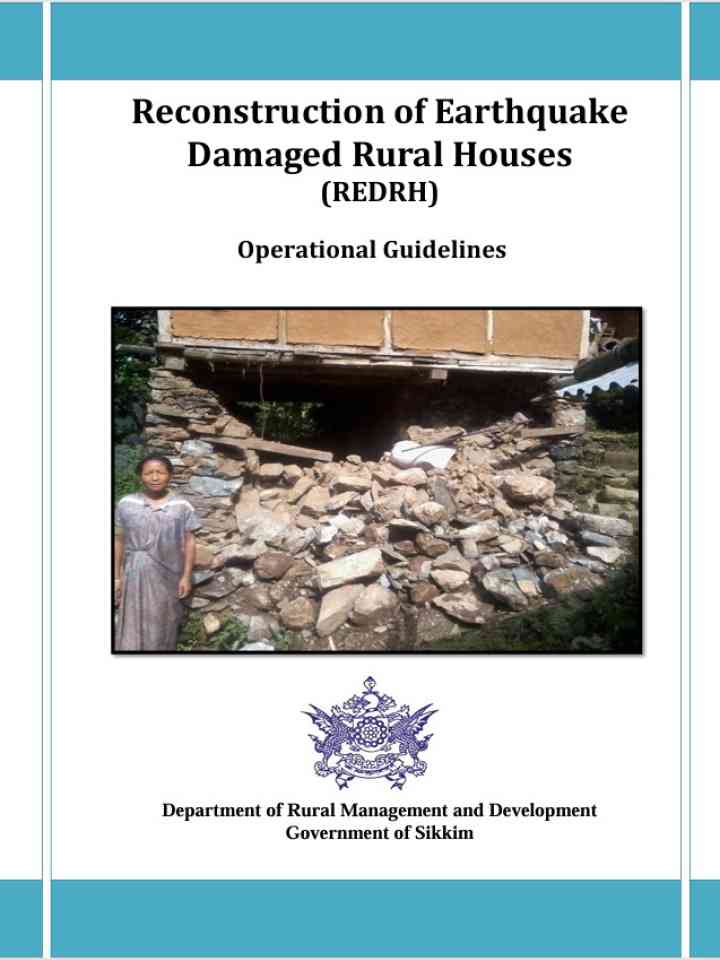
The Reconstruction of Earthquake Damaged Rural Houses (REDRH) operational guidelines were established to address the extensive damage caused by the 2011 earthquake in Sikkim, which destroyed over 12,500 rural homes.
This book is intended to provide an overview of the concept of ecosystem approach to disaster risk reduction (Eco-DRR), natural resource management and disaster linkages, incorporating Eco-DRR concepts in various phases of disaster management, including post disaster recovery in wide range of human and natural environmental settings.
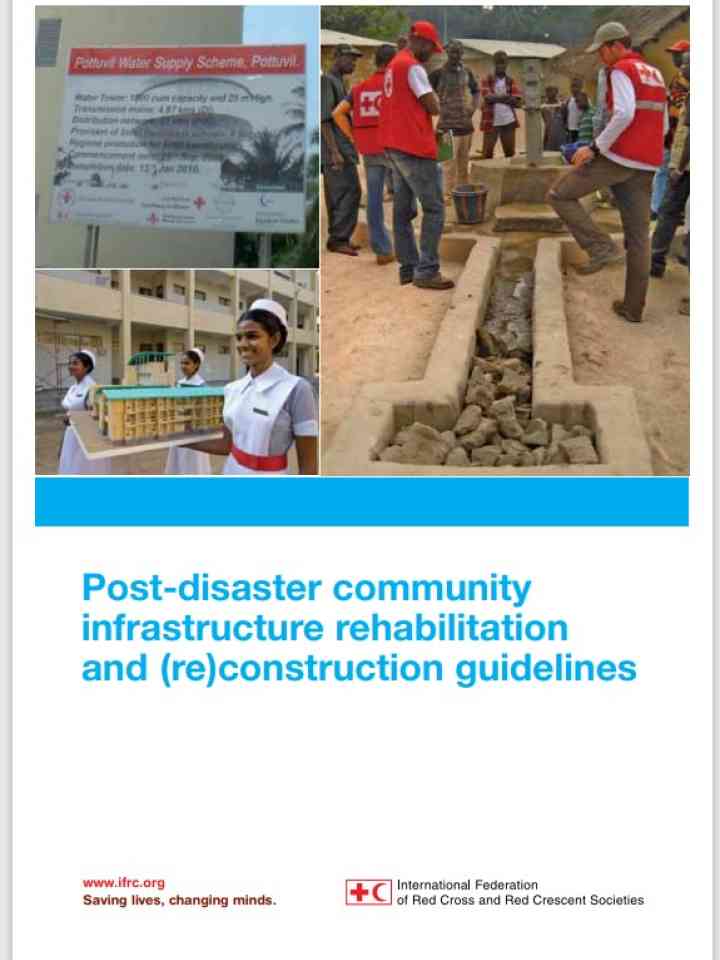
The aim of these guidelines is to promote a change in the approach to community infrastructure, informed by emerging practices, capitalizing on the experiences and expertise in response to the 2004 Indian Ocean tsunami, and other recent events.
International Federation of Red Cross and Red Crescent Societies (IFRC)