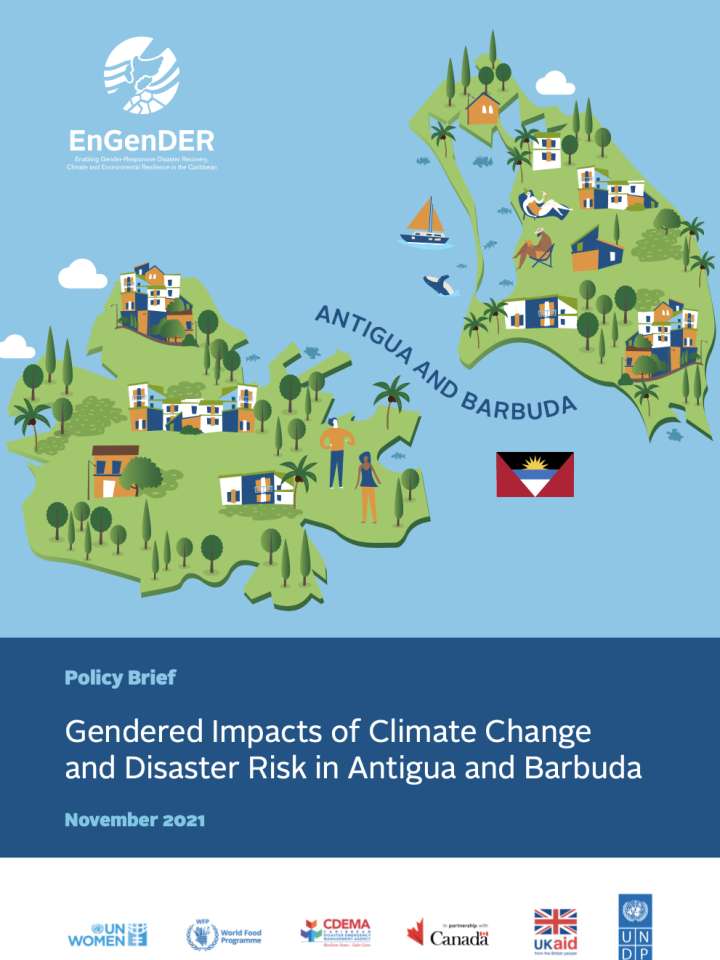
The aim of the Enabling Gender-Responsive Disaster Recovery, Climate and Environmental Resilience in the Caribbean (EnGenDER) Project is to identify and address any gaps to ensure equal access to resilience, climate change and environment solutions.
United Nations Entity for Gender Equality and the Empowerment of Women (UN WOMEN)
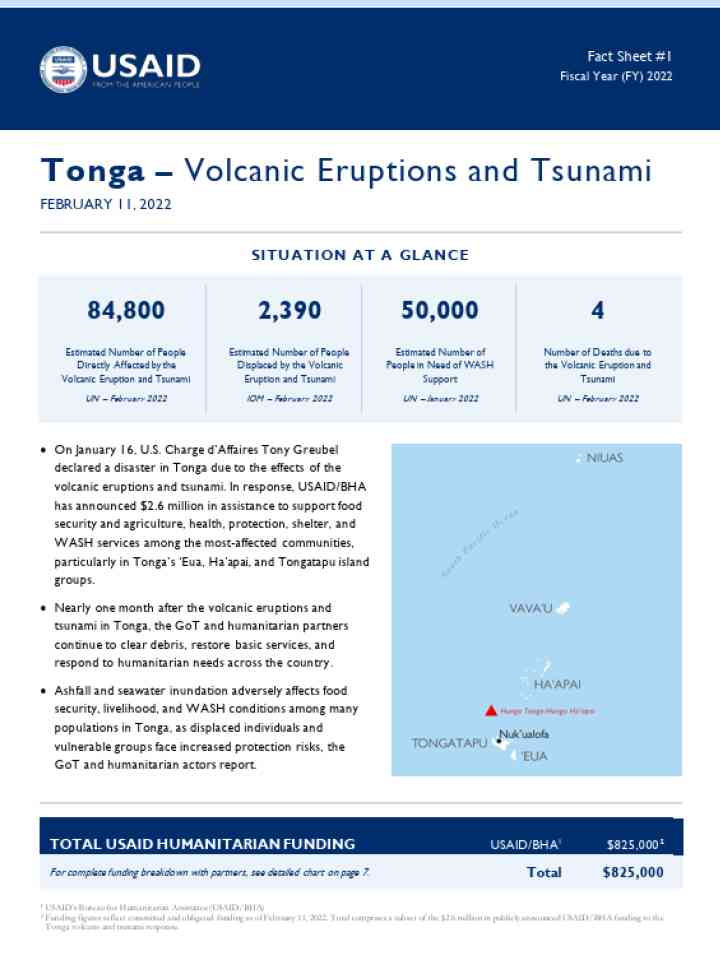
These fact sheets outline humanitarian impacts, priority needs, and response actions following the Hunga Tonga–Hunga Haʻapai volcanic eruptions and tsunami in January 2022.
United States Agency for International Development (USAID)
This review submitted for the MTRSF presents a stocktaking of progress and challenges experienced in the BBB component of Priority 4, and a prospective review of new and emerging issues, priority challenges to be addressed, and priority actions.
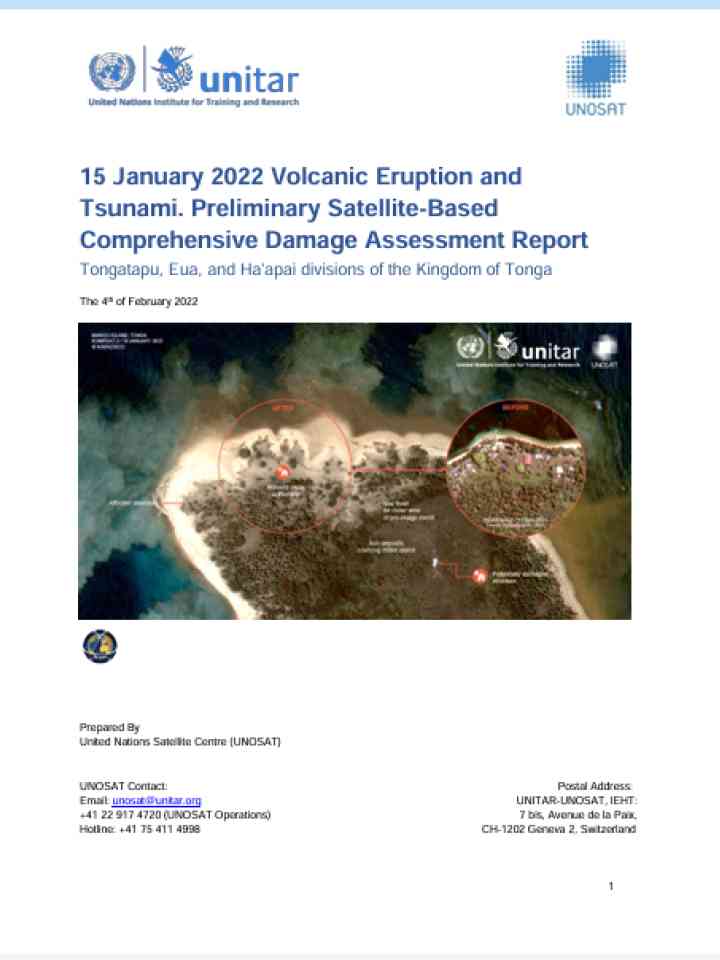
This report presents a satellite-based assessment of building, road, and vegetation damage caused by the January 2022 volcanic eruption and tsunami across Tongatapu, ʻEua, and Haʻapai in Tonga.
This research on (in)visible communities confronting climate change and environmental injustice asks how climate-induced disasters intensify social inequities. This research shows that more equitable approaches to disaster preparation are possible.
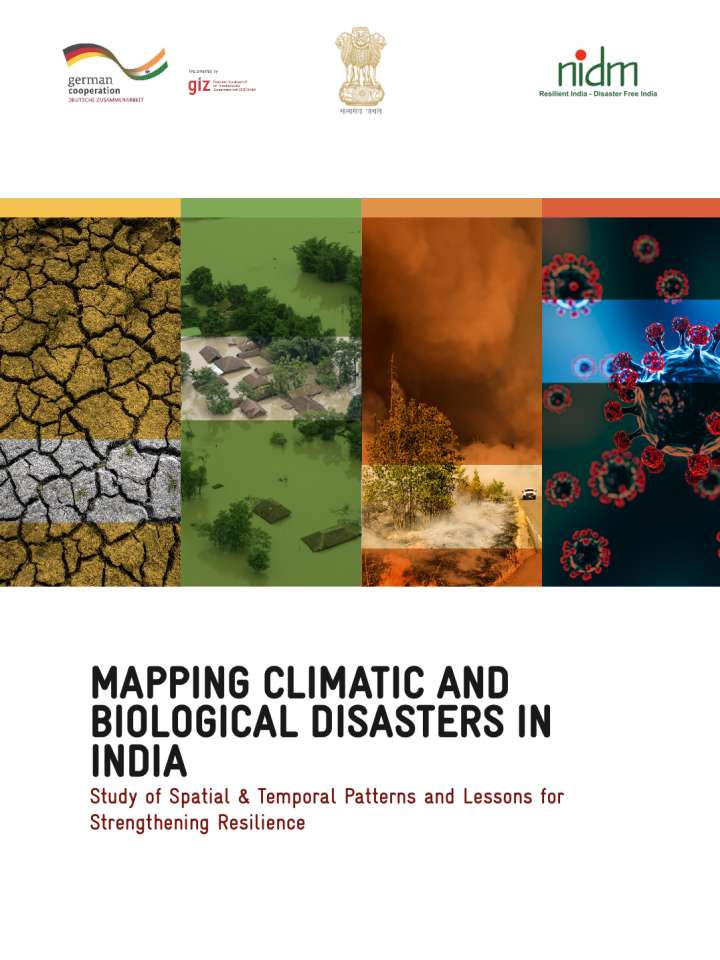
Spatio-temporal mapping of climatic and biological disaster outbreak in India has been undertaken using historical data and scientific tools to explore options to support for relief, recovery, resilience, and adaptation.
Federal Ministry for Economic Cooperation and Development
Deutsche Gesellschaft für Internationale Zusammenarbeit (GIZ)
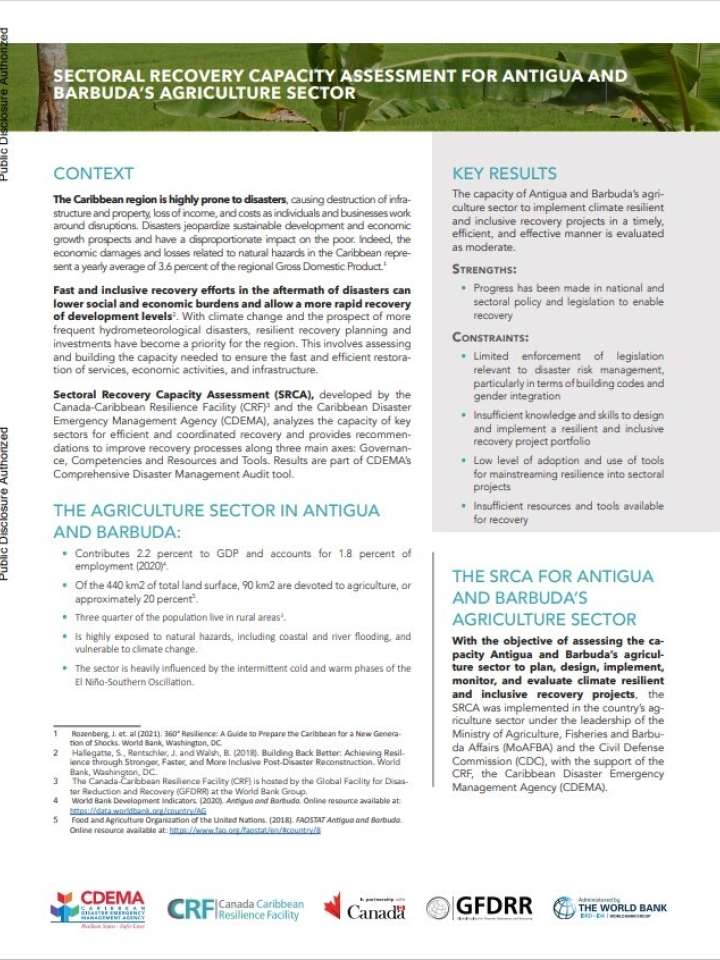
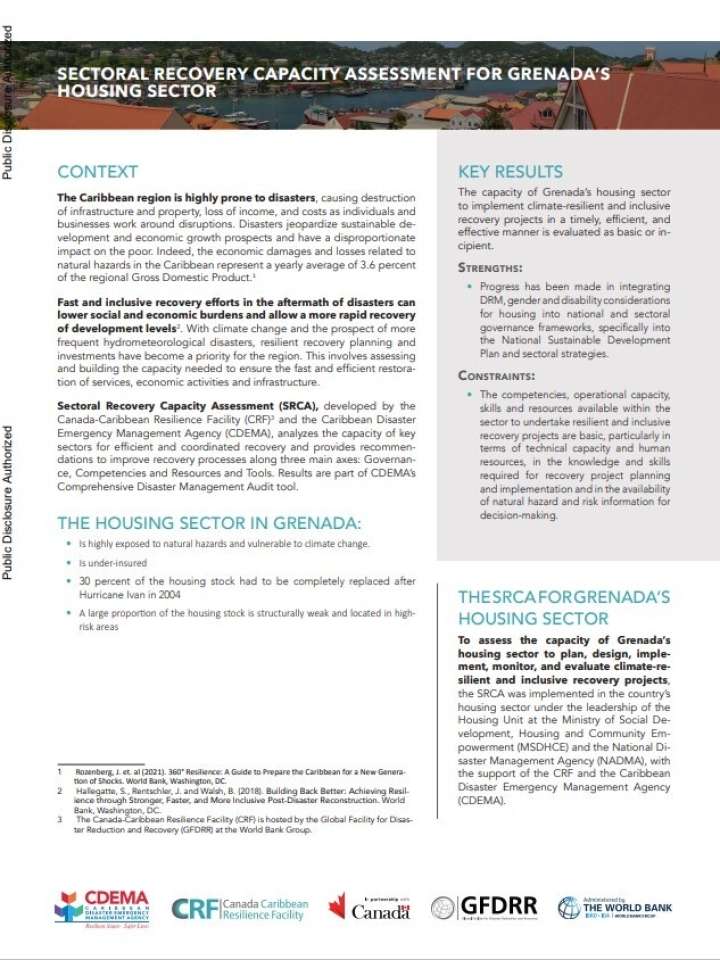
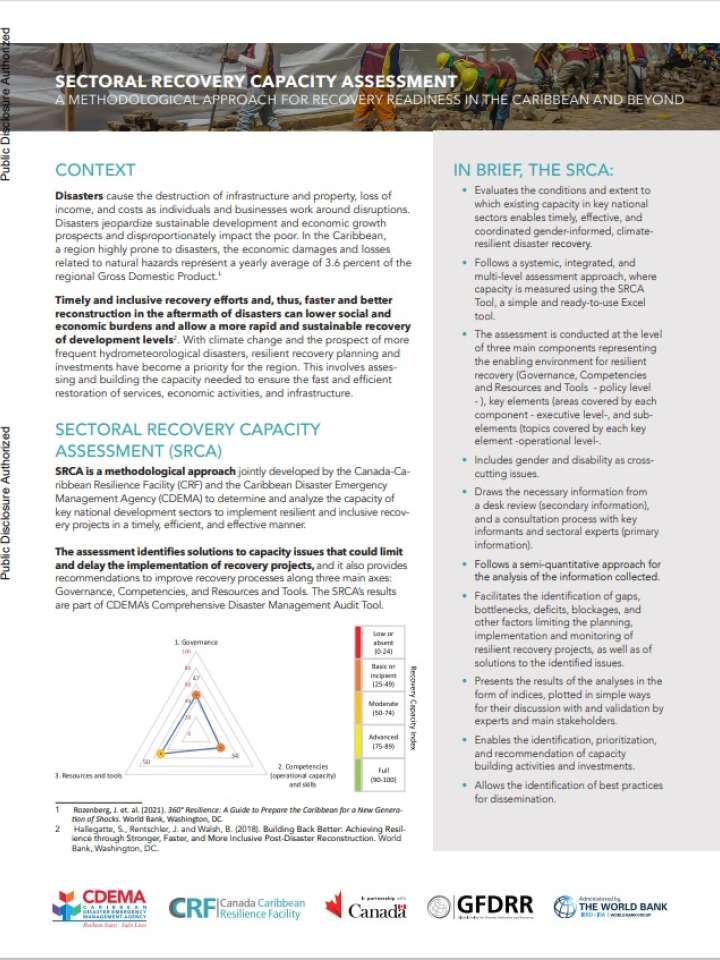
This document summarizes the Sectoral Recovery Capacity Assessment, a methodological approach to determine and analyze the capacity of key sectors to implement resilient and inclusive recovery projects in a timely, efficient, and effective manner.
World Bank, the
Caribbean Disaster Emergency Management Agency
Global Facility for Disaster Reduction and Recovery, the (GFDRR)
Caribbean Catastrophe Risk Insurance Facility, the