This paper challenges the world to remember the Philippines long after the TV cameras have gone. It provides a snapshot of the humanitarian response’s initial successes and struggles.
Southasiadisasters.net issue no. 100, November 2013:
This 100th issue takes stock of a wide variety of issues from the field of disaster risk reduction. It contains articles covering emerging issues such as the rebuilding process in Uttrakhand, building
This paper builds on the hypothesis that a successful post-2015 framework for disaster risk reduction (DRR) needs to better address underlying risk factors over a long timeframe and engage directly more pertinent actors such as local government leaders and the private sector. The paper explores the possible priority issues (the "substance") that should be highlighted in the post-2015 framework for DRR, setting the parameters for who (the "actors") and how (the "form") the substance should be included and the actors engaged.
United Nations Office for Disaster Risk Reduction (UNDRR)
This article summarizes the deliberations and presentations held at the Global South-South Development (GSSD) Expo 2013 and the AIDMI partnership forum focusing on South-South Cooperation at the local level in two areas: (i) scaling up the South-South
A comprehensive plan that contains actionable recommendations both for rebuilding the communities impacted by Sandy and increasing the resilience of infrastructure and buildings citywide.
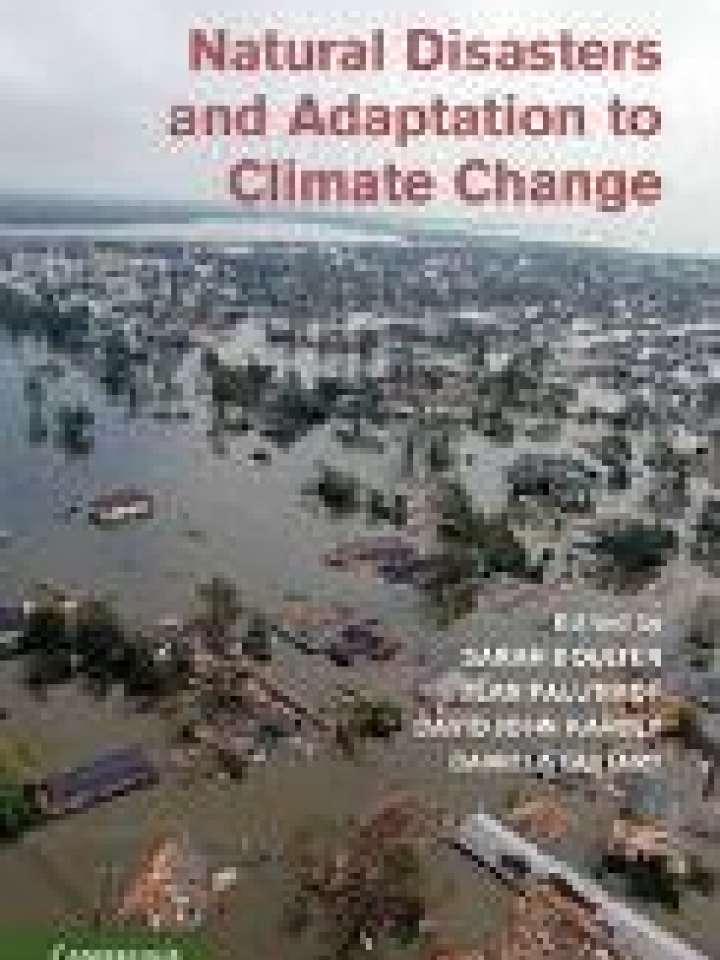
This volume presents eighteen case studies of natural disasters from Australia, Europe, North America and developing countries. By comparing the impacts, it seeks to identify what moves people to adapt, which adaptive activities succeed and which fail
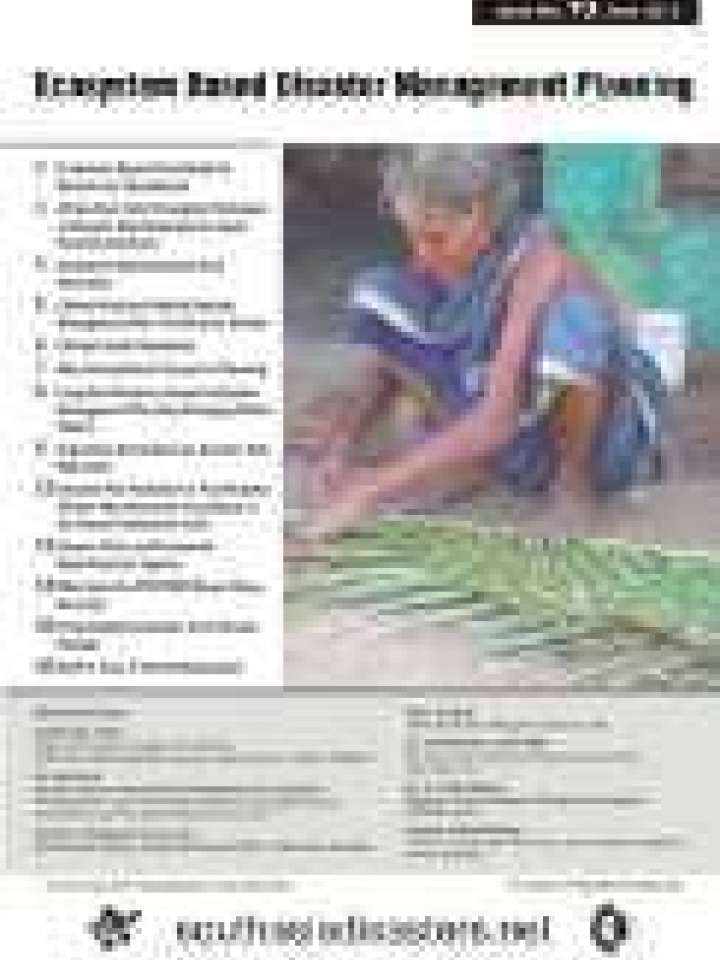
This issue presents articles related to ecosystem, climate change, recovery and gender, in relation to disaster management planning in India and beyond. The content includes: (i) ecosystem based flood relief to recovery in Uttarakhand; (ii) a view from Delhi - emerging challenges of disaster risk reduction for the Asian Development Bank; (iii) ecosystem based disaster risk reduction; (iv) climate risk and district disaster management plan of Puri district, Odisha; (v) climate-smart revolution; (vi) addressing natural hazards in planning; (vii) long-term recovery issues in disaster management planning - emerging global trends; (viii) Yogyakarta declaration on disaster risk reduction; (ix) disaster risk reduction in post disaster shelter reconstruction - case study in the Indian sunderbans delta; (xi) gender, risk, and community mobilization in Uganda; (xii) what does the IPCC SREX report mean for India?; (xiii) protecting communities from climate change; (xiv) IUCN in Asia, a note for exploration.
This document explains resilience in the context of disaster and climate change, giving nine examples of case studies from Action Contre la Faim (ACF) resiliency projects around the world. The document is comprised of six sections: (i) section one
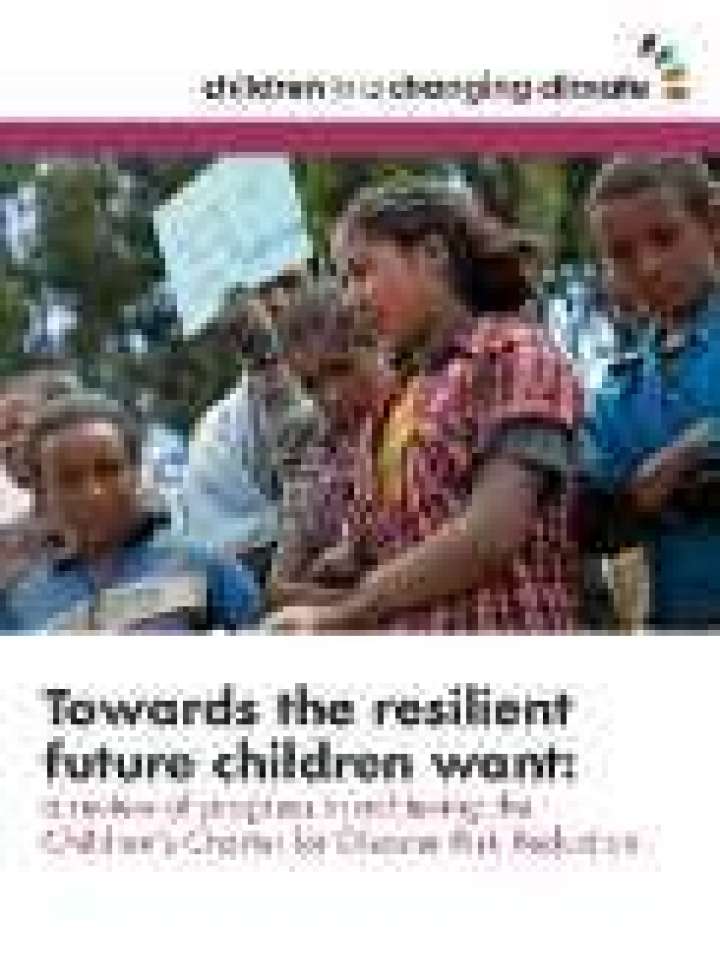
This report aims to respond to the question of how the five priorities for disaster risk reduction (DRR), identified by children from 21 hazard-prone countries in the Children’s Charter for DRR, can be achieved, exploring the enabling factors and
Plan International (PI)
United Nations Office for Disaster Risk Reduction (UNDRR)
The preparation of this National Progress Report has been undertaken within the framework of the biennial 2011-13 HFA Monitoring and Progress Review process, facilitated by UNISDR and the ISDR partnership.