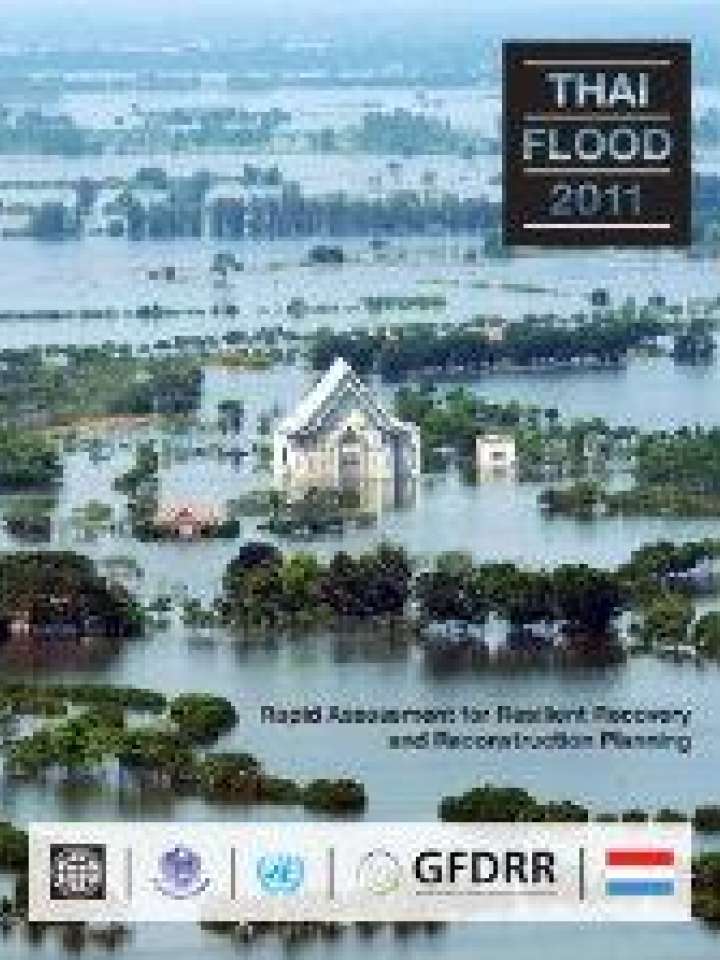
This Rapid Assessment for Resilient Recovery and Reconstruction Planning report is the result of an exercise initiated by the Royal Thai Government to assess the economic and social impact of the 2011 floods and prepare recovery and reconstruction plans.
Twenty-six of the country’s 66 affected provinces were included in the assessment, which examines 18 main sectors and used a comprehensive and internationally established methodology looking at damage and losses caused by the disaster. The report determines the country’s needs for post-disaster recovery and reconstruction and proposes short-, medium-, and long-term measures in each of the 18 sectors for a sustainable post-disaster reconstruction program. Drawing on global good practices for disaster risk management and building-back-better strategies, the report also gives suggestions on how to improve the resilience of the country’s infrastructure and its communities to the impacts of disasters.
World Bank, the
Global Facility for Disaster Reduction and Recovery, the (GFDRR)
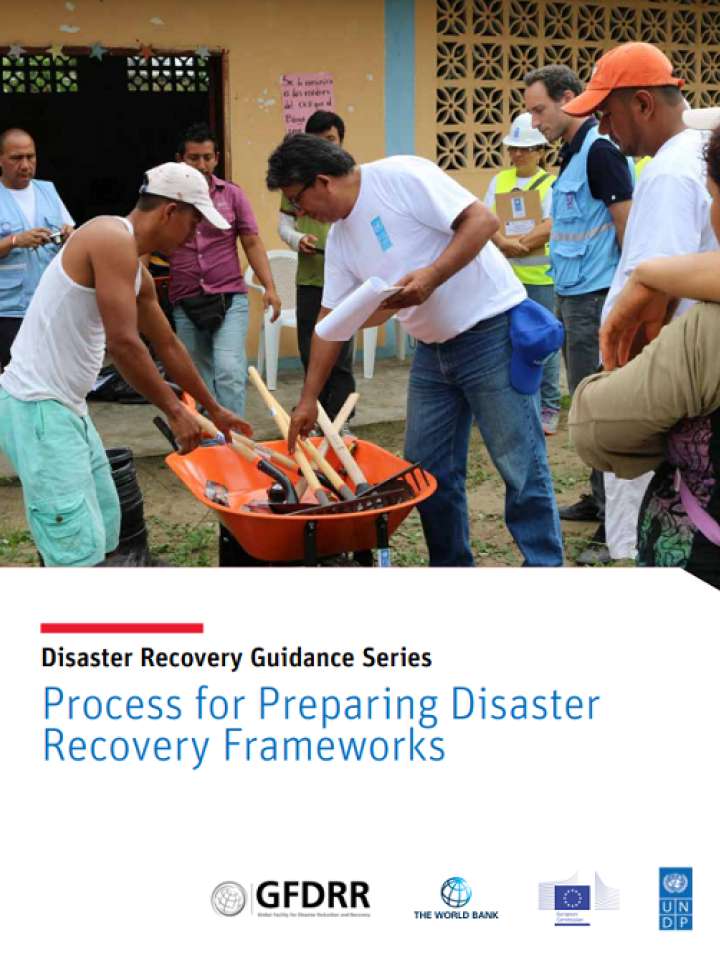
This Process Note explains the process for preparing a DRF. It is intended to support the government officials, partners, affected population, and other stakeholders who will plan and prepare the DRF.
Global Facility for Disaster Reduction and Recovery, the (GFDRR)
This report of a Post-Incident Assessment provides a review of the Government of Alberta’s support to stakeholders, emergency social services, and community evacuations during the May 2016 Wood Buffalo Wildfire and its aftermath.
The first edition of this quarterly series showcases a selection of four papers, which address the impacts of droughts and floods, disaster resilience, and the role of Technical Vocational Education and Training (TVET) in disaster management
Gravitazz Institute for Disaster Reduction and Emergency Management
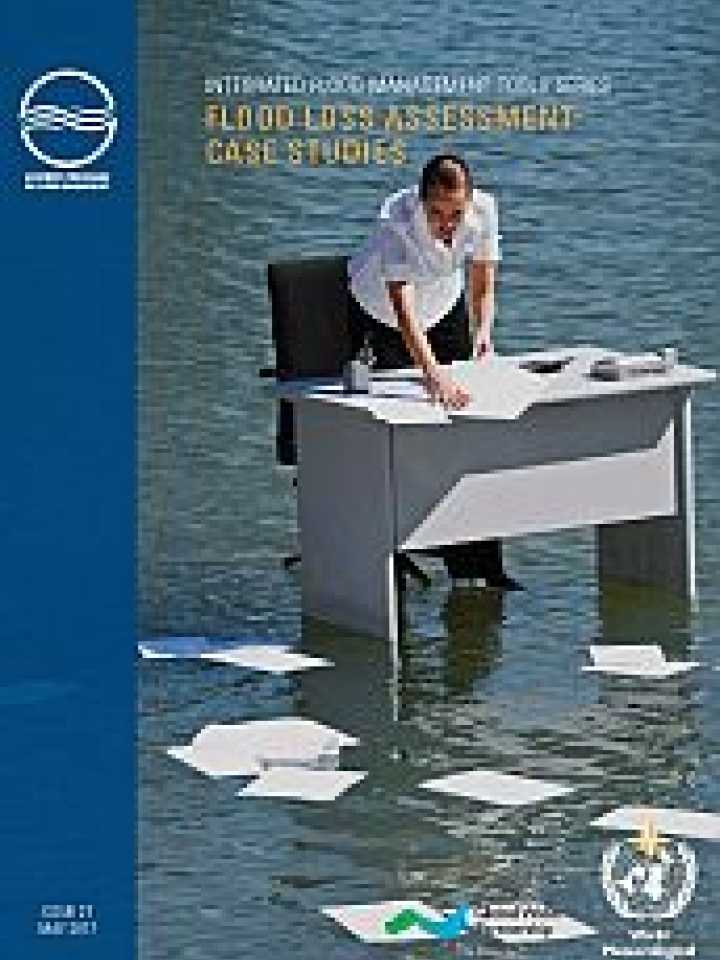
This publication is part of the Integrated Flood Management Tools Series (IFM) being compiled by the Associated Programme on Flood Management. This IFM Tool collects existing methodologies in the framework of the flood loss assessment.
This guideline is the product of literature reviews, discussions and contributions from diverse stakeholders, as well as UNDRR-nominated experts appointed specifically for the development of this guideline.
United Nations Office for Disaster Risk Reduction (UNDRR)
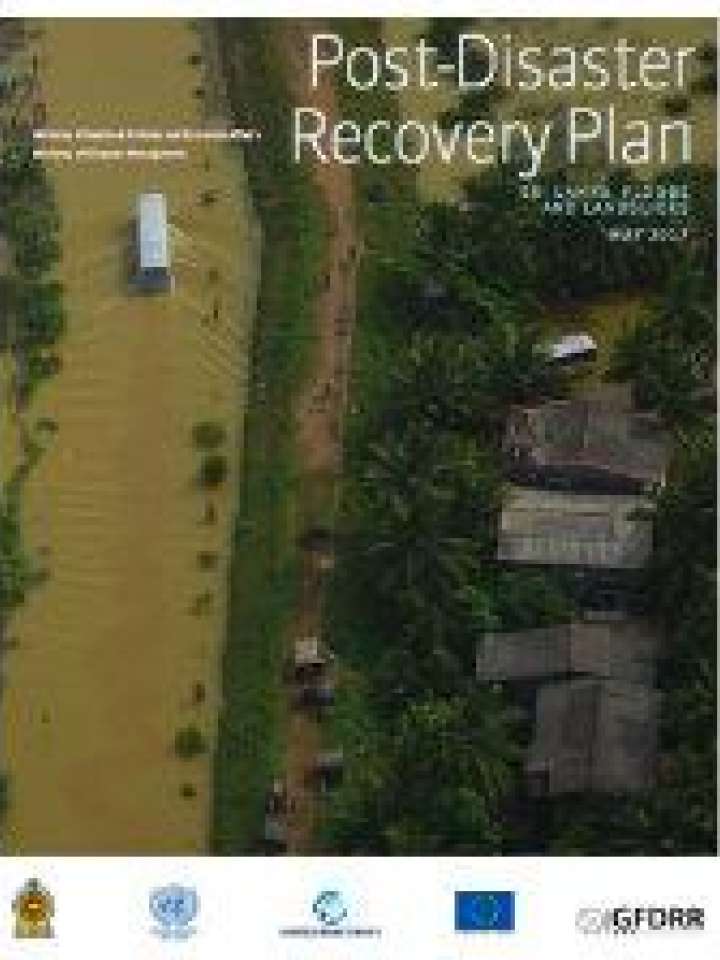
The PDRP specifies priority recovery needs and financial requirements, embedded in nine key sectors and three cross-cutting areas. It is expected to ensure that recovery is resilient and supports the development agenda of the country.
Sri Lanka - government
Global Facility for Disaster Reduction and Recovery, the (GFDRR)
This Local Government Guide to Recovery is an attempt by those most affected by recent events in Colorado to pass along valuable lessons to others that may one day face the same challenges.
This publication reports on a project that assessed current societal expectations of acceptable lifeline performance levels and restoration timeframes that are informed by the phases of response and recovery, distinguishing those that are hazard independent and those that are specific for seismic (including tsunami), wind (including hurricane and tornado), flood, snow/ice, and wildfire hazard events.